Key Points
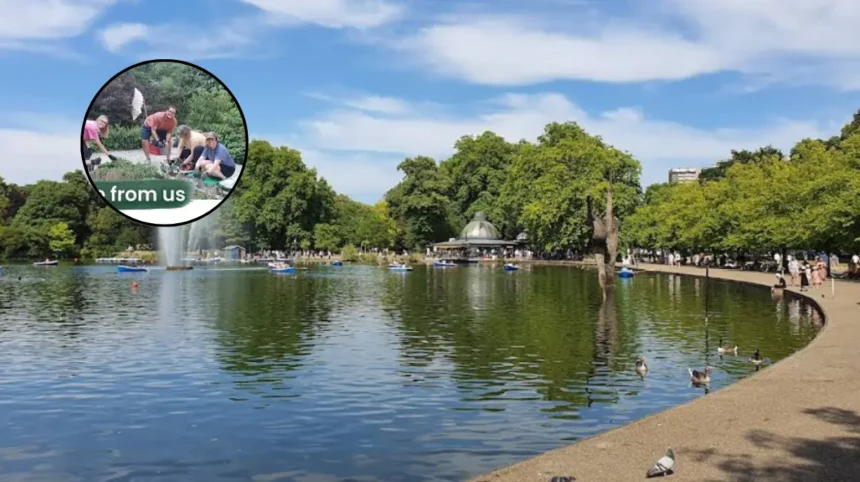
- An outdoor workshop titled “Explore Outdoors: Connecting with Nature” has been scheduled to take place at Victoria Park in Bethnal Green, London.
- Organized by St Margaret’s House, the event is a 90-minute, heart-led practice designed to celebrate the upcoming Solstice.
- The session incorporates a blend of grounding exercises, mindful walking, breathing techniques, and reflective journaling.
- Aimed at mitigating modern stressors, the event invites participants to transform nature from a passive backdrop into an active, deeper connection.
- The practice requires no prior experience, emphasizes non-judgmental reflection, and offers a voluntary space for participants to share their thoughts and feelings.
Bethnal Green (East London Times) June 11, 2026 – A specialised outdoor workshop designed to counteract the digital saturation of modern life and foster deep environmental awareness is set to take place at Victoria Park. Titled “Explore Outdoors: Connecting with Nature,” the 90-minute session is organized by community arts and wellbeing charity St Margaret’s House. Structured specifically as a heart-led practice to celebrate the Solstice, the gathering will guide attendees through a deliberate sequence of walking, breathing exercises, and journaling. The initiative explicitly targets individuals experiencing high stress, urban disconnection, or a pronounced need for mental stillness, offering a structured environment to cultivate psychological and ecological well-being without requiring any prior experience in mindfulness practices.
- Key Points
- Why Is a Nature Connection Workshop Being Organized in East London?
- What Can Participants Expect During the 90-Minute Practice?
- Who Should Attend the Explore Outdoors Session?
- Background of the Particular Development
- Prediction: How This Development Can Affect Urban Professionals and Local Residents
Why Is a Nature Connection Workshop Being Organized in East London?
The modern urban environment increasingly confines daily human activity to digital interfaces and indoor spaces, frequently reducing the natural world to an unexamined background. According to promotional documentation released by the event organizers at St Margaret’s House, the workshop serves as a direct, gentle invitation for local residents to “relight your relationship” with the living world.
By utilizing the extensive green spaces of Victoria Park, the program aims to shift perspective from passive observation to active engagement.
Organizers emphasize that the hustle of a busy, screen-filled world often desensitizes individuals to their immediate biological surroundings. The timing of the event is intentionally aligned with the Solstice, a period historically associated with seasonal transitions, reflection, and heightened awareness of the natural cycles of daylight and earth systems.
What Can Participants Expect During the 90-Minute Practice?
The workshop is structured around a sequence of low-impact, contemplative activities designed to systematically lower physiological stress markers and encourage cognitive deceleration. The experience initiates within the green perimeter of Victoria Park, where an instructor will lead the group through a heart-centred framework.
The initial stage of the workshop focuses entirely on stabilization and presence. According to the event syllabus provided by St Margaret’s House, the session begins with a “gentle grounding exercise to settle” the participants.
This phase typically involves focused breathing and sensory anchoring, allowing attendees to transition away from the cognitive momentum of their daily schedules. Once the group achieves a collective state of stillness, the instructor formally invites and guides them to connect through their hearts directly with the natural structures and living systems surrounding them in the parkland.
What Role Do Curiosity and Journaling Play?
Following the stabilization phase, the practice introduces deliberate movement and tactile observation. Participants are encouraged to move through the space with what the organizers term a “child-like curiosity.” This specific mindset prioritizes objective observation over analytical categorization.
During this segment, attendees will engage in:
- Controlled Breathwork: Synchronizing breathing patterns with physical movement to enhance blood oxygenation and neurological calming.
- Stillness Intervals: Periods of absolute physical quiet to heighten auditory and visual perception of the wildlife and flora.
- Free Journaling: Writing exercises where participants observe, reflect, and write completely freely. The guiding framework instructs individuals to welcome “every thought and feeling without judgement,” ensuring that the writing acts as an unfiltered psychological release rather than a structured literary exercise.
Who Should Attend the Explore Outdoors Session?
The workshop parameters have been designed to maximize inclusivity, removing traditional barriers associated with formalized meditation or wellness retreats.
St Margaret’s House has explicitly stated that “no prior experience is needed” to register or benefit from the session.
The curriculum is curated to be “especially nourishing” for specific demographics within the metropolitan area. This includes individuals dealing with chronic workplace stress, those feeling a generalized sense of isolation or disconnection from their physical environments, and any persons simply requiring a distinct, uninterrupted moment of genuine stillness.
The final segment of the 90-minute block provides a structured opportunity for participants to share their experiences and personal reflections with the group, though this remains entirely optional to preserve individual comfort boundaries.
Background of the Particular Development
St Margaret’s House has operated as a foundational community, arts, and wellness hub in Bethnal Green since its establishment in the late 19th century. Over the decades, the charity has continuously adapted its programming to meet the shifting socio-economic and public health needs of the East London populace.
The introduction of specific nature-based mindfulness initiatives represents an expansion of their existing holistic health methodologies, which include community yoga, low-cost therapy spaces, and creative arts programs.
This development occurs against a broader public health context in the United Kingdom, where social prescribing—a mechanism enabling general practitioners to refer patients to non-clinical, community-based activities—has gained significant structural backing. Victoria Park, managed by the London Borough of Tower Hamlets, provides the critical infrastructure for these interventions.
As one of London’s oldest dedicated public parks, opened in 1845 specifically to improve the health of the working-class population in the East End, its utilization for contemporary mental health workshops directly aligns with its historical civic purpose. The integration of seasonal markers like the Solstice reflects a growing trend among community organizations to utilize predictable natural phenomena as anchoring points for local psychological well-being campaigns.
Prediction: How This Development Can Affect Urban Professionals and Local Residents
The implementation of targeted, short-duration nature practices like the “Explore Outdoors” workshop is highly likely to alter local community health dynamics, particularly for urban professionals and high-density housing residents in East London.
For the primary audience of stressed and digitally fatigued individuals, regular access to these structured 90-minute sessions provides a replicable framework for stress mitigation. By learning specific grounding and journaling techniques within a public park, participants are equipped to transition Victoria Park from a casual recreational space into a functional resource for self-directed psychological regulation.
Over a longer timeline, if St Margaret’s House and similar regional charities scale these nature-led initiatives, local public health networks may observe a measurable reduction in minor anxiety and stress-related consultations within the borough. Conversely, the success of such programs will inevitably increase spatial demands on Victoria Park.
As community groups increasingly claim public green infrastructure for wellness programming, conflicts regarding park usage zones—balancing quiet mindfulness practices against louder, high-impact recreational sports and large-scale commercial events—will require formal governance and policy adjustments from local municipal councils.