In my earlier op eds for this newspaper I referred to the difficulties posed by the Trump administration in the United States. In the summer edition of The World Today a publication of Chatham House, the UK’s leading research establishment in foreign affairs, Professor Lawrence Freedman, Emeritus Professor of War Studies at King’s College London, gave an interview in which he said:
“But nothing, nothing I’ve seen in over 50 years – and I’ve lived through Watergate- compares with the utter chaos of this administration.”
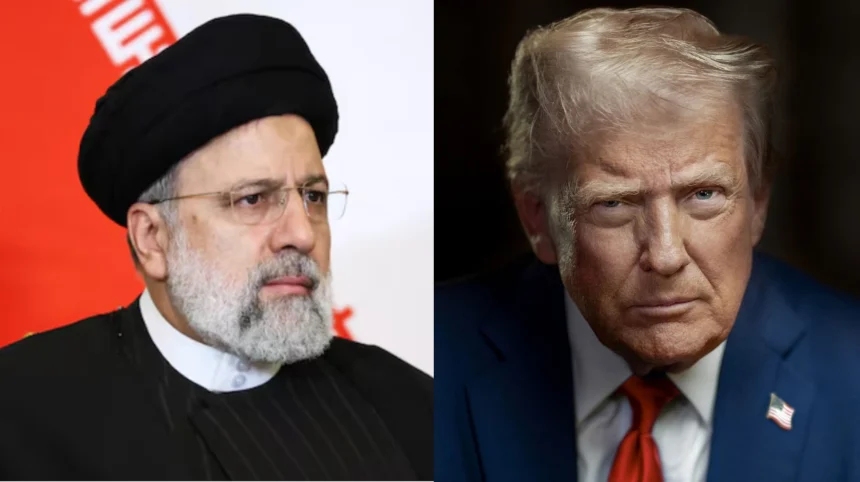
As someone who also lived through the Watergate crisis and was holidaying in Florida at the time as a young law student watching the hearings was an experience not to be forgotten. Nixon’s abuse of power could not be compared with what Americans are experiencing now. Trump has displaced the world order, disrupted World Trade, undermined NATO and adopted a questionable approach towards Russia in its aggression against Ukraine. Europe, Canada, Australia, South Korea and Japan now recognise that the current U.S. government is not a credible ally when Trump seeks to remove US NATO troops and questions the mandatory effect of Article V Washington Treaty 1949. Trump is egocentric and seems to take things personally with a view to what he can gain. He fails to understand geopolitics to the point of ignoring advice from those most qualified to give it. He seeks maximalist outcomes. Iran is a tragic case in point where a lack of deep analysis on its political, social, religious, historic and cultural organisation would help understand how to deal with the regime and its people as they are distinct entities. How Trump and his administration can resolve the most embarrassing misadventure in modern US history is difficult to imagine given that the earlier agreement with Iran, the Joint Comprehensive Plan of Action, (JCPOA) was negotiated by the five present members of the UN Security Council and Germany. The current negotiations have been led by Pakistan and Quatar. These negotiations have not been helped by constant contradictory pronouncements from Trump’s administration which not only give and gave confusing signals, but made negotiations more difficult. This obviously frustrated other countries which totally rely on exports of oil and commodities from the Gulf region, e.g., the Philippines.
Behind all the procrastination and bombast from President Trump serious negotiations and diplomacy has undoubtedly been progressing. It is said that Quatar protected the Res Laffan refinery which produces LNG as well as liquefied petroleum gas (LPG), gas condensate, liquid helium, ethane, sales gas sulphur, butane, granulated sulphur, propane, and molten sulphur. It has a production capacity of more than 77 million tons per annum and are in the process of an expansion project that will raise domestic LNG production capacity to 142 million tons per annum. Although it was struck by an Iranian missile according to a report in the Washington Post the Quatar negotiated with Iran and stopped production rather than loose such a valuable industrial complex. It is further suggested that the EU, Turkey, Russia and China as well as the UK were involved in discussions to open the Strait of Hormuz. It is suggested that the United Arab Emirates would transfer $30 billion to Iran and the United States would allocate $300 million to develop the Middle East. A meeting took place between the French Foreign Minister and the experienced Iranian Foreign Minister, Abbas Araghchi, as well as telephone discussions between the EU Foreign Minister and Mr Araghchi to help co-ordinate efforts to resolve the impasse. These were augmented by discussions between the Foreign Ministers of Turkey, South Africa, Saudi Arabia and Mr Araghchi. China’s Foreign Minister Mr Wang Li was also involved in discussions with Quatar and Iran. It is no coincidence that after President Trump’s meeting with President Xi Jinping in May China’s Foreign Ministry stated:
“Dialogue and negotiation is the right way forward, and the use of force is a dead end.”
Nothing surprising in that as it was China that facilitated mediation as a dispute process long before the Romans invented Lex Mercatoria.
Obviously, the Gulf states have been anxious to resolve the crisis as have all oil importing countries. President Trump who joined the Israelis opportunistic adventure must be most anxious of all to end the conflict, although his actions appear to forestall any permanent end. In this case where the United States has lacked clear objectives and continually given mixed signals confusing and protracting a means of resolution the most one may foresee is a return to the status quo regarding the Strait of Hormuz postponing any refractory disputes for future negotiations in order to rescue the global economy before it is driven into an unavoidable recession. It may be a symbolic agreement to agree at a later stage during a cooling off period for a 60-day moratorium of hostilities. There is clearly an urgent need to open the Strait. Other aspects of any residual dispute could be discussed in a new context where it may be considered more safely and in a more enlightened atmosphere.
The effect of all this turbulence in foreign affairs and global trade, not to mention financial markets and effects on the cost of living, must bring home to every reader of this newspaper that we cannot ignore foreign policy or relations with other countries. Last week the Defence Secretary resigned warning about the lack of support in terms of future investment in defence procurement-essential if Britain is to have a meaningful defence capability. Before that the Heads of our security services had warned about interference from certain foreign state actors. In my lifetime I have never known of such a risk as we now face, save in my school days during the Cuban Missile Crisis when the United States and the Soviet Union were on the brink of nuclear war. In those days we had an American President who managed the crisis through diplomacy as well as a quarantine on Cuba where Russian missiles had been secretly placed. His balance of sanctions and negotiation succeeded through his efforts and the those of his brother, the Attorney General Robert F Kennedy and the Head of the KGB station in Washington DC who was able to give a clear warning to his governement. Premier Khrushchev removed the missiles from Cuba and President Kennedy subsequently had missiles removed from Turkey. As a footnote to history, it is a fact that Fidel Castro opposed the settlement between Khrushchev and Kennedy. Both statesmen overrode Castro’s opposition. It appears that Prime Minister Natanyahu is making a similar objection to any settlement between Iran and the United States. History sometimes chimes.