Key Points
- Prime Minister Sir Keir Starmer has announced a last-minute policy reversal, introducing emergency legislation allowing pubs in England and Wales to remain open until 5:00 am on Monday, July 6, 2026.
- The legislative change is designed to accommodate the England national football team’s World Cup Round of 16 match against Mexico, which is scheduled to kick off at 1:00 am UK time at the Estadio Azteca in Mexico City.
- Publicans in the London Borough of Havering, including the operators of The Saxon King in Harold Hill and Brewdog in Upminster, have expressed immense relief after initially facing bureaucratic barriers regarding Temporary Event Notices (TENs).
- The emergency blanket exemption cuts through local regulatory red tape, removing the necessity for individual publicans to secure separate council permissions to trade through the early hours of the morning.
- Major industry bodies, including the British Beer and Pub Association (BBPA) and the Night Time Industries Association (NTIA), have strongly welcomed the economic lifeline, whilst motoring organisations have issued strict warnings regarding next-day hydration and driver fatigue.
Havering (East London Times) July 4, 2026 — Hospitality operators across the London Borough of Havering are “absolutely over the moon” following an emergency government directive that permits pubs to extend their operational licensing hours until 5:00 am to broadcast England’s upcoming World Cup knockout match. The sudden legislative intervention, confirmed by Prime Minister Sir Keir Starmer on Thursday, July 2, 2026, represents a total policy reversal by the government, which had hours earlier insisted that standard late-night licensing laws would not be altered for the high-stakes Round of 16 fixture against Mexico. The match is scheduled to kick off at 1:00 am UK time on Monday, July 6, 2026, meaning standard closing times would have forced venues to clear out patrons midway through the second half or ahead of potential extra time and a penalty shootout.
- Key Points
- Why did the government execute a sudden licensing U-turn for the Mexico fixture?
- How are Havering publicans reacting to the emergency 5am opening allowance?
- What are the broader national reactions from the UK hospitality sector?
- What safety warnings and corporate guidance have been issued ahead of Monday morning?
- Background of the Licensing Laws and Tournament Dynamics
- Prediction: How the 5am Extension Will Affect Local Communities and Commuters
Why did the government execute a sudden licensing U-turn for the Mexico fixture?
The decision to alter national licensing regulations followed a surge in public and political pressure after England secured their place in the knockout stages by defeating the Democratic Republic of Congo 2-1 on Wednesday, courtesy of two dramatic late goals from captain Harry Kane. Initially, the executive branch resisted appeals for an industry-wide extension.
As documented by news reports across national media, Business Minister Kate Dearden explicitly stated in the House of Commons on Thursday morning that licensing hours would not be universally extended for the 1:00 am kickoff, responding to a formal challenge from Liberal Democrat MP Max Wilkinson, who argued that independent businesses would
“miss out on a real opportunity to get money in the till.”
However, following a coordinated push from industry bodies and regional leaders—including London Mayor Sir Sadiq Khan, who publicly urged capital boroughs to cut red tape for local establishments—Downing Street altered its position. Home Secretary Shabana Mahmood signed an emergency legislative power, utilizing statutory provisions that allow the extension of alcohol licensing hours during occasions of “exceptional international, national or local significance.”
Local Government Secretary Steve Reed confirmed that the emergency law was rushed through Parliament on Friday, July 3, 2026, noting that the prior baseline framework established after a six-week winter consultation
“hadn’t covered the eventuality of England playing so late in the night” and terming it “one of the fastest changes in the law that we’ve seen.”
In an official press briefing from 10 Downing Street, Prime Minister Sir Keir Starmer framed the intervention as both a community asset and an economic boost, declaring:
“Football might be coming home but we’re making sure fans don’t have to. Pubs staying open til the final whistle is good news for supporters and good news for the pubs and venues that bring our communities together.”
How are Havering publicans reacting to the emergency 5am opening allowance?
The local hospitality sector in Havering has responded with widespread enthusiasm, particularly those venues that had been locked out by rigid local authority deadlines. Under standard legislative procedures, publicans seeking to trade beyond their permitted hours must lodge a Temporary Event Notice (TEN) with their local municipality at least ten working days prior to an event.
Because the precise scheduling of the World Cup knockout tree depends entirely on tournament progression, many independent publicans found it logistically impossible to secure these permits within the statutory timeframe.
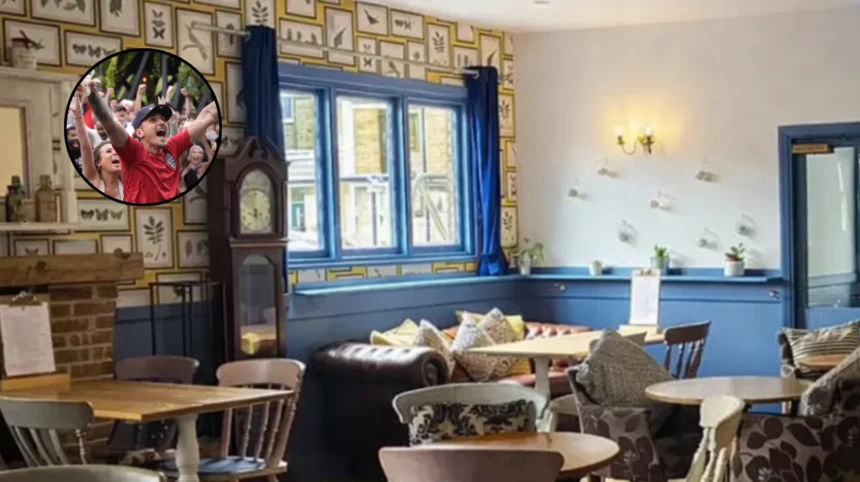
As reported by local news journalists at the Romford Recorder, Jane Phillips, the proprietor of The Saxon King located on Petersfield Avenue in Harold Hill, revealed that her establishment had failed to secure a TEN permit in time for the match. Expressing her relief to the publication, Phillips stated:
“We didn’t get the TEN in unfortunately so we are absolutely over the moon that we’re allowed to open. There’s so much interest after the last game and everyone is excited. The other games have been absolutely fantastic – we’ve been a full house on the decking area outside but this next game will be inside because of the noise late at night.”
Phillips further detailed the logistical realities of managing an all-night operation, confirming that The Saxon King will remain open until the 5:00 am cutoff on Monday morning, after which the premises will shut down for a six-hour period to facilitate deep cleaning and operational maintenance. The establishment will then reopen for regular midday trade at 11:00 am utilizing a completely fresh rota of bar staff. Phillips emphasized the vital fiscal impact of the late-night game, adding, “The extra funds coming in are helping the pub out immensely – we really need it.
The staff are working extremely hard as well.” She concluded by affirming that she would be personally “monitoring everybody” to guarantee public safety and maintain strict order inside the venue during the early hours.
What are the operational plans for corporate and franchise bars like Brewdog Upminster?
A short distance away in Upminster, franchised and corporate operators are also adjusting their matchday frameworks to accommodate the overnight influx of football supporters. Errol Kiani, the operator of the Brewdog franchise on Station Road, Upminster, welcomed the prime minister’s policy change but argued that the administrative chaos could have been avoided with proactive governance. Speaking to the Romford Recorder, Kiani remarked:
“It’s good but these plans could have been made well in advance. We had already applied two weeks prior for a TEN application on the belief we would get through to be open for the game. All pubs could have applied for TENs for this. The government announcement just makes it easier for pubs to operate under normal conditions.”
Kiani has instituted a structured ticketing system to manage crowd capacity, placing 250 tickets on sale for fans wishing to view the game via the bar’s internal screens and rooftop viewing deck.
According to Kiani, ticket transactions escalated dramatically following England’s victory over Congo, with more than 60 percent of the venue’s available capacity selling out within a 24-hour window on Thursday.
Addressing the tactical timeline of the evening, Kiani noted that whilst standard match regulations dictate that the fixture should conclude by approximately 3:00 am, the structural format of the World Cup knockout phase means that 30 minutes of extra time and a subsequent penalty shootout could easily push the broadcast towards 4:00 am.
Consequently, Brewdog Upminster will remain open for exactly one hour following the final whistle to allow crowds to disperse safely, meaning the full 5:00 am limit will likely only be utilized if the game goes the distance. Kiani revealed that the tournament’s late-night timings in the Americas have had “mixed effects on business” compared to previous European championships, making the anticipated Sunday night into Monday morning surge a crucial financial window.
Following the 5:00 am shutdown, Brewdog Upminster will resume regular daytime service at 8:00 am on Monday morning.
What are the broader national reactions from the UK hospitality sector?
On a macro level, representative organizations for the commercial night-time economy have echoed the sentiments of Havering’s independent publicans, designating the blanket exemption as a major victory for an industry still recovering from long-term economic headwinds. Emma McClarkin, the Chief Executive of the British Beer and Pub Association (BBPA), released a public statement noting that publicans and fans collectively would be “over the moon about this decision,” reiterating the cultural sentiment that
“the best place to watch the match is down the local.”
Simultaneously, Michael Kill, the Chief Executive of the Night Time Industries Association (NTIA), lauded the executive branch for adopting a realistic view of late-night operations. As reported by global news wires, Kill stated:
“This pragmatic approach allows venues to focus on what matters most, bringing communities together to support the national team. Major sporting occasions like this deliver a significant boost to hospitality businesses while creating an atmosphere that unites the country.”
The commercial impact is expected to scale significantly across major national pub groups. For instance, national pub operator Greene King announced that it would be taking immediate advantage of the emergency law, committing to keeping more than 600 of its managed venues open until 5:00 am across major urban hubs including London, Birmingham, Bristol, Carlisle, Liverpool, and Folkestone.
What safety warnings and corporate guidance have been issued ahead of Monday morning?
While the licensing extension has been roundly praised by commercial entities, it has drawn caution from transport authorities, safety groups, and employment experts regarding the societal spillover effects of a 5:00 am closing time on a conventional working day.
Because the match will conclude in the twilight hours of Monday morning, transport analysts expect a heightened risk of sleep-deprived and intoxicated individuals on the UK road network.
Rod Dennis, a senior spokesperson for the motoring organization RAC, issued a direct warning to football fans regarding the delayed metabolic breakdown of alcohol combined with extreme fatigue. Dennis stated to national broadcasters:
“Tiredness, dehydration and alcohol can be a lethal combination behind the wheel. Anyone staying up to watch the match shouldn’t drive until they’re fully rested and hydrated, which may mean not driving until much later in the day on Monday.”
The risk is compounded by unseasonably hot weather conditions forecast across the South East of England over the weekend, which health officials note significantly elevates the risk of rapid dehydration when combined with heavy alcohol consumption.
Furthermore, human resource organizations and corporate advisory bodies have proactively intervened, counseling employers to prepare for widespread absenteeism or diminished productivity on Monday morning.
Business consultants have advised corporate managers to set “clear expectations” regarding start times and workplace conduct, whilst simultaneously suggesting that companies offer flexible working arrangements, remote options, or delayed shifts where logistically feasible to mitigate the risks associated with sleep-deprived commuters.
In a highly unusual intervention regarding the education sector, England’s German head coach, Thomas Tuchel, publicly advocated for leniency toward younger football fans. Following the victory in Atlanta, Tuchel openly encouraged parents to let their children stay up late, stating,
“Write an excuse for school and let them watch football… There’s so much school to go to, but the World Cup is every four years.”
This prompted a direct response from Education Secretary Bridget Phillipson, who sought to balance national enthusiasm with academic attendance. Phillipson stated firmly to media outlets:
“It’s a late game, but children can be in school the next day.”
Background of the Licensing Laws and Tournament Dynamics
The regulatory framework governing pub opening times in England and Wales is anchored in the Licensing Act 2003, which transferred licensing authorities from local magistrates to municipal borough councils. Under Section 172 of the Act, the Secretary of State maintains the specific legal power to sign a “licensing hours order,” universally relaxing opening conditions for specified licensed premises during periods of exceptional national significance.
This mechanism has historically been deployed for high-profile events such as Royal Weddings, the Queen’s Platinum Jubilee in 2022, the King’s Coronation in 2023, and the final stages of major UEFA European Championships.
The core operational conflict of the current tournament stems entirely from geographical time zone differentials.
Because the 2026 FIFA World Cup is being co-hosted across North America by the United States, Canada, and Mexico, match schedules are heavily aligned with Western Hemisphere prime-time television slots.
For audiences based in the United Kingdom, this translates to kickoff windows occurring late at night or in the early hours of the morning.
Prior to this emergency intervention, the Home Office had only sanctioned a limited extension framework following a comprehensive six-week public consultation process concluded in December.
That baseline agreement only permitted extensions from 11:00 pm until 1:00 am for matches kicking off between 5:00 pm and 9:00 pm, and up to 2:00 am for matches commencing between 9:00 pm and 10:00 pm.
It notably left a legal void for matches starting at 1:00 am or later, forcing the hospitality industry into an administrative logjam as individual publicans flooded local borough councils with late-stage TEN applications.
The administrative friction became a point of significant political contention when England’s progression into the Round of 16 made an overnight fixture against Mexico a mathematical reality, ultimately forcing the emergency parliamentary intervention on July 3.
Prediction: How the 5am Extension Will Affect Local Communities and Commuters
The implementation of this emergency 5:00 am licensing extension will have immediate, measurable consequences for specific local audiences across Havering and the wider UK, altering the traditional patterns of the Monday morning domestic routine.
The primary group facing immediate operational impact consists of pub landlords, bar staff, and nighttime security personnel.
While the extension delivers a much-needed short-term revenue injection to help offset rising utility costs and inflation, it will impose acute physical demands on workforce management.
Venues that lack the scale to rotate staff—such as smaller, independent establishments—will see identical teams working grueling overnight shifts stretching from Sunday evening until dawn.
Local supply chains will also experience a compressed delivery window, as cellar technicians and draymen navigate a morning environment where venues are resetting their inventories in a highly condensed six-hour window before regular Monday trade resumes.
For Monday Morning Commuters and Logistics Drivers
The structural crossover between departing pub patrons and early-morning commuters will create a highly volatile road safety environment between 5:00 am and 9:00 am on Monday, July 6.
In boroughs like Havering, which feature heavy thoroughfares connecting to the A127 and M25 transport corridors, commercial logistics drivers and rail commuters will be sharing infrastructure with individuals who have been awake for over 24 hours.
Given the explicit warnings issued by the RAC regarding the cumulative effects of alcohol, heat-induced dehydration, and profound sleep deprivation, local transport networks are highly likely to see an increase in minor traffic incidents, transit delays, and emergency service deployments.
For Corporate Employers and Local Businesses
Local commerce within Havering should anticipate a pronounced “productivity dip” across the morning business hours. With millions of fans expected to utilize the full scope of the 5:00 am closing allowance, white-collar offices and local industrial sites will likely experience elevated rates of short-notice sickness absence, tardiness, and cognitive fatigue among staff.
Employers who refuse to adopt a flexible approach may see internal friction, whereas businesses that proactively adjust operational expectations by allowing delayed start times or remote log-ins will be better positioned to preserve staff morale and workplace safety.