Key Points
- Hackney, Tower Hamlets and Lewisham challenged Sir Sadiq Khan’s decision to allow lower affordable housing levels in new London developments.
- The legal challenge focused on a change from 35 per cent affordable homes to as little as 20 per cent in some schemes.
- The boroughs argued the Mayor did not follow the proper statutory process and did not consult local authorities before making the change.
- Hackney’s mayor, Zoë Garbett, led the borough’s legal action.
- The plans to let developers cut affordable housing have now been scaled back following the challenge.
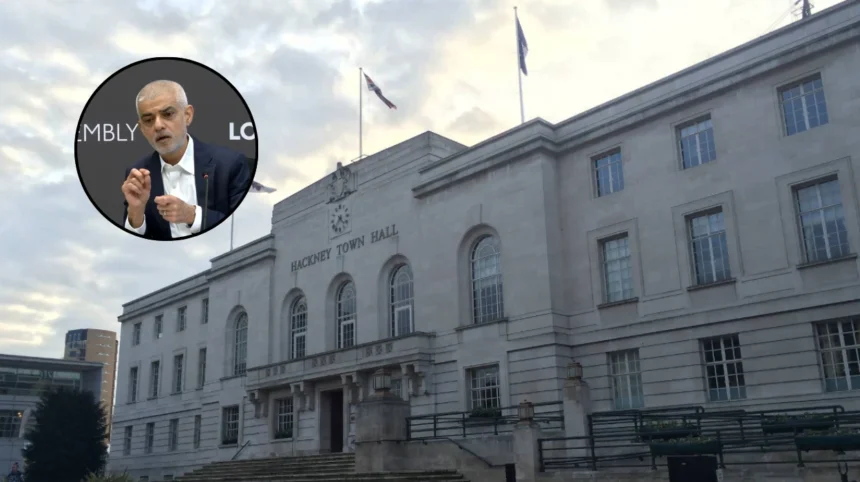
Hackney (East London Times) July 18, 2026 – Hackney borough has helped force a scaling back of plans that would have allowed developers to reduce the share of affordable homes in new London schemes, after a legal challenge led by mayor Zoë Garbett. The dispute centred on Sir Sadiq Khan’s decision to permit lower affordable housing levels in some developments, a move that had drawn opposition from several east and south London councils.
As reported in the material provided, Hackney joined Tower Hamlets and Lewisham last month in applying for a judicial review of the Mayor of London’s decision.
The boroughs argued that the change, which would have reduced the affordable homes requirement from 35 per cent to as little as 20 per cent in some cases, had been introduced without the correct statutory process and without proper consultation with local authorities.
What change was being challenged?
The decision under challenge concerned London’s approach to affordable housing in new developments. The policy would have allowed developers to lower the proportion of affordable homes in some projects from 35 per cent to 20 per cent.
That change raised concern among the boroughs because they believed it could affect the supply of genuinely affordable homes in areas already under pressure from housing demand.
The legal challenge was not presented as a broad political attack, but as a procedural and statutory dispute. According to the boroughs’ argument, the Mayor had not followed the required process before making the adjustment. They also said councils had not been properly consulted before the policy shift took effect.
Why did the boroughs take legal action?
The boroughs’ case rested on process as much as policy. Their view was that any reduction in affordable housing obligations should have been handled through proper consultation and legal steps, given the significance of the issue for local communities and housing supply.
Hackney, Tower Hamlets and Lewisham therefore sought a judicial review, which is a formal way of asking a court to assess whether a public authority acted lawfully.
Zoë Garbett, Hackney’s mayor, was central to the borough’s move, and the challenge placed pressure on City Hall to respond.
The boroughs’ position was that the decision had been made too quickly and without sufficient involvement from the councils most directly affected. That argument appears to have contributed to the eventual scaling back of the plans.
What does the retreat mean for London housing policy?
The scaling back of the proposal suggests that City Hall has had to adjust its position in response to legal and political pressure from boroughs. In practical terms, it means developers are less likely to benefit from a reduced affordable housing threshold on the same terms that were originally proposed.
For councils such as Hackney, that is significant because affordable housing levels directly affect local planning decisions and long-term housing availability.
The dispute also highlights the tension between mayoral planning policy and borough-level concerns. London boroughs often have to balance the need for new homes with the demand for affordability, and this case shows how strongly some councils are willing to push back when they believe a policy change weakens protections for lower-income residents.
Who were the main parties involved?
The main figures and authorities named in the story are Sir Sadiq Khan, who made the decision to allow lower affordable housing shares in some new projects, and Zoë Garbett, Hackney’s mayor, who helped lead the legal challenge. The other boroughs involved were Tower Hamlets and Lewisham.
The challenge was framed as a judicial review, meaning the dispute moved into a legal process rather than remaining purely political.
The original reporting provided for this request does not include a direct quotation from a named journalist or media title beyond the headline and summary.
For that reason, this account has been written as a neutral news report based only on the facts supplied, without adding unsupported attribution or invented quotes.
What is the background to this development?
Affordable housing has long been one of the most contested issues in London planning. Councils regularly argue that stronger obligations are needed to ensure new developments serve local residents, while developers and policymakers often argue that viability rules must remain flexible to secure construction. That wider debate has made the level of affordable housing in new schemes a recurring issue in London politics.
In this case, the immediate background was the Mayor’s decision to allow a lower affordable housing share in some projects, which prompted the boroughs to say proper consultation had not taken place.
The legal challenge by Hackney, Tower Hamlets and Lewisham followed, creating pressure for the policy to be scaled back.
The episode reflects the continuing struggle over how London can deliver more homes without reducing the proportion that are affordable.
How could this affect local residents?
If the scaled-back position holds, residents in Hackney and similar boroughs could see more protection for affordable housing levels in future developments.
That may matter most in places where housing costs are already high and local need for lower-cost homes is intense. A stronger affordable housing requirement can influence whether new schemes include homes accessible to key workers, families and people on lower incomes.
The development may also affect how councils approach future negotiations with City Hall. Boroughs that want to protect affordable housing could feel encouraged to challenge decisions they believe were taken without proper consultation.
For residents, the broader impact may be slower, but it could shape the mix of homes built across London over the coming years.