Key Points
- Council Opposition: Green-led and coalition London local authorities, including Lambeth Council and Waltham Forest Council, have formally signalled their intention to resist new national guidance governing single-sex facilities.
- Core Concerns: Local representatives argue that the newly introduced framework leaves transgender, intersex, and gender non-conforming individuals vulnerable to discrimination, prejudice, and exclusion from essential public facilities.
- National Directive: The updated guidelines require single-sex facilities—such as public toilets, changing rooms, and emergency refuges—to be operated based on biological sex assigned at birth rather than gender identity.
- Legal Review Requested: Lambeth Council has instructed legal officers to examine whether refusing to implement the Equality and Human Rights Commission (EHRC) Code of Practice is legally viable.
- Mandatory Training and Neutral Spaces: Waltham Forest Council has approved motions establishing mandatory equality training for staff and councillors while committing to expanding gender-neutral facility options.
- Supreme Court Context: The EHRC framework follows a landmark Supreme Court judgment affirming that the definition of “sex” under the Equality Act 2010 refers strictly to biological sex at birth.
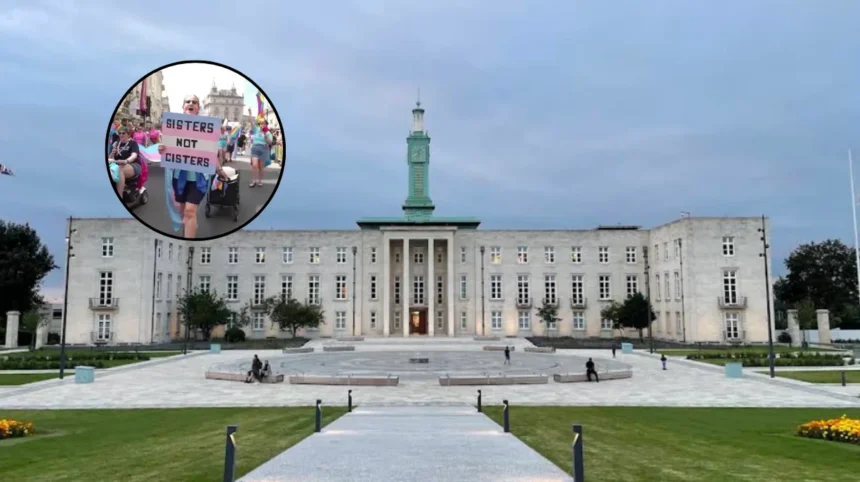
Waltham Forest (East London Times) August 5, 2026 – Green-run and allied London councils have formally declared their resistance to implementing new government-backed guidance on single-sex spaces, warning that the rules place transgender and gender non-conforming residents at direct risk of prejudice and discrimination. The stance, spearheaded by town halls in Lambeth and Waltham Forest, sets up a significant legal and administrative conflict between local municipal authorities and national equality oversight bodies over the management of public facilities including toilets, changing rooms, and emergency refuges.
- Key Points
- What Are London Councils Resisting in the New Single-Sex Space Guidance?
- Why Are Lambeth and Waltham Forest Councils Opposing the EHRC Code?
- What Specific Directives Have Local Authorities Issued to Staff and Officers?
- What Is the Background to the EHRC Guidance on Single-Sex Spaces?
- How Will This Development Affect Trans People, Local Authorities, and Public Service Users?
What Are London Councils Resisting in the New Single-Sex Space Guidance?
Under the revised Code of Practice issued by the Equality and Human Rights Commission (EHRC) and supported by government ministers, service providers across England and Wales are advised to restrict access to single-sex facilities according to an individual’s biological sex assigned at birth. The national guidance clarifies that restricting access to spaces on the basis of biological sex constitutes a lawful and proportionate mechanism for preserving privacy, dignity, and safety under the Equality Act 2010.
However, municipal leadership in multiple London boroughs contends that the strict application of biological sex criteria creates significant operational, ethical, and social challenges. As reported by the London Evening Standard political reporting team, representatives from both Lambeth Council and Waltham Forest Council have publicly signalled that they will resist enforcing these directives across municipal venues, libraries, sports complexes, and administrative offices. Council leaders maintain that forcing staff to monitor or verify the biological sex of individuals attempting to use public facilities is unworkable, invasive, and inherently discriminatory.
Why Are Lambeth and Waltham Forest Councils Opposing the EHRC Code?
Local authority leaders argue that the new regulatory framework undermines community cohesion and compromises the safety of vulnerable groups accessing council-administered services.
As reported by the Lambeth Council communications team on the Love Lambeth news portal, Cllr Natalie Kane, Deputy Leader and Cabinet Member for Inclusion, Democracy and Culture, stated that
“for trans, intersex and gender non-conforming individuals, as well as those men and women who do not fit normative social representations of gender, these guidelines present the danger of discrimination and prejudice in the spaces where we should be prioritising care, support and service provision”.
Cllr Natalie Kane further emphasized the obligation of local authorities to serve all residents equally without creating barriers at the point of access, stating that
“when residents access our public services, they should not be concerned about how their gender is perceived, but how we provide the very best service for them, every step of the way”.
The full council motion passed in Lambeth formally condemned the EHRC draft code as “incoherent and self-contradictory, discriminatory, and impossible to implement in a reasonable and proportionate manner,” calling directly on municipal officers to protect LGBTQIA+ workers and service users by refusing to adopt the guidelines if legally defensible.
Similarly, as reported by Sebastian Mann, Local Democracy Reporter for the Waltham Forest Echo, Waltham Forest Council passed a pro-trans administration motion following political gains by the Green Party, declaring that “trans women are women, trans men are men, and non-binary identities are valid”. The council criticized the potential for intrusive questioning regarding biological sex and resolved to introduce policies that prioritize inclusive access across municipal facilities.
What Specific Directives Have Local Authorities Issued to Staff and Officers?
In response to the publication of the EHRC guidance, both borough administrations have initiated internal policy reviews to construct alternative operational frameworks for public services.
In Lambeth, elected members voted to instruct council legal officers to conduct a formal assessment regarding the lawfulness of non-implementation. As reported on the official Lambeth Council portal, the approved motion explicitly directs council officers “to proceed with non-implementation should officers advise that this is a lawful option”. In tandem with this measure, Lambeth is drafting a borough-wide policy covering council workplaces and public services to safeguard the right of transgender and gender non-conforming individuals to basic dignity and privacy.
In Waltham Forest, the local authority has focused on systemic training and structural adaptations. As reported by Sebastian Mann of the Waltham Forest Echo, the council administration committed to rolling out mandatory equality training for all municipal staff and elected councillors. Additionally, the council resolved to expand the provision of self-contained, gender-neutral facility options across its estate while maintaining existing service standards.
Conversely, national policymakers have maintained that clear rules are required to ensure single-sex spaces are protected in accordance with equality law. As reported by Sam Tabahriti of Reuters, Education Secretary and Women and Equalities Minister Bridget Phillipson stated that the new code of practice ensures organisations “have clear guidance regarding its implementation, protecting people’s rights across our country”.
What Is the Background to the EHRC Guidance on Single-Sex Spaces?
The current dispute stems from a multi-year legal and regulatory debate surrounding the interpretation of sex and gender reassignment provisions under the Equality Act 2010.
In April 2025, the UK Supreme Court issued a landmark judgment clarifying that the statutory terms “woman,” “man,” and “sex” within the Equality Act 2010 refer specifically to biological sex assigned at birth. The ruling established that holding a Gender Recognition Certificate (GRC) does not alter an individual’s biological sex for the purposes of single-sex service exceptions under equalities legislation.
Following the Supreme Court ruling, the Equality and Human Rights Commission was tasked with updating its statutory Code of Practice for services, public functions, and associations. The statutory watchdog drafted updated guidance to provide clarity for service providers, including local councils, healthcare trusts, hoteliers, and leisure operators.
The EHRC code outlines that operating single-sex services based strictly on birth sex is lawful provided it represents a “proportionate means of achieving a legitimate aim,” such as ensuring physical safety, privacy, or preventing distress. However, the code also highlights that service providers should consider the impact on excluded groups and, where feasible, provide alternative facilities, such as individual gender-neutral lockable cubicles. While the EHRC code carries significant weight in employment and equality tribunals, legal analysts note that it does not create primary legislation, leaving individual service providers to conduct context-specific proportionality assessments.
How Will This Development Affect Trans People, Local Authorities, and Public Service Users?
The divergence between national regulatory guidance and local authority enforcement is projected to create distinct operational and legal consequences across several key groups:
1. Transgender and Gender Non-Conforming Residents
For transgender, non-binary, and gender non-conforming individuals, the resistance mounted by councils such as Lambeth and Waltham Forest offers localized protection against exclusion from public amenities. In boroughs that opt not to enforce strict biological sex requirements, trans residents are less likely to face verification checks or denial of access in council-managed facilities like sports centres, libraries, and community halls. However, the disparity between local council policies and national guidance may lead to confusion, as rules could vary significantly when moving between different London boroughs or transitioning from municipal facilities to privately operated or NHS venues.
2. Local Authorities and Council Staff
Municipalities choosing to resist the EHRC guidance face potential legal exposure. If a member of the public files a formal complaint or legal challenge under the Equality Act 2010 asserting that a council facility failed to maintain a single-sex space in line with statutory guidance, courts and tribunals will reference the EHRC Code of Practice during proceedings. Frontline council employees—such as receptionists, facility managers, and leisure staff—may be placed in challenging positions, balancing internal municipal anti-discrimination policies against external regulatory standards and user complaints.
3. General Public Service Users
For the broader public, including women’s rights advocacy groups and service users who utilize single-sex facilities, the outcome of this administrative resistance will determine how privacy and safety regulations are implemented on the ground. Proponents of strict single-sex definitions argue that clear, birth-sex-based boundaries are necessary to preserve dedicated spaces for women in vulnerable settings. Conversely, council leaders maintain that inclusive policies paired with expanded gender-neutral facilities accommodate the needs of all community members without subjecting any resident to discrimination or intrusive scrutiny.