Key Points
- Eastbury Manor House is a historic Grade I listed property dating back to the 16th century.
- The landmark is frequently referred to as the ‘Hampton Court of the East’ due to its striking brick architecture.
- The property is owned by the National Trust and managed locally within the borough.
- Located in Barking, the heritage site is situated approximately a 30-minute drive from central Romford.
Barking (East London News) August 8, 2026 – Eastbury Manor House, a prominent 16th-century Tudor manor located in Barking, continues to attract local attention for its architectural significance and accessibility from neighbouring East London areas. Dubbed by heritage enthusiasts and local historians as the ‘Hampton Court of the East’, the Grade I listed building sits approximately a 30-minute drive from central Romford, providing outer East London residents with direct access to a preserved National Trust estate.
Where is the 16th-century manor house located?
The property stands in the suburb of Barking within Greater London. Its geographic proximity to major transit routes makes it accessible for visitor journeys originating across Havering and Redbridge, situated roughly 30 minutes away by car from Romford’s town centre.
Explore More Barking News
Teenager Stabbed Near Station on Salisbury Avenue: Full Details Barking 2026
c2c Train Disruption East London and Essex Rail Works 2026
Why is Eastbury Manor House called the ‘Hampton Court of the East’?
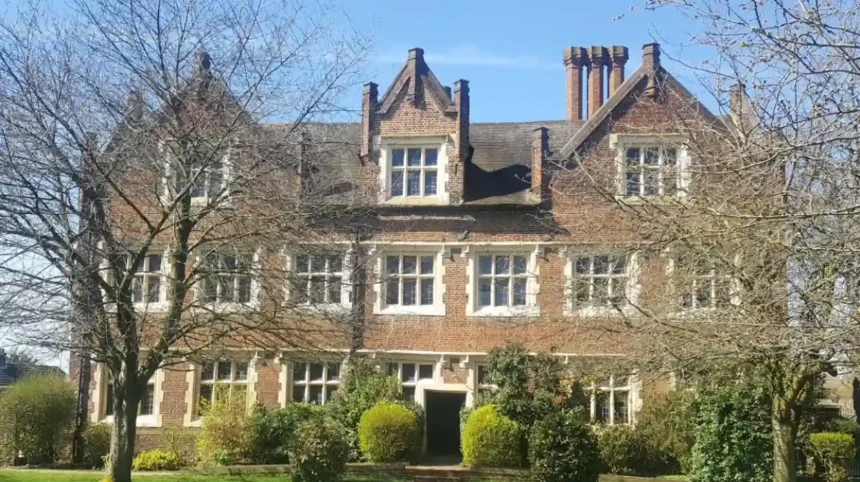
The designation ‘Hampton Court of the East’ stems from the structure’s notable Tudor brickwork, high gables, and original leaded windows, which mirror design features prominent in royal residences of the 16th century.
Built during the reign of Elizabeth I by Clement Sysley, a wealthy merchant who purchased the land following the Dissolution of the Monasteries, the manor stands as a rare surviving example of a medium-sized gentry house from the Elizabethan era constructed entirely in brick.
Who owns and manages Eastbury Manor House?
Eastbury Manor House is owned by the National Trust. While legal ownership resides with the national heritage body, management and operational duties are carried out in partnership with the local borough council to maintain community access, public tours, and educational programming.
Background
The historical trajectory of Eastbury Manor House spans over four centuries of structural development and social change in East London:
- 1530s–1570s: The land originally belonged to Barking Abbey, one of the most prominent religious houses in England. Following King Henry VIII’s Dissolution of the Monasteries in the late 1530s, the land passed through several owners before being acquired by Clement Sysley. Sysley completed construction of the current brick manor house around 1573.
- 17th–19th Century: The house was held by various private owners and tenant farmers. Local folklore frequently linked the isolated manor to the Gunpowder Plot of 1605, suggesting conspirators used the house as a secret meeting location, though formal historical documentation supporting the connection remains subject to debate.
- Early 20th Century: Over decades of agricultural use, the building fell into structural decline. By the 1910s, it faced potential demolition as industrialisation expanded across Barking.
- 1918–Present: Recognizing its architectural value, the Society for the Protection of Ancient Buildings campaigned for its preservation. The property was subsequently acquired by the National Trust in 1918 and underwent extensive restoration to safeguard its timber frames, original wall paintings, and Tudor brick facade.
Prediction
The continued operation and promotion of Eastbury Manor House as a heritage destination in Barking is anticipated to influence several distinct group audiences across East London:
- Local Residents and Heritage Visitors: Enhanced awareness of historic sites within a 30-minute travel radius encourages hyper-local tourism, providing residents of Barking, Dagenham, and Havering with affordable cultural experiences without requiring travel to central London.
- Educational Institutions: Primary and secondary schools within the surrounding boroughs gain ongoing access to practical Tudor history resources and field trip facilities within their immediate administrative boundaries.
- Borough Preservation and Tourism Boards: Sustained interest in Grade I listed assets provides local councils and preservation organizations with stronger leverage to secure regional heritage grants, supporting maintenance funding for public historic sites.