Key Points:
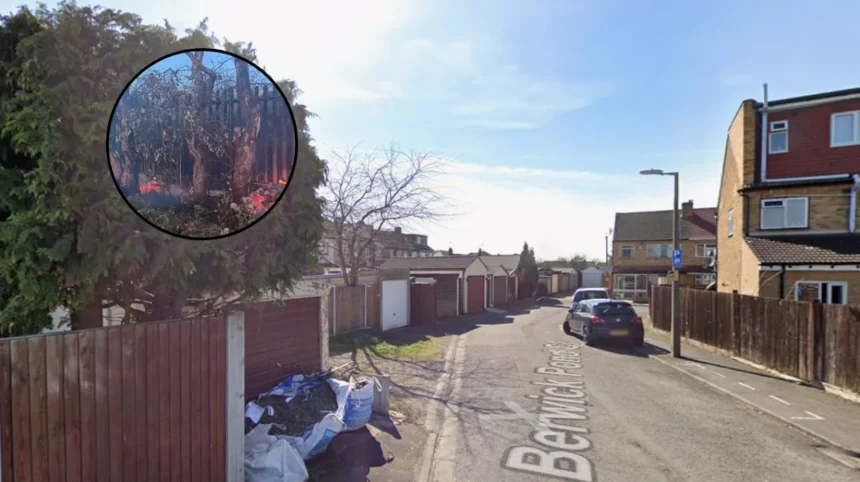
- Two additional fires were reported along Berwick Pond Road in Rainham on Sunday, 16 August, following a summer-long series of grass and heathland blazes across the London Borough of Havering.
- Metropolitan Police have launched investigations into suspected deliberate ignition, leading to the arrest and charging of a 53-year-old man following incidents at Cottons Park in Romford, alongside a 17-year-old previously arrested and bailed pending enquiries.
- Authorities stress that whilst arson enquiries remain active, there is currently no confirmed borough-wide metric establishing how many individual incidents have been formally classified as deliberate.
- Forestry England confirmed that more than 12 hectares of land at Ingrebourne Hill have suffered severe damage, crippling local wildlife corridors and hindering tree re-establishment efforts.
- Firefighting resources have been stretched significantly; a single incident in Rainham required 15 fire engines and approximately 100 firefighters working in intense heat conditions.
Havering (East London Times) August 17, 2026 – The London Borough of Havering has faced a relentless surge of grass and heathland fires throughout the summer season, culminating in two further incidents recorded on Berwick Pond Road in Rainham on Sunday, 16 August. Emergency service personnel have worked extensively across hot and dry terrain to mitigate widespread damage. As detailed in reporting from local media coverage, London Fire Brigade operational teams have repeatedly responded to high-volume incidents across Rainham and surrounding open spaces.
- Key Points:
- How Many Havering Fires Have Been Formally Classed As Arson?
- What Environmental Impact Have The Fires Caused At Ingrebourne Hill?
- How Many Animals Have Been Impacted By The Blazes?
- How Are Emergency Fire Crews Handling The Ongoing Demands?
- Background of the Development
- Prediction: How This Development Will Affect Local Residents and Park Visitors
Earlier in the month, on 9 August, approximately four hectares of heathland were damaged along Berwick Pond Road. That specific incident required six fire appliances and roughly 40 firefighters to bring the flames under control before they could expand further into populated or wooded zones. The sustained frequency of these blazes has placed a continuous operational demand on local emergency infrastructure throughout the warm weather period.
How Many Havering Fires Have Been Formally Classed As Arson?
At present, official authorities have not released a confirmed borough-wide figure detailing the exact proportion of Havering’s summer fires formally designated as arson. Whilst emergency services acknowledge that multiple fires remain under active investigation, the cause of each individual incident must undergo rigorous physical examination before an official determination is made. Authorities caution against treating every recorded incident as an intentional act, as dry grassland conditions heighten the vulnerability of open spaces to accidental ignition.
However, active criminal enquiries are underway. Following incidents at Cottons Park in Romford on 14 August, Metropolitan Police officers responded to reports of an individual deliberately setting blazes. A 53-year-old man was arrested at the scene, subsequently charged, and remanded in custody to appear before the courts. Furthermore, police enquiries into the broader pattern of fires led to the earlier arrest of a 17-year-old male on suspicion of arson and theft of a motor vehicle; he was subsequently released on bail pending further investigative steps.
What Environmental Impact Have The Fires Caused At Ingrebourne Hill?
The ecological impact across local green spaces has reached significant proportions. As reported by environmental correspondents, official statements from Forestry England confirm that more than 12 hectares of land at Ingrebourne Hill have been severely damaged by recent blazes. Representatives from Forestry England characterized the destruction of established grassland and young trees as “devastating” for long-term conservation strategies in the area.
The scorched terrain forms part of an essential environmental habitat, providing critical nesting grounds and wildlife corridors for breeding birds, butterflies, and indigenous fauna. Environmental officers emphasized that recurring fires disrupt these delicate ecosystems and severely impede ongoing efforts to establish new tree saplings, effectively resetting years of land regeneration work.
How Many Animals Have Been Impacted By The Blazes?
Despite the clear visual evidence of damaged flora and habitat destruction, officials state that there is currently no reliable statistical figure regarding the exact number of animals killed or displaced by the fires across Havering. Conservation teams maintain that placing a firm metric on lost wildlife would be speculative and inaccurate without systematic ecological assessments. Nevertheless, environmental bodies agree that the physical loss of breeding grounds and essential cover represents a substantial setback for local biodiversity.
How Are Emergency Fire Crews Handling The Ongoing Demands?
The physical and operational burden on frontline firefighters has been severe throughout the hot summer months. Fire crews have been deployed repeatedly to large-scale blazes across Havering under intense atmospheric heat and drought-like ground conditions. During one major incident in Rainham during July, the operational response scaled to approximately 100 firefighters and 15 fire engines battling a blaze that engulfed roughly four hectares of grassland.
To prevent further strain on emergency resources and mitigate environmental damage, Forestry England has issued an urgent public appeal. Members of the public are advised strictly against lighting campfires or using barbecues—including disposable units—across public parks and heathlands. Visitors are further requested to dispose of all litter responsibly and to ensure all cigarette butts are completely extinguished before disposal.
Explore More Rainham News
Rainham Residents Demand Action Over Launders Lane Fumes: Rainham 2026
Rainham Wildfire: Drone Images Show Ingrebourne Hill Fire Damage in 2026
Background of the Development
The recent cluster of open-space fires across Havering reflects broader environmental vulnerabilities observed across Greater London during dry summer periods. Green spaces such as Ingrebourne Hill, Rainham Marshes, and Cottons Park feature expansive grass, heath, and woodland ecosystems that dry out rapidly during extended spells of elevated temperatures. Over recent years, London Fire Brigade has repeatedly highlighted open-land blazes as a primary summer operational risk, prompting enhanced public safety campaigns regarding dry-weather fire hazards.
In response to previous fire surges, emergency services and local land managers—such as Forestry England and local borough councils—have increasingly coordinated monitor networks to detect early signs of smoke and prevent flame spread. The presence of urban-rural fringe zones in Havering creates a unique challenge, where residential neighborhoods sit directly adjacent to extensive wild vegetation, making fire management crucial to preventing property damage alongside habitat loss.
Prediction: How This Development Will Affect Local Residents and Park Visitors
For residents of Havering and frequent visitors to the area’s public parks, these recent developments are likely to trigger increased operational restrictions and heightened community vigilance throughout the remainder of the summer. Local authorities and Forestry England are expected to enforce stricter controls on public parks, which may include explicit bans on disposable barbecues, heightened ranger patrols, and temporary closures of high-risk heathland trails during dry spells to protect recovering habitats.
Residents living close to open green spaces may experience periodic smoke advisories and localized traffic diversions whenever emergency vehicles respond to open-ground incidents. Furthermore, the loss of over 12 hectares of mature habitat at locations like Ingrebourne Hill means the community will face a diminished natural environment in the medium term, with local biodiversity and tree-planting initiatives taking years to fully recover from the scorched conditions.