Key Points
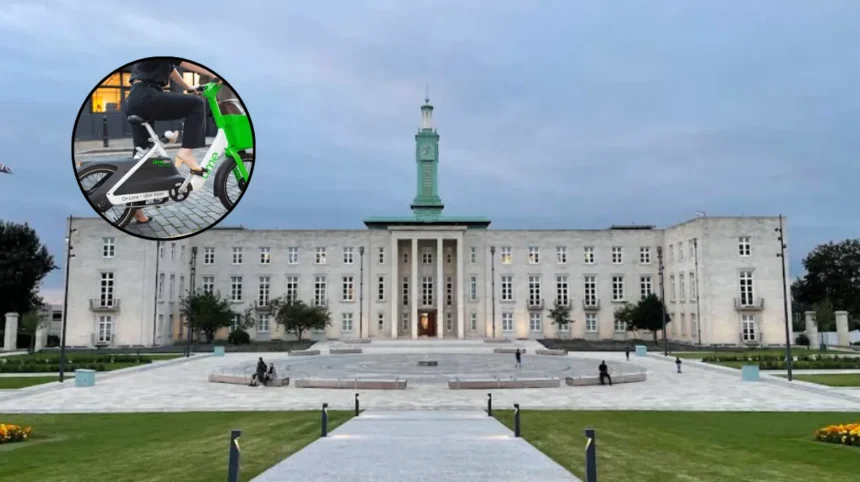
- Waltham Forest Council has launched a public consultation regarding the potential introduction of dockless e-bikes across the borough.
- The local authority previously banned private dockless bike operations eight years ago following a failed trial with Irish operator Urbo in 2017.
- Green Party council leader Paul Perkins initiated the review after taking office in May, reversing the long-standing stance held by the previous Labour administration.
- The borough currently sits alongside nine other London local authorities—Barnet, Bexley, Croydon, Harrow, Havering, Hillingdon, Newham, Redbridge, and Tower Hamlets—that prohibit private e-bike operators.
- Despite the current prohibition, Waltham Forest possesses extensive cycling infrastructure, having received significant funding under a 2014 ‘Mini-Holland’ transformation scheme.
- The infrastructure includes approximately 22 kilometres of dedicated cycle lanes and over 1,000 secure bicycle hangars.
Waltham Forest (East London Times) August 18, 2026 – The East London borough of Waltham Forest could soon introduce dockless e-bikes for the first time in nearly a decade, following the announcement of a formal public consultation by the newly elected Green Party council leader, Paul Perkins.
- Key Points
- Why Were E-Bikes Banned In Waltham Forest Initially?
- Which London Boroughs Currently Maintain Bans On Dockless E-Bikes?
- How Does The Ban Align With Waltham Forest’s Cycling Infrastructure?
- What Are The Arguments For Reintroducing E-Bikes Under The Green Leadership?
- What Concerns Remain Regarding Street Clutter And Public Safety?
- Background Of The Development
- Prediction: How This Development Could Impact Waltham Forest Residents And Transport Stakeholders
As reported by Time Out, dockless electric bicycles are currently prohibited across the entire local authority area, creating a stark contrast with neighbouring districts where services operated by companies such as Lime and Forest are ubiquitous. The consultation aims to gather feedback from residents, local business owners, and commuters to assess whether regulated commercial operations should be permitted to establish network roots across key neighborhoods, including Leyton, Walthamstow, and Chingford.
Why Were E-Bikes Banned In Waltham Forest Initially?
To understand the current restriction, the borough’s historical experience with commercial micro-mobility schemes must be examined. According to reporting by Time Out, Waltham Forest initially engaged with dockless bicycle technology in 2017 through a pilot agreement with Irish provider Urbo.
However, the initiative experienced substantial operational difficulties shortly after launch. Within 10 months of implementation, the council terminated the pilot following widespread community feedback regarding street clutter, anti-social parking, and obstruction of public footpaths.
As recorded in coverage by Time Out, the experience led the previous Labour administration, which led the local authority from 2010 until May of this year, to adopt a strict policy excluding commercial dockless operators from the borough.
Which London Boroughs Currently Maintain Bans On Dockless E-Bikes?
Waltham Forest is not unique in its restriction of private commercial operators. As detailed by Time Out, the borough remains one of ten London local authorities that maintain full bans or operate without formal operational agreements for dockless schemes like Lime or Forest.
The outer and inner London boroughs currently enforcing similar prohibitions or lacking commercial operator agreements include:
- Barnet
- Bexley
- Croydon
- Harrow
- Havering
- Hillingdon
- Newham
- Redbridge
- Tower Hamlets
The lack of unified regulation across London’s 32 boroughs and the City of London has created a fragmented transport landscape, where users frequently find services disabled or restricted when crossing local authority boundaries.
How Does The Ban Align With Waltham Forest’s Cycling Infrastructure?
The prolonged prohibition of e-bikes in Waltham Forest has often been viewed as paradoxical given the area’s substantial investments in sustainable transport infrastructure. As noted by Time Out, the borough was selected in 2014 as a primary recipient of major municipal funding under the landmark ‘Mini-Holland’ scheme.
This multi-million-pound public health and transport initiative transformed local traffic management, replacing high-volume through-routes with pedestrianised zones, low-traffic neighbourhoods (LTNs), and segregated cycle corridors.
Today, as reported by Time Out, Waltham Forest contains:
- Approximately 22 kilometres of fully segregated cycle routes.
- More than 1,000 secure public bike hangars installed across residential streets.
- Traffic-calmed residential areas specifically designed to prioritize active travel over private vehicular movement.
Despite the presence of active cycling communities in districts like Leyton and Walthamstow, residents seeking motor-assisted bicycle travel have remained restricted to privately owned, non-dockless electric cycles.
What Are The Arguments For Reintroducing E-Bikes Under The Green Leadership?
Following the local elections in May, the election of Green Party council leader Paul Perkins signaled a distinct shift in environmental and transport policy direction. As reported by Time Out, Perkins announced over the weekend that the local administration would seek public input to re-evaluate the borough’s policy on dockless schemes.
Proponents of lifting the ban argue that modern dockless e-bike operations have evolved significantly since the 2017 Urbo trial. Current market leaders utilize geofencing technology, which allows local authorities to establish mandatory parking bays, enforce speed limits in pedestrian areas, and fine users who abandon vehicles outside designated zones.
Advocates assert that integrating e-bikes into Waltham Forest’s existing network would lower barriers to active travel for elderly residents, individuals commuting longer distances, and those with physical limitations that make conventional cycling challenging.
What Concerns Remain Regarding Street Clutter And Public Safety?
Conversely, critics and pedestrian advocacy groups maintain that dockless fleets continue to pose accessibility challenges. Opponents frequently highlight issues surrounding improperly parked units blocking pavements, which present hazards for visually impaired pedestrians, wheelchair users, and parents with pushchairs.
The outcome of the upcoming public consultation will determine whether Waltham Forest attempts to draft strict operational frameworks with private vendors or maintains its long-standing prohibition.
Explore More Waltham Forest News
Waltham Forest College Earns Prestigious Skills Flagship Award Waltham Forest 2026
Mobile Foodbank Supports 200 Vulnerable Residents in Waltham Forest 2026
Background Of The Development
The debate surrounding commercial dockless e-bikes in Waltham Forest forms part of a broader, capital-wide challenge regarding micro-mobility regulation across Greater London. When dockless bikes first appeared in London around 2017, the lack of centralized regulation led to chaotic street conditions, prompting several local authorities to issue enforcement notices, confiscate improperly parked units, or enact outright prohibitions.
In response to these historical challenges, Transport for London (TfL), alongside London Councils—the governance body representing the capital’s 32 boroughs and the City of London—has been working toward a unified contractual framework for rental e-bikes and e-scooters. While TfL currently coordinates a managed trial for rental e-scooters, individual London boroughs retain ultimate legal control over their highway networks and pavement management. Consequently, each council retains the statutory authority to negotiate independent agreements with private providers or prohibit them entirely.
Waltham Forest’s initial 2017 trial with Urbo occurred during the early, unregulated expansion phase of dockless schemes in the UK. The operational collapse of that initial pilot made the borough a prominent example of the risks associated with premature vendor deployment, leading to an eight-year policy freeze that incoming leader Paul Perkins is now re-examining.
Prediction: How This Development Could Impact Waltham Forest Residents And Transport Stakeholders
If Waltham Forest Council decides to lift its eight-year ban following the public consultation, the decision will directly affect multiple local demographics and transport groups across the borough:
- Local Cyclists and Commuters: Residents in Leyton, Walthamstow, and surrounding areas would gain immediate access to first-and-last-mile transport options, simplifying journeys to major transit hubs such as Blackhorse Road, Walthamstow Central, and Stratford without relying on personal vehicles or bus services.
- Pedestrians and Accessibility Advocates: Pedestrians, particularly visually impaired individuals, elderly residents, and users of mobility aids, could face heightened risks of pavement obstruction if the council fails to enforce mandatory designated parking bays with strict geofenced restrictions.
- Commercial Operators: Transport firms such as Lime, Forest, and Voi would secure access to a densely populated, cycle-friendly urban market, helping bridge transport connections between North and East London boroughs.
- Neighboring Local Authorities: A policy reversal in Waltham Forest could exert pressure on adjacent restricted boroughs, such as Newham and Redbridge, to reconsider their own positions to minimize boundary drop-off issues and support a continuous, cross-borough micro-mobility network across East London.