Key Points
- Newham experienced a net loss of more than 16,000 residents due to internal migration in 2025, ranking second in the UK for population decline behind Birmingham.
- Data from the Office for National Statistics (ONS) reveals that nearly 50,000 people moved out of the East London borough last year, compared to almost 34,000 moving in.
- Every major city across England and Wales lost more residents to other parts of the United Kingdom than it gained over the same period.
- Local residents in Canning Town cite soaring rent costs, gentrification, elevated crime rates, and poor living conditions as driving factors behind the departure.
- Community members express growing concerns over the lack of affordable housing, with high-rise developments pricing out established families and long-term locals.
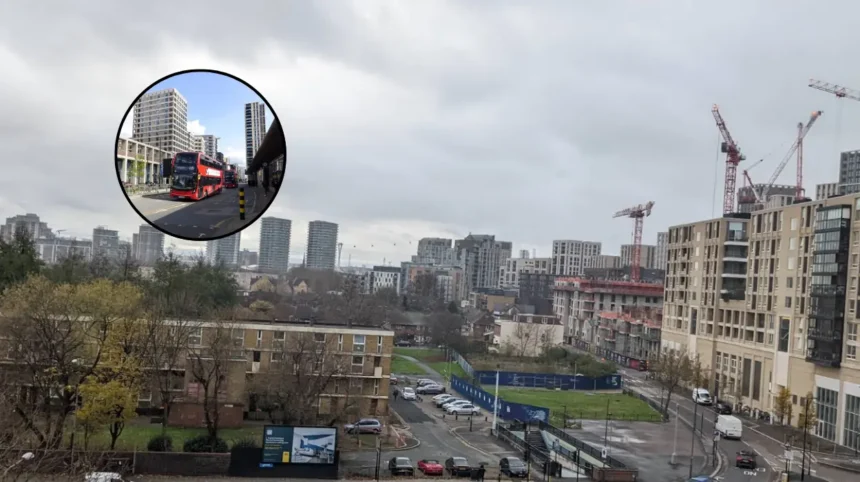
Canning Town (East London Times) August 24, 2026 –Newham is currently experiencing one of the highest rates of internal population loss in the United Kingdom, as thousands of residents relocate to other regions of the country. According to official figures released by the Office for National Statistics (ONS), the East London borough recorded a net loss of more than 16,000 residents through internal migration in 2025.
While approximately 34,000 people moved into the borough during the twelve-month period, nearly 50,000 individuals chose to move out. This sharp disparity places Newham second nationally for net migration loss, surpassed only by the city of Birmingham.
The demographic shift in Newham mirrors a broader national trend identified by the ONS, which indicates that every major city across England and Wales lost more residents to domestic relocation than it gained over the past year.
However, the concentration of departures from Newham highlights severe local pressures. To investigate the primary drivers behind this movement, reporters from MyLondon visited Canning Town to speak directly with community members regarding the challenges facing the borough.
Why Do Local Residents Feel Compelled to Leave the Borough?
Interviews conducted on the streets of Canning Town revealed widespread discontent regarding the local cost of living, housing quality, and neighbourhood safety. Many residents reported that skyrocketing rents and property prices have made remaining in the area financially unviable for working-class families.
Long-term inhabitants noted that recent urban regeneration projects have failed to provide adequate affordable housing options, leading to the displacement of established communities in favour of high-density, expensive residential developments.
Safety and public order were also cited as primary factors influencing decisions to leave. Residents expressed ongoing concerns over localized crime, anti-social behaviour, and street cleanliness, arguing that council services have struggled to keep pace with the area’s rapid structural transformation.
For many who have spent decades in the borough, the combination of escalating financial pressure and diminishing neighbourhood security has created a environment where staying is no longer seen as a sustainable long-term option.
Explore More Newham News
Lendlease Submits 2,000-Home Stratford Cross Planning Application, Stratford 2026
Newham Offers Dedicated Post Results Support for Students in Newham 2026
Background of Internal Migration and Regeneration in East London
The borough of Newham has undergone extensive physical and economic transformation over the past two decades, largely accelerated by development surrounding the London 2012 Olympic Games.
Areas such as Stratford, Canning Town, and the Royal Docks received substantial public and private investment aimed at regenerating former industrial sites, upgrading public transport infrastructure, and constructing new residential towers.
Despite the influx of capital infrastructure, the borough has consistently faced severe socio-economic challenges.
Historically one of the most deprived areas in Greater London, Newham features high levels of housing overcrowding, long local authority waiting lists, and a substantial reliance on the private rented sector. As property values across East London surged over the last decade, regional wage growth failed to keep pace with housing costs.
Consequently, the combination of regional inflationary pressures and structural housing shortages has intensified outward migration, driving former residents toward outer London suburbs, the Home Counties, or regional UK cities where housing costs remain lower.
Prediction: How Will This Internal Population Shift Affect East London Communities?
The sustained net departure of tens of thousands of working-class and long-term residents is projected to alter the demographic, social, and economic landscape of Newham and the surrounding East London region.
For local tenants and prospective buyers, the continued departure of residents highlights an ongoing crisis of affordability. If high demand from higher-earning incoming residents continues to drive rent levels upward, lower-income households will face heightened risks of displacement.
This trend may further push working-class families out of Greater London entirely, changing the traditional socio-economic makeup of historic East End neighbourhoods.
The rapid turnover of the local population poses logistical challenges for public infrastructure, health services, and educational institutions. Schools may experience shifting enrollment figures, whilst local health trusts must adapt to changing demographic profiles.
Furthermore, small local businesses and traditional high-street traders reliant on long-standing community patronage may see shifts in customer habits as established residents are replaced by transient populations or higher-density residential developments.