Key Points:
- Local Jewish communal organizations have alleged that Hackney Council was carrying out a preordained review on its twinning relationship with the Israeli city of Haifa.
- Hackney Anglo-Israel Friendship Association (HAIFA) and the London Jewish Forum wrote a joint letter outlining their concerns to the Mayor of Hackney.
- This joint letter had backing from national organizations such as the Board of Deputies of British Jews and the Jewish Leadership Council.
- The concerned communal organizations pointed out that despite the decision being made in principle, formal consultations are still ongoing.
- Hackney Council, which is now under the control of the Green Party due to the recent elections of the local council, previously decided to end its relationship with Haifa.
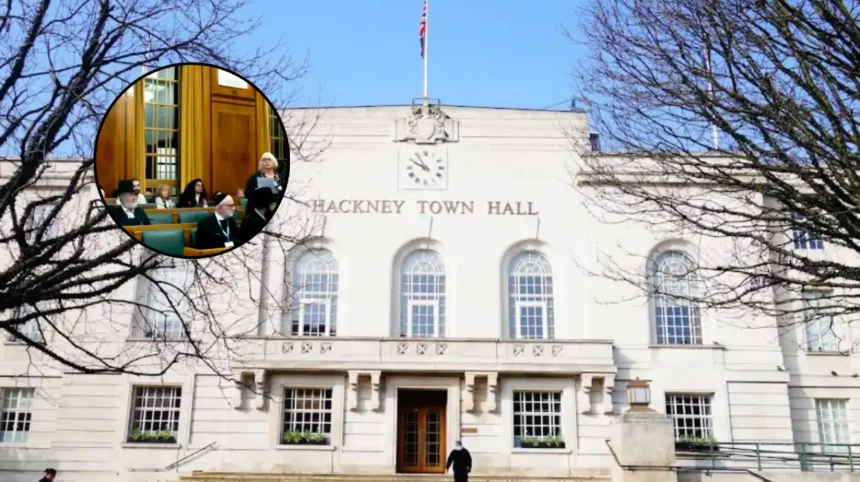
Hackney (East London Times) September 7, 2026 – Local Jewish community organisations have formally raised concerns with Hackney Council, warning that the official review into the borough’s twinning relationship with Haifa appears to be predetermined. Representatives from these groups contend that the municipal authority has already decided the outcome in principle, even though formal consultation procedures remain open to the public. In a joint communication addressed to the Mayor of Hackney, leadership from the Hackney Anglo-Israel Friendship Association (HAIFA) and the London Jewish Forum expressed severe reservations regarding the integrity of the process.
The joint letter contends that “Haifa’s fate seemingly decided before the process intended to determine it had even begun.” The correspondence emphasizes that proceeding with public consultations under such conditions undermines civic trust and fails to offer a neutral platform for local residents to air their views. The push to review and potentially cancel the long-standing civic partnership follows political shifts within the local authority, where the Green Party gained control of the council following local elections.
Who is supporting the joint letter sent to the Mayor of Hackney?
The representations made by local organisations have received explicit backing from prominent national Jewish institutions. The Board of Deputies of British Jews and the Jewish Leadership Council both signed on in support of the letter submitted by HAIFA and the London Jewish Forum. These bodies maintain that civic twinning relationships exist to foster cross-cultural understanding and grassroots community connections, arguing that arbitrary terminations harm local cohesion within the borough.
Supporters of the twinning link note that Haifa is historically recognized for its multi-faith population and co-existence initiatives within Israel. The umbrella organisations expressed concern that severing ties without an open and impartial consultation process sets a troubling precedent for local government administration and municipal diplomacy across the United Kingdom.
How did Hackney Council move to sever ties with the Israeli city?
The dispute originates from action taken by Hackney Council during a full council session. Following municipal elections in which the Green Party secured an overwhelming majority, elected members voted on a motion to sever formal civic ties between the London borough and Haifa.
Following the vote, council leadership initiated a formal review process to assess the future of the twinning arrangement. However, community groups argue that voting to cut ties prior to completing a comprehensive impact assessment or public consultation renders any subsequent review procedural rather than meaningful.
Background of the Hackney-Haifa twinning relationship
Civic twinning arrangements between United Kingdom local authorities and international cities were widely established throughout the twentieth century to promote cultural exchange, educational links, and international goodwill. The partnership between the London Borough of Hackney and the Israeli port city of Haifa was established to build bridges between diverse urban populations and encourage shared civic projects. Haifa, located in northern Israel, is widely noted for its mixed population of Jewish, Muslim, Christian, and Druze residents, often cited in municipal diplomacy as a model for interfaith cooperation.
In recent years, foreign policy motions and international disputes have increasingly surfaced within local council chambers across Britain. Local authorities have frequently debated motions regarding international conflicts, leading to contentious discussions over the role of municipal councils in international affairs. The decision by the newly elected Green Party administration in Hackney reflects a broader trend of local councils taking political stances on global matters, though such moves frequently draw debate from residents who believe local government should focus strictly on domestic municipal services.
Prediction: How will this development affect the local community and municipal relations?
The ongoing dispute over the Hackney-Haifa twinning review is likely to impact several distinct stakeholder groups across the borough and the wider political landscape:
- Local Jewish Residents and Communal Organisations: The perception that municipal consultations are predetermined risks deepening feelings of alienation among local Jewish constituents. If community groups feel that public council consultations are merely symbolic, engagement between local civic leadership and minority ethnic or religious groups could deteriorate, impacting future collaborative initiatives on local policy.
- Hackney Council and Public Trust: Proceeding with public consultations while facing accusations of predetermination exposes the council to potential legal challenges or administrative reviews regarding procedural fairness. The local administration may face heightened scrutiny from opposition members and residents over its adherence to local governance standards and consultation protocols.
- Civic Twinning Frameworks Across the UK: A final decision to sever ties with Haifa could lead other local authorities in the UK to reconsider their own international twinning agreements. Conversely, if public pressure forces a re-evaluation of the consultation process, it may establish a precedent requiring councils to maintain strict neutrality and complete rigorous impact assessments before introducing motions that alter long-standing international civic bonds.