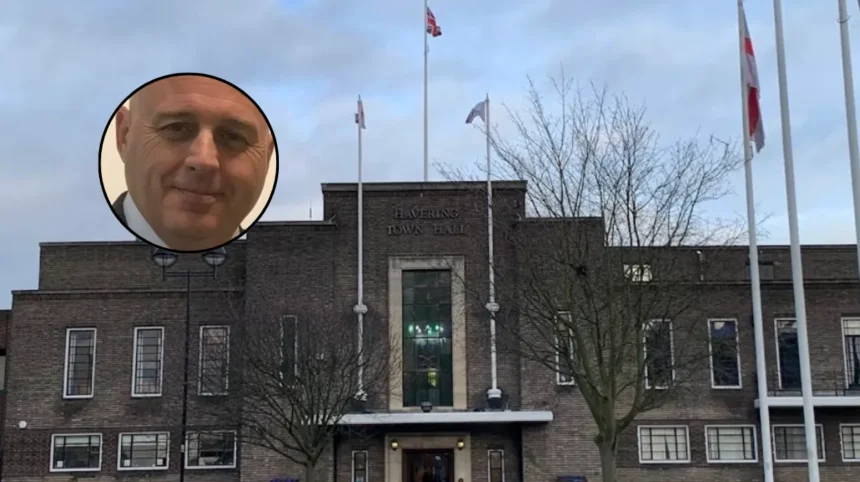
Key Points
- Formal Challenge: Havering Council leader Keith Prince AM has challenged City Hall regarding proposed strategic planning targets for Traveller pitches.
- Proposed Target: Draft Policy HN4 of the London Plan mandates a net minimum of 73 additional permanent Gypsy and Traveller pitches in Havering between 2027/28 and 2036/37.
- Second-Highest Target: Havering’s proposed target is the second-highest across all London boroughs, behind only Bromley’s figure of 77.
- Travelling Showpeople: The draft strategy also requires Havering to identify five additional plots specifically for Travelling Showpeople.
- Discrepancy in Data: The London Gypsy and Traveller Accommodation Needs Assessment indicates a requirement of 73 pitches using London-wide methodology, but only 58 pitches when relying strictly on local borough evidence.
- Consultation Timeline: The proposals remain unadopted; the public consultation period for the Draft London Plan runs until 15 October 2026.
Havering (East London Times) September 14, 2026 – Havering Council leader Cllr Keith Prince AM has formally challenged City Hall over draft strategic regional targets that would compel the Outer London borough to allocate space for at least 73 net additional permanent Gypsy and Traveller pitches over a ten-year period.
- Key Points
- Why Has Keith Prince Questioned City Hall Over the Draft London Plan Targets?
- How Does City Hall Plan to Expand Traveller Pitch Capacity Across Boroughs?
- What Methodology Lies Behind the City Hall Accommodation Calculations?
- Background of the Particular Development
- Prediction: How This Development Can Affect Havering Residents and Community Stakeholders
Why Has Keith Prince Questioned City Hall Over the Draft London Plan Targets?
As reported by The Havering Daily, Cllr Keith Prince AM raised the local authority’s concerns during a direct exchange with Deputy Mayor for Housing and Residential Development Tom Copley at the London Assembly Plenary session on Thursday 10 September.
At the centre of the challenge is Policy HN4 of the Draft London Plan. The regional planning framework outlines proposed targets for London local authorities between the 2027/28 and 2036/37 municipal financial years. Under the current draft framework, Havering faces a requirement to provide a minimum of 73 additional permanent pitches. This allocation stands as the second-highest proposed quota across the whole of Greater London, surpassed only by the London Borough of Bromley, which has been assigned a draft target of 77 pitches.
In addition to the permanent pitches, the draft policy dictates that Havering Council must identify planning space for five additional plots tailored for Travelling Showpeople.
How Does City Hall Plan to Expand Traveller Pitch Capacity Across Boroughs?
According to details reported by The Havering Daily, City Hall’s strategic document instructs local planning authorities to evaluate several avenues to meet these figures. Boroughs are expected to assess whether extra accommodation capacity can be developed within or directly adjacent to existing established sites.
Furthermore, local councils are instructed to examine existing temporary sites to determine if they can safely and appropriately be converted into permanent residential locations. Strategic policy guidelines also advise boroughs to make provision for Traveller accommodation as part of wider, large-scale residential developments and mixed-use regeneration projects where suitable.
Beyond permanent residential allocations, local planning authorities across the capital are expected to allocate dedicated transit sites or establish administrative protocols for negotiated stopping agreements to accommodate temporary movements.
What Methodology Lies Behind the City Hall Accommodation Calculations?
City Hall officials state that these target allocations are constructed to directly address documented housing needs and compensate for long-standing historic under-delivery of dedicated Traveller accommodation throughout Greater London. However, text within the Draft London Plan acknowledges that a degree of statistical uncertainty exists regarding aspects of the underlying Census data utilised in the strategic calculations.
The draft targets draw heavily from the London Gypsy and Traveller Accommodation Needs Assessment. When applying a unified, London-wide analytical methodology combined with existing borough-level data, the assessment concluded a net requirement of 73 pitches for Havering.
In contrast, the same assessment records that if analysts rely solely on local, existing borough evidence without applying the broader regional methodology overlay, the calculated requirement drops to 58 pitches.
City Hall has emphasized that the proposed figures have not been formally adopted into statutory policy. The Draft London Plan remains open to public feedback and statutory stakeholder consultation until 15 October 2026.
Background of the Particular Development
The provision of accommodation for Gypsy, Roma, and Traveller communities has long been a complex area of strategic land-use planning within Greater London. Under the Greater London Authority (GLA) Act, the Mayor of London is required to produce a spatial development strategy—known as the London Plan—which sets the overall strategic framework for development across all 32 boroughs and the City of London.
Historically, the allocation of pitches was largely left to individual borough local plans, leading to uneven provision and significant variance in site standards across boundary lines. Subsequent revisions of regional planning policy sought to establish standardized assessment methodologies to ensure that accommodation needs were distributed across Outer and Inner London local authorities based on documented demand patterns and land availability.
Havering, situated on the eastern fringe of Greater London with substantial areas of Metropolitan Green Belt land, has historically accommodated a relatively high proportion of Traveller sites compared to denser Inner London authorities. As a result, strategic recalculations periodically reignite local policy debates regarding land constraints, Green Belt protection, local infrastructure capacity, and the precise statistical metrics used by regional authorities to determine pitch allocations.
Prediction: How This Development Can Affect Havering Residents and Community Stakeholders
The challenge mounted by Cllr Keith Prince and the eventual determination of Policy HN4 will have direct strategic implications for several key groups across the London Borough of Havering:
- Local Authority and Planning Officers: If the target of 73 pitches is adopted without reduction, council planning officers will be required to integrate these figures into Havering’s local planning framework. This will necessitate identifying suitable land allocations, potentially requiring site consultations, infrastructure assessments, and complex land-use reviews within the borough’s development management process.
- Gypsy and Traveller Communities: The final policy outcome will determine the future availability of secure, lawful, and permanent residential accommodation in the borough. Maintaining or altering the proposed targets affects the long-term address of overcrowding, access to stable utility infrastructure, and local service access for resident families.
- Borough Residents and Local Landowners: The site identification process required by the Draft London Plan may involve proposals near existing residential areas or potential conversions of temporary sites. Local residents and property owners will likely participate actively in the ongoing public consultation before the 15 October 2026 deadline to express views on land allocation, local service capacity, and suburban green space considerations.