Key Points
- More than 700 residents have participated in a survey requesting the expansion of the hospital capacity of their locality.
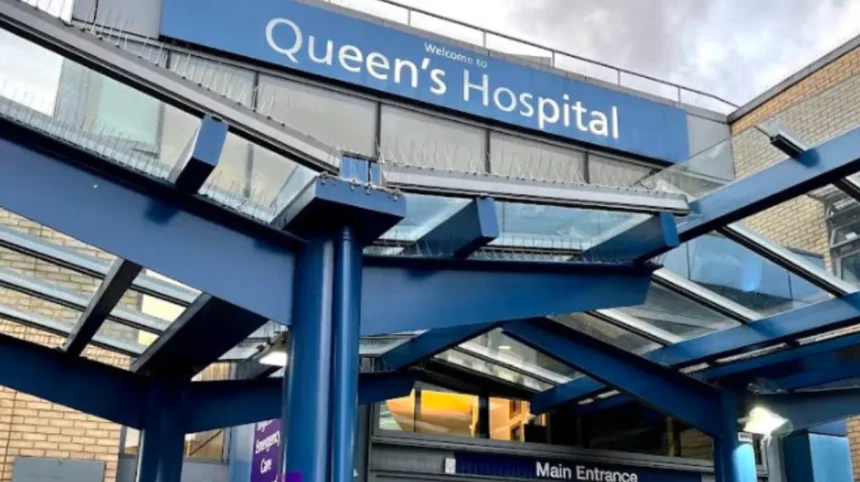
- The attention of the community is directed at Queen’s Hospital, located in Romford, and King George Hospital, located in Goodmayes.
- Barking, Havering and Redbridge University Hospitals NHS Trust manages approximately 900 beds for a regional population of around 800,000.
- According to recent CQC inspections, Queen’s Hospital had an overall score of “Requires improvement” due to issues such as overcrowding and emergency delays.
- Population growth and the development of houses in the area have caused concerns about an overload of medical facilities.
Romford (East London Times) September 18, 2026 – Hundreds of Havering residents have issued a collective demand for expanded regional hospital infrastructure, warning that local medical facilities are failing to keep pace with rapid housing development and population growth. In a public consultation conducted by The Havering Daily, more than 700 readers left comments calling for urgent action to address severe capacity constraints at Queen’s Hospital in Romford and King George Hospital in Goodmayes.
- Key Points
- Is Havering’s Current NHS Capacity Falling Short of Local Population Demand?
- What Do Official Regulatory Reports Reveal About Queen’s Hospital Performance?
- How Is Regional Housebuilding Exacerbating Local Healthcare Concerns?
- What Is the Background to Havering’s Growing Healthcare Infrastructure Challenge?
- How Will This Infrastructure Deficit Affect Local Residents and NHS Services?
Is Havering’s Current NHS Capacity Falling Short of Local Population Demand?
The public debate centres on whether existing regional health infrastructure can sustain both current demand and projected residential expansion. Barking, Havering and Redbridge University Hospitals NHS Trust currently oversees care for approximately 800,000 residents spanning outer North East London and Essex. To serve this catchment area, the Trust maintains approximately 900 beds across its two primary hospital sites.
Local community members argue that this provision is inadequate. As published by the news team at The Havering Daily, residents repeatedly highlighted that Queen’s Hospital and King George Hospital are already operating under visible strain. The public response indicates growing concern over whether emergency departments, inpatient bed numbers, and specialist health services will remain accessible as thousands of new homes and flats are constructed across Havering.
What Do Official Regulatory Reports Reveal About Queen’s Hospital Performance?
Performance data from the Care Quality Commission (CQC) reflects many of the pressures highlighted by local campaigners. In its evaluation, the CQC registered an overall rating of “Requires improvement” for Queen’s Hospital, which operates as the Trust’s primary acute facility. The hospital’s urgent and emergency services similarly received a “Requires improvement” designation due to recurrent issues involving overcrowding, patient flow bottlenecks, and treatment delays.
The volume of urgent admissions highlights the operational burden placed on the site. According to figures recorded by CQC inspectors during their 2023 inspection cycle, Queen’s Hospital managed 60,806 adult emergency department attendances alongside 23,333 paediatric attendances in a single year, representing a combined annual total exceeding 84,000 emergency presentations.
How Is Regional Housebuilding Exacerbating Local Healthcare Concerns?
The push for medical expansion comes as Havering undergoes significant urban development. Local authority plans mandate the construction of thousands of new residential units across the borough. Community leaders and residents maintain that urban regeneration must be matched by proportional capital investment in public services.
Members of the local community noted through The Havering Daily’s forum that civic planning cannot focus solely on housing metrics. Residents stressed that alongside school placements, transport links, and primary GP surgeries, acute hospital capacity must be integrated into long-term infrastructure strategies. With approximately 900 beds serving a catchment area of nearly one million people, residents continue to question where new householders will receive acute medical care when emergency treatment is required.
What Is the Background to Havering’s Growing Healthcare Infrastructure Challenge?
The tension between urban expansion and healthcare provision in outer North East London has developed over several decades of demographic shifts. Queen’s Hospital was opened in Romford in 2006 under a Public Private Partnership initiative, designed to consolidate acute services across Havering, Barking and Dagenham, and surrounding Essex border areas. Simultaneously, neighboring King George Hospital in Goodmayes saw shifts in its service profile, transferring major emergency and maternity functions to Romford over subsequent restructuring plans.
However, population growth across the Thames Gateway region has significantly outpaced original NHS demographic projections. Havering has transformed from a traditionally suburban borough into a major focal point for London housing targets, leading to higher population density without a corresponding increase in acute bed capacity. Previous CQC inspections and independent healthcare audits have consistently identified patient flow, discharge delays, and A&E congestion as structural vulnerabilities within the Trust, reinforcing local calls for long-term capital investment and facility expansion.
How Will This Infrastructure Deficit Affect Local Residents and NHS Services?
If regional healthcare capacity remains static while the local population expands, residents across Havering and surrounding boroughs face prolonged wait times for both emergency treatment and elective procedures. Overcrowded emergency departments increase the risk of delayed triage and ambulance handovers, directly affecting patient outcomes during critical medical events.
For the general public, persistent hospital congestion may result in cancelled operations, extended bed-wait times in A&E assessment units, and reduced access to localized specialist care. Furthermore, primary care networks could experience secondary strain as patients unable to secure timely hospital appointments turn to local GP surgeries. Without structural expansion or capital development, the disparity between housing growth and NHS provision threatens to undermine overall public health resilience across outer North East London.