Key Points
- Discovery and Cessation of Use of RAAC: The Kenneth More Theatre was shut down in 2024 due to the discovery of RAAC in its roof during an assessment of the structure.
- Considerable Investment: More than £1 million of investment from Redbridge Council has been made in carrying out the task of removing the RAAC as well as refurbishing the entire building.
- Refurbishment: The works include refurbishment of the auditorium and other areas of the building, such as new seats, painting and carpets.
- Reopening: A planned reopening of the theatre has been set in December 2026 by the local council after all the work is done.
- Programming After Reopening: A special pantomime performance is planned in spring 2027.
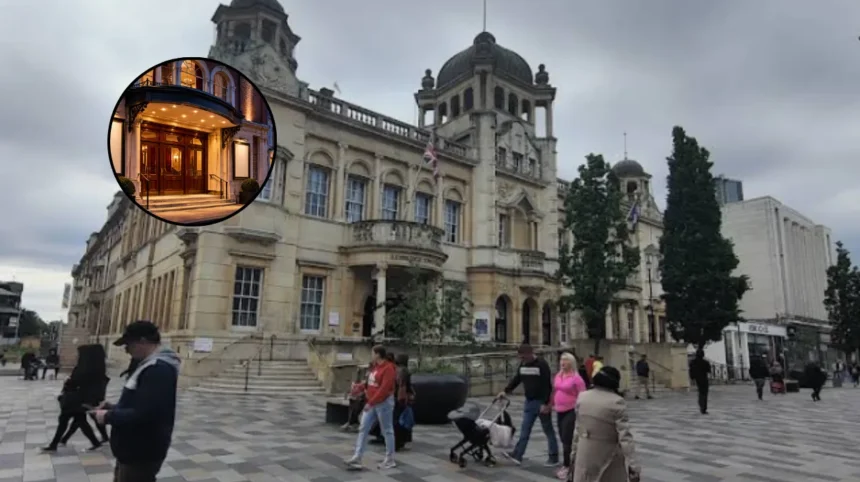
Ilford (East London Times) September 19, 2026 – Redbridge Council has officially confirmed that the Kenneth More Theatre is scheduled to reopen its doors to the public in December 2026, following a comprehensive investment of more than £1 million dedicated to removing reinforced autoclaved aerated concrete (RAAC) and refurbishing the venue’s interior. The civic decision to shutter the popular cultural site was taken in 2024 after a formal structural assessment identified the presence of RAAC within the building’s roof structure. The closure was initiated under safety and maintenance protocols overseen directly by the local authority to ensure public protection and preserve the structural integrity of the facility.
The local authority outlined that the multi-stage remedial and improvement programme encompasses both essential structural engineering tasks and widespread aesthetic upgrades. Beyond the physical removal and replacement of the compromised roofing components, the investment covers extensive refurbishment across the auditorium and public front-of-house areas. Specific enhancements detailed by the council include the installation of entirely new seating within the auditorium, fresh redecoration throughout the interior premises, and the laying of new floor coverings and carpets.
The council has clarified that the December 2026 operational target represents a planned reopening milestone, distinct from the physical building works currently underway. Following the official reopening in winter, the venue intends to launch a refreshed community entertainment schedule, headlined by a special pantomime planned for spring 2027. Local users, arts organisations, and theatregoers will await final verification from the authority confirming that all remedial tasks and regulatory safety checks are fully concluded prior to public admission.
What is the Full Scope of the RAAC Removal and Interior Refurbishment Project?
The scope of the capital project covers two primary areas: direct structural remediation of the affected roof spans and an interior refurbishment designed to modernise the community hub. According to details released by the council, the structural element focused exclusively on the systematic extraction and replacement of RAAC planks that were flagged during the initial 2024 engineering inspection.
In tandem with the heavy structural interventions, the council elected to run a cosmetic and facility renewal scheme. The interior refurbishment encompasses complete redecoration of public spaces and the installation of new carpeting across high-footfall areas and aisle walkways. Inside the main auditorium, existing seating is being completely replaced to elevate comfort standards for future audience members. The local authority stated that pairing structural safety interventions with interior upgrades allows the building fabric to be renewed in a single major project phase.
What is the Timetable for the Planned Reopening and Future Event Programme?
Redbridge Council has structured the facility’s return to public service into distinct phases, separating the completion of building works from the restart of public performances. The council has specified December 2026 as the formal target for reopening the theatre building, provided all construction milestones, structural certifications, and safety sign-offs are achieved on schedule.
To signal the venue’s return to local arts and cultural life, the authority has announced plans for a special pantomime scheduled for spring 2027. This production is positioned as a core element of the theatre’s post-reopening calendar, designed to welcome back families and community groups. Council representatives emphasised that the execution of the spring 2027 programme remains contingent on the smooth finalisation of structural works and the satisfying of all necessary regulatory compliance checks in the run-up to the December 2026 opening.
Background of the Particular Development
Reinforced autoclaved aerated concrete (RAAC) is a lightweight form of concrete that was widely utilised in the construction of public buildings, schools, and cultural venues across the United Kingdom from the 1950s through to the 1990s. Characterised by its bubbly, aerated internal structure, RAAC was historically favoured due to its thermal insulation properties and cheaper manufacturing costs compared to standard dense concrete. However, structural engineering authorities have identified that RAAC has a limited operational lifespan—typically around 30 years—and is highly susceptible to structural degradation, particularly when exposed to moisture or prolonged roof leaks.
In late 2023 and throughout 2024, the UK government and local authorities initiated nationwide safety audits across publicly owned buildings after cases of sudden RAAC failure were documented in educational and municipal properties. These structural surveys prompted widespread temporary closures of community halls, schools, and theatres across the country while detailed engineering assessments were conducted.
When Redbridge Council commissioned a structural evaluation of the Kenneth More Theatre in 2024, engineers discovered RAAC elements embedded in the roof structure. Given the severe safety risks associated with potential material failure, the local authority took immediate action to close the venue. The subsequent decision to allocate over £1 million in municipal capital funding reflects a broader national trend where local councils have had to balance tight public budgets against urgent, unbudgeted structural repairs to protect public infrastructure.
Prediction: How Will This Development Affect Local Residents and Community Groups?
The confirmed timeline and financial commitment for the Kenneth More Theatre will have several notable direct and indirect impacts on local residents, arts organisations, and the broader Redbridge community:
- Restoration of Community Cultural Access: For local residents, the December 2026 reopening guarantees the return of a long-standing civic venue. The addition of modernized seating, fresh carpets, and redecorated facilities will provide an improved overall visitor experience compared to the pre-closure era.
- Impact on Local Performing Arts Groups: Amateur dramatics societies, youth theatre groups, and local schools that historically relied on the Kenneth More Theatre for annual performances will face a continued period of displacement until late 2026. These groups must continue seeking alternative, often more costly, venues outside the borough or adjust their performance schedules until the site fully reopens.
- Financial and Operations Certainty: Clarification of the £1 million-plus budget allocation provides certainty that the building is being permanently repaired rather than permanently decommissioned or demolished—a concern that often arises when municipal venues face heavy structural repair costs.
- Economic Footfall for Nearby Businesses: The eventual return of theatregoers in December 2026 and the influx of families for the spring 2027 pantomime will restore evening footfall to surrounding local businesses, restaurants, and public transport links that experienced reduced trade during the closure period.
- Dependence on Milestone Delivery: Local users remain dependent on the council maintaining its construction schedule. Any unforeseen engineering complications during the RAAC extraction phase could shift the target reopening date further into 2027, delaying the planned economic and cultural recovery for the area.