Key Points
- Regeneration Shift: Silvertown, located in the Royal Docks in East London, is emerging as the capital’s latest major property focus, following in the footsteps of established regeneration zones like Hackney Wick and Fish Island.
- Massive Masterplan: The transformation is being led by The Silvertown Partnership through a landmark 27-acre scheme designed to bring thousands of new residences, public parks, proposed commercial spaces, and water-based leisure venues.
- First Release: Guinness Homes, working alongside project partner Lendlease, has officially introduced Argenta, the inaugural residential phase within the Silvertown project, featuring 66 Shared Ownership apartments.
- Financial Accessibility: The development offers one- and two-bedroom properties, with prices starting from £97,500 for a 25 per cent share (full market value £390,000), making monthly costs significantly lower than local private renting averages.
- Heritage Preservation: The broader vision for the district involves restoring iconic industrial landmarks, including the historic Millennium Mills and Silo D structures.
- Infrastructure Upgrades: Local connectivity has seen significant boosts through nearby DLR connections, the newly opened Silvertown Tunnel, and plans for a dedicated pedestrian and cycle bridge over Royal Victoria Dock to Custom House station.
Silvertown (East London Times) September 21, 2026 – As reported by coverage in Wharf Life, housing reporter Rob Burton highlighted how the shifting landscape of East London property is driving prospective homeowners towards emerging waterside districts. The capital’s urban narrative has long been defined by massive urban renewal, with former industrial strongholds transitioning into thriving residential hubs. Whilst areas such as Hackney Wick and Fish Island have achieved full establishment status—and the accompanying high entry valuations—first-time buyers are increasingly turning their attention further east along the River Thames to secure affordable entry onto the property ladder.
- Key Points
- What Features Define the New Argenta Residential Scheme?
- How Does Shared Ownership Pricing Compare to Private Renting in Newham?
- How Will Local Transport and Public Infrastructure Support the Development?
- What Surrounding Community and Leisure Facilities Are Being Developed?
- Background of the Silvertown Regeneration Development
- Predictions: Impact of the Development on East London Buyers and the Local Community
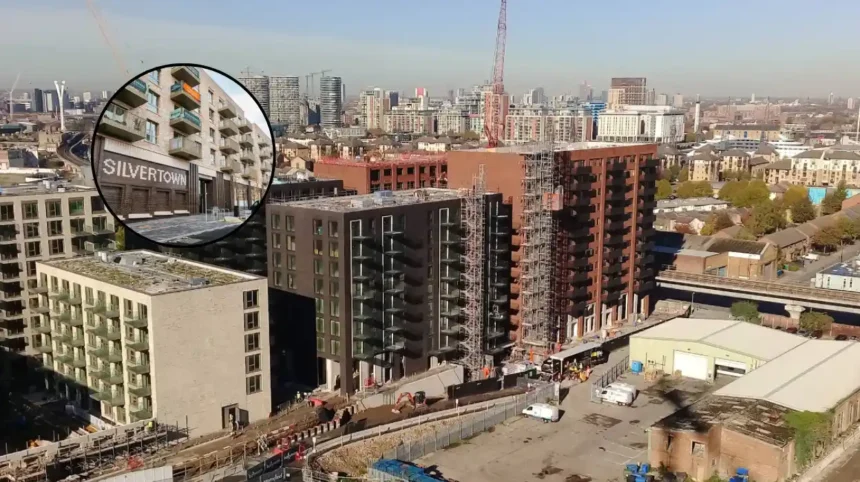
The district currently attracting significant interest is Silvertown, a historic dockside enclave situated within Newham’s Royal Docks. Long recognised for its heavy industrial legacy, the neighborhood is undergoing a comprehensive physical re-imagining. Under the direction of housing provider Guinness Homes and master developer The Silvertown Partnership—a joint initiative working alongside Lendlease—the region is undergoing a massive multi-phase transformation expected to introduce thousands of new properties over the coming decade.
What Features Define the New Argenta Residential Scheme?
As noted by property representatives at Guinness Homes, the unveiling of Argenta marks the initial residential collection launched directly within the 27-acre masterplan site. The initial release comprises 66 Shared Ownership apartments out of a planned 430 total units being constructed by Guinness Homes across early project phases.
The accommodation comprises a mixture of one- and two-bedroom properties tailored towards first-time buyers, professional couples, and local workers. As detailed by interior design team Dapa Atelier, who configured the development’s flagship show homes, the internal layouts draw aesthetic influence directly from Silvertown’s maritime and industrial background, incorporating materials such as cork wall coverings, refined copper details, and Art Deco design touches.
Every apartment comes complete with integrated kitchen appliances, high-performance insulation, private outdoor space in the form of balconies or terraces, and access to a central, landscaped communal garden fitted with raised planting beds for resident gardening. Additional ground-level conveniences, including an on-site Co-op grocery retail unit, are scheduled to open alongside the initial residential moves.
How Does Shared Ownership Pricing Compare to Private Renting in Newham?
As stated by housing data analysts at Guinness Homes, buying through Shared Ownership at Argenta provides a vastly reduced financial barrier compared to prevailing private rental rates in the London Borough of Newham.
According to regional property metrics:
- One-Bedroom Shares: Initial equity portions of 25 per cent start from £97,500 (calculated against a full market assessment value of £390,000), requiring initial buyer deposits starting from £4,875.
- Two-Bedroom Shares: Equity portions start from £137,500 for a 25 per cent share (against full values starting at £550,000).
- Monthly Expenditure Comparisons: Combined mortgage payments, discounted rents, and service fees for a one-bedroom shared ownership unit average roughly £1,306.85 per month. By contrast, the average private market rental rate for an equivalent one-bedroom apartment across Newham stands at £1,626 per month, yielding an estimated operational saving of over £300 each month for owner-occupiers.
Eligibility criteria mandate that purchasing applicants must currently reside or work within London, with total household income capped at £90,000 per annum.
How Will Local Transport and Public Infrastructure Support the Development?
As reported in coverage by The Royal Docks project team, transport infrastructure serving the Silvertown precinct has seen substantial expansion designed to link the riverside zone directly with major commercial centers.
Residents at Argenta are situated within short walking distance of Pontoon Dock and West Silvertown Docklands Light Railway (DLR) stations, providing rapid transit connections to Canning Town, Canary Wharf, and Stratford. Further connectivity enhancements include:
- Elizabeth Line Access: The nearby Custom House station offers high-frequency services across Central London, reaching the West End in 15 minutes and direct links to Heathrow Airport.
- Cross-Dock Pedestrian Bridge: Revised planning permissions approved by Newham Council have cleared the way for a brand-new walking and cycling bridge across Royal Victoria Dock, creating a direct non-motorised transit link straight to Custom House station.
- Silvertown Tunnel: Opened in early 2025, the new highway tunnel running beneath the Thames has established a direct vehicle link to Greenwich Peninsula and the O2 Arena, alleviating historical bottlenecks at Blackwall.
- Aviation Links: London City Airport sits adjacent to the dock network, reachable within minutes for domestic and short-haul European travel.
What Surrounding Community and Leisure Facilities Are Being Developed?
Beyond residential units, the masterplan delivered by The Silvertown Partnership envisions a fully integrated dockside community focused heavily on public realm engagement, green spaces, and water recreation.
The wider 27-acre footprint will encompass new commercial premises, local retail units, independent cafés, and licensed premises. The site’s historic dock edges are earmarked for public parks and designated open-water swimming spots. In addition, residents sit within close proximity to Thames Barrier Park and Royal Victoria Dock, where open-water sports including paddleboarding, canoeing, and open-water saunas are actively operational.
Urban heritage conservation remains central to the overarching blueprint. The masterplan explicitly prioritises the adaptive reuse of two historic industrial structures: Millennium Mills, a iconic 20th-century flour mill structure being converted into modern enterprise and workspace hubs, and the adjacent Silo D concrete storage landmark.
Background of the Silvertown Regeneration Development
The Royal Docks were originally constructed during the mid-to-late 19th century, fast becoming the heart of global commercial shipping and manufacturing in industrial London. Silvertown itself took its name from Samuel Winkworth Silver, who established a waterproof clothing factory in the area in 1852. For over a century, the neighborhood was dominated by heavy manufacturing giants, most notably Tate & Lyle sugar refineries and large-scale grain milling operations dominated by Millennium Mills.
Following the mid-20th-century shift toward containerised shipping, the Royal Docks faced rapid industrial decline, leading to the total closure of commercial dock operations by 1981. For decades, vast swathes of Silvertown remained derelict brownfield land, despite periodic redevelopment pushes elsewhere in the Docklands, such as Canary Wharf.
In recent years, the London Borough of Newham and the Greater London Authority designated the Royal Docks as a key Enterprise Zone—London’s only such designated economic area. The current regeneration strategy was formally launched when The Silvertown Partnership secured revised planning permissions to redevelop the iconic 27-acre core site into a mixed-use residential and commercial hub, creating roughly 6,500 to 7,000 total homes alongside 1.2 million square feet of commercial workspace.
Predictions: Impact of the Development on East London Buyers and the Local Community
The progression of the Silvertown masterplan and the initial release of homes at Argenta are poised to significantly alter the socioeconomic landscape for several distinct groups across East London:
1. First-Time Buyers and Local Renters
For young professionals, single purchasers, and couples currently locked into the private rental market in Newham and neighbouring boroughs, the influx of affordable Shared Ownership housing provides a critical entry route onto the property ladder. Given that monthly housing outlays via Shared Ownership at Argenta benchmark lower than private rental costs, eligible middle-income buyers will be able to start accumulating housing equity rather than paying rising private rents. However, long-term affordability for these buyers will heavily depend on future service charges and their ability to execute “staircasing” (purchasing additional equity shares up to 100 per cent) as broader area values appreciate.
2. Existing Residents and Local Businesses
Long-standing residents of E16 will see their immediate urban environment transition rapidly from isolated brownfield plots into a highly populated, service-rich precinct. The addition of new healthcare services, primary schools, green spaces, and high-street amenities like supermarkets and leisure venues will improve local quality of life. Furthermore, local small businesses stand to benefit from an expanded customer base as thousands of new households move into the area. Conversely, the transition could accelerate broader gentrification pressures across the wider Royal Docks, increasing surrounding land values and local living costs over the coming decade.
3. The Wider London Housing Market and Regional Economy
From a broader market perspective, the successful delivery of phase-one housing at Silvertown serves as a vital test case for public-private partnerships in London. By delivering over 50 per cent affordable housing within the scheme’s initial building phases, the development will help alleviate extreme housing shortages in East London. Additionally, the creation of an estimated 10,000 long-term local jobs within the commercial and workspace sector (centred around the restored Millennium Mills) is predicted to turn Silvertown from a traditional commuter suburb into an independent economic hub within London’s Enterprise Zone.