Key Points
- Borough-wide Expansion: Redbridge Council is expanding its weekly food waste collection service to cover all remaining houses across the borough between November and December.
- Phased Rollout: Following an initial trial of 10,000 households launched last year, all remaining kerbside homes will receive notifications by post between October and November detailing their collection start dates.
- Flat Coverage: Flat owners and occupants will be brought into the scheme via a separate, phased rollout, with direct communications scheduled as their respective start dates approach.
- Equipment Provided: Each eligible household will receive a small indoor kitchen caddy, an initial supply of caddy liners, and a larger, animal-proof, lockable outdoor caddy.
- Environmental & Economic Impact: Food waste constitutes approximately 40 per cent of Redbridge’s household rubbish. Diverting this material to anaerobic digestion facilities generates renewable energy and bio-fertiliser while saving municipal funds.
- Trial Success: Phase one diverted over 400 tonnes of food waste with nearly 80 per cent regular participation, generating sufficient energy to heat approximately 40 average UK homes for a year.
- Government Alignment: The initiative directly supports updated national waste strategy mandates requiring local authorities to collect organic household waste separately.
Redbridge (East London Times) September 23, 2026 – Redbridge Council has confirmed that its weekly household food waste collection scheme will be extended to all remaining houses across the borough between November and December.
As reported by local media coverage of the local authority announcement, the scheme follows a trial phase launched last year that introduced food waste collections to an initial 10,000 households. The local council has now scheduled a full extension to cover all remaining kerbside properties, alongside plans to integrate residential flats through a subsequent phased rollout. Flat owners and occupiers will be contacted directly by municipal authorities closer to their specified launch dates.
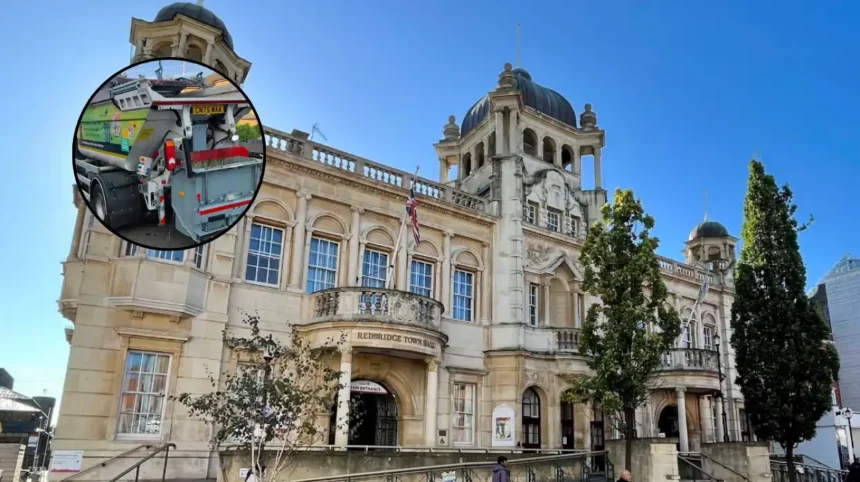
Under the expansion, households entering the scheme will be provided with two dedicated containers: a small caddy designed for kitchen countertops and a larger, lockable caddy intended for outdoor placement. The outdoor unit features a locking mechanism specifically engineered to keep food waste secure from urban wildlife, such as foxes and birds.
As reported in statements released by Redbridge Council, residents currently living in houses outside the initial trial area will receive official letters by post between October and November. These communications will outline instructions regarding caddy deliveries, schedule details, and operational steps. Householders can also verify their exact start dates using the Recycle Refuse tool on the official Redbridge Council website.
Why Are Local Residents and Municipal Leaders Supporting the Expansion?
Local residents who participated in the initial trial have reported positive operational outcomes from the weekly service. As reported by local media outlets, Wanstead resident Karen, who was among the first group to receive the caddies, expressed support for the ongoing infrastructure expansion.
“It’s wonderful to have a weekly food waste collection,” Karen stated.
“The service is reliable and a great way to make use of food waste that I can’t compost.”
From an administrative perspective, council representatives highlighted both environmental and operational statistics from the initial pilot scheme. As reported by local news sources, Councillor Jo Blackman, Redbridge Council cabinet member for environment and neighbourhoods, outlined the numerical results achieved since the first phase began.
“Since launching the first phase of our food waste collection service last year, we’ve seen fantastic results, with nearly 80 per cent of the 10,000 participating households now regularly using their food waste caddy,”
Councillor Jo Blackman stated.
“So far, more than 400 tonnes of food waste have been collected and processed through anaerobic digestion, generating enough renewable energy to heat around 40 average UK homes for a year.”
What Environmental and Policy Factors Are Driving separate Food Waste Collections?
The borough-wide rollout addresses specific municipal waste challenges and broader policy targets. Council figures indicate that food waste currently accounts for approximately 40 per cent of all household rubbish collected across Redbridge. When deposited in standard landfill sites or residual waste streams, decomposing organic matter produces methane, a potent greenhouse gas that contributes to climate change.
By isolating organic material at the doorstep, the council diverts waste to specialised anaerobic digestion plants. At these facilities, biological processes break down organic matter to produce renewable energy and nutrient-rich bio-fertilisers for agricultural land.
Alongside climate mitigation objectives, the council noted financial efficiencies associated with waste processing. Separate organic waste processing costs significantly less per tonne than managing mixed residual waste, enabling local authorities to reduce landfill tax burdens and reallocate municipal funds to other public services. Furthermore, the local scheme aligns Redbridge Council with updated central government policies that legally obligate English local councils to provide separate, weekly food waste collections to residential properties.
Background of the Particular Development
The expansion of food waste infrastructure in Redbridge reflects a broader systemic shift across UK local governance, driven by national statutory mandates under the Environment Act 2021. Historically, UK municipal authorities managed household rubbish through combined residual collections, sending mixed organic and inorganic waste directly to landfill sites or energy-from-waste incinerators.
In response to national net-zero greenhouse gas targets, central government legislation mandated that local authorities in England introduce separate weekly food waste collections for all kerbside properties and residential flats. This legislative directive was established to standardize waste streams across the country, eliminate biodegradable organic matter from landfill sites, and bolster national renewable energy generation via anaerobic digestion infrastructure.
Prior to the full rollout announcement, Redbridge Council operated a multi-phase waste strategy. Phase one was initiated in late 2025 as a controlled pilot involving 10,000 households across selected residential areas. The trial allowed municipal waste teams to assess collection logistics, gauge community adoption rates, and evaluate processing pathways. The trial achieved an 80 per cent regular participation rate among selected households and successfully diverted more than 400 tonnes of organic material away from standard rubbish streams, providing the logistical baseline required to proceed with borough-wide expansion.
Explore More Redbridge News
Redbridge North Circular Road Incidents Cause Major East London Traffic Chaos 2026
Redbridge Council Predicts Over £8m Budget Overspend in Redbridge 2026
Prediction: How Will This Development Affect Local Residents and Property Owners?
The transition to universal, separate food waste collections will alter daily household routines, financial structures, and property management standards across Redbridge.
Household Operational Changes
For residents living in kerbside properties, the initiative introduces an additional layer of household waste sorting. Householders will need to adjust kitchen habits to separate organic scraps, plate scrapings, and non-compostable food waste from general rubbish and dry recyclables. While this requires a modest behavioural shift, the provision of sealed indoor and outdoor caddies is expected to reduce the volume of decomposing waste placed in standard black residual bin bags. Consequently, kerbside rubbish bags are less likely to tear or attract urban scavengers like foxes, improving street-level cleanliness on collection days.
Impact on Flat Owners and Landlords
Flat owners, tenants, and property management companies face distinct practical considerations as the scheme expands to high-density residential blocks. Implementing communal food waste collection requires dedicated space within shared bin stores, clear signage, and robust management to prevent contamination. Property owners and block management boards will need to coordinate directly with council officers to ensure adequate caddy provisions, arrange accessible collection points, and maintain hygiene standards in communal storage areas. Successful integration will depend on clear communication between landlords and tenants regarding proper usage guidelines.
Municipal Financial and Environmental Impact
For the broader community, the successful adoption of the service will directly influence local council expenditure and climate targets. Diverting 40 per cent of household organic waste away from expensive incineration and landfill processing reduces operational disposal costs for Redbridge Council. These operational savings assist in protecting municipal budgets, allowing public funds to be retained for essential local services. Environmentally, local residents will contribute directly to lower regional methane emissions, while producing renewable energy and agricultural fertilisers as part of a circular local economy.