Key Points
- Demanding Call Volume: Havering police registered 14,711 emergency and non-emergency calls across the borough’s ten largest recorded categories over a 12-month period, working out to an average of 1,226 calls monthly or approximately 40 calls every single day.
- Call Breakdown Highlights: Suspicious circumstances generated the highest volume with 3,163 calls, followed closely by concern for safety (2,917), violence against the person (2,674), and domestic incidents (1,919).
- Limited Dedicated Officers: Metropolitan Police figures provided to the London Assembly indicate that, as of May 2026, Havering possessed a dedicated Town Centre Policing Team consisting of just 16 officers (13 Police Constables, two Sergeants, and one Inspector) with zero PCSOs.
- Substantial Regional Disparity: Havering’s dedicated town centre team is significantly smaller than neighbouring areas within the East Area Basic Command Unit (BCU), where Barking and Dagenham deployed 23 officers and Redbridge maintained 33 officers.
- Impact of Officer Abstractions: Statistics highlight an average of around 191 monthly officer abstractions, taking frontline staff away from local neighbourhood duties to cover wider London-wide events and operational demands.
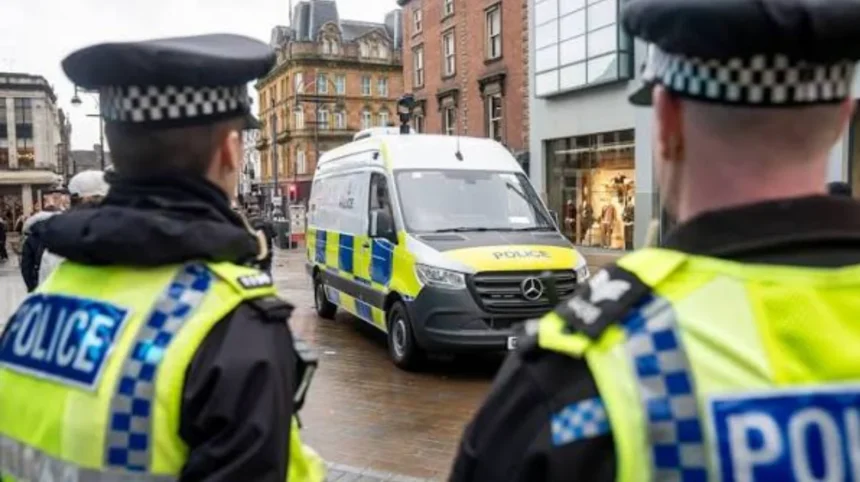
Havering (East London Times) September 24, 2026 — As reported by Francesca Lilleystone of The Havering Daily, figures released from an East Area Response Policing report alongside Metropolitan Police data supplied to the London Assembly reveal that Havering police officers responded to 14,711 calls across the ten largest recorded categories over a 12-month period. Across the same timeframe, the Metropolitan Police recorded that Havering’s dedicated Town Centre Policing Team was maintained at a force strength of just 16 officers as of May 2026.
- Key Points
- What Do The Call Statistics Reveal About Frontline Demands?
- How Does Havering’s Town Centre Team Compare To Neighbouring Boroughs?
- How Do Monthly Officer Abstractions Affect Local Street Visibility?
- Background of the Particular Development
- Prediction: How This Development Can Affect Havering Residents and Local Stakeholders
The data illustrates an immense frontline workload across the East Area Basic Command Unit (BCU), which encompasses Havering alongside neighbouring London boroughs Barking and Dagenham and Redbridge. With officers frequently required to attend incidents across multiple categories, residents and local stakeholders have questioned whether current operational capacity matches the volume of incoming incidents.
What Do The Call Statistics Reveal About Frontline Demands?
According to analysis compiled by Francesca Lilleystone of The Havering Daily, the 14,711 recorded calls represent a baseline demand of roughly 1,226 calls each month, or 40 calls per day, strictly within the ten primary categories documented in the East Area Response Policing report. Because these figures exclude minor offences, administrative tasks, and unlisted categories, the true total of incoming police communications in Havering remains higher.
The report details the specific breakdown across the top ten recorded call categories:
- 3,163 calls relating to suspicious circumstances
- 2,917 calls relating to concern for safety
- 2,674 calls relating to violence against the person
- 1,919 calls regarding domestic incidents
- 854 calls relating to highway disruption
- 735 calls regarding anti-social behaviour nuisance
- 727 calls generated directly by police officers
- 693 calls logged as abandoned communications
- 515 calls relating to civil disputes
- 514 calls concerning collapse, illness, or similar medical emergencies
As documented by Francesca Lilleystone of The Havering Daily, public safety calls, reports of suspicious activity, and violent offences comprise the vast majority of requests for assistance. Managing these high-priority incidents demands substantial immediate officer deployment, often pulling emergency response teams away from routine patrols.
How Does Havering’s Town Centre Team Compare To Neighbouring Boroughs?
As reported by Francesca Lilleystone of The Havering Daily, official Metropolitan Police figures provided to the London Assembly reveal that Havering’s dedicated Town Centre Policing Team comprised 16 officers in May 2026. This team consisted of 13 Police Constables, two Police Sergeants, and one Inspector, supported by zero Police Community Support Officers (PCSOs).
This deployment figure relates specifically to the dedicated Town Centre Policing Team—which focuses heavily on high-footfall commercial areas such as Romford—and does not reflect the total number of police personnel stationed across the broader borough. However, comparative regional figures highlight notable variations within the East Area BCU and surrounding London areas:
- Havering: 16 total officers (13 Constables, 2 Sergeants, 1 Inspector, 0 PCSOs)
- Barking and Dagenham: 23 total officers (18 Constables, 4 Sergeants, 1 Inspector, 2 PCSOs)
- Redbridge: 33 total officers (27 Constables, 5 Sergeants, 1 Inspector, 4.5 PCSOs)
As noted by Francesca Lilleystone of The Havering Daily, Redbridge’s dedicated town centre policing contingent was more than double the size of Havering’s team during the same recording period. Across Greater London, town centre team sizes vary dramatically based on Met Police resource allocation, ranging from four officers in Bexley and nine in Ealing to 66.7 officers in Camden and 245.4 in Westminster.
How Do Monthly Officer Abstractions Affect Local Street Visibility?
As reported by Francesca Lilleystone of The Havering Daily, local policing challenges in Havering are further compounded by officer abstractions. The borough recorded an average of approximately 191 officer abstractions every month, a process where local officers are temporarily reassigned from their primary neighbourhood duties to support major public events, demonstrations, or specialized central operations across Greater London.
When officers are abstracted or deployed to urgent calls outside their immediate beat, their physical presence in local neighbourhood wards and town centres is temporarily reduced. While abstractions are a standard operational mechanism across the Metropolitan Police Service to manage pan-London security needs, the removal of local officers creates secondary pressures on the personnel remaining in the borough.
As detailed by Francesca Lilleystone of The Havering Daily, residents across Romford, Hornchurch, Upminster, and Rainham continue to raise public concerns regarding shoplifting, anti-social behaviour, criminal damage, and street violence. The combination of high incoming call volumes, dynamic abstractions, and a compact town centre team directly influences how rapidly officers can respond to non-emergency community issues.
Background of the Particular Development
The Metropolitan Police Service’s tri-borough system, introduced under the Basic Command Unit (BCU) restructuring model in 2018, merged Havering, Redbridge, and Barking & Dagenham into the East Area BCU. The structural shift was designed to streamline management overheads, pool specialist detective units, and allow resources to be shared dynamically across borough boundaries during major incidents. However, the model has faced ongoing scrutiny from local councillors, community groups, and business improvement districts who argue that local accountability and dedicated neighbourhood footprints have been diluted.
To mitigate local coverage gaps, specialized secondary units have been deployed alongside core Metropolitan Police teams. Notably, the council-funded Havering Joint Task Force—a dedicated six-officer team led by Sergeant Tanner—was established to target localized vehicle crime, burglary, and high-street theft. Furthermore, Metropolitan Police leadership under Superintendent Brind announced a targeted risk-based framework in mid-2026 aimed at curtailing non-essential abstractions across London. This policy shift reduced pan-London event abstractions by roughly 20,000 officer shifts between April and July 2026 compared to 2025, while assigning three additional neighbourhood officers directly to Havering. Despite these localized interventions, fundamental debate surrounding core staffing formulas across outer East London boroughs remains active.
Prediction: How This Development Can Affect Havering Residents and Local Stakeholders
- For Local Residents: The combination of elevated call volumes and frequent officer abstractions will likely lead to longer response times for lower-priority, non-emergency incidents, such as anti-social behaviour and civil disputes. Residents may observe fluctuating police visibility on local residential streets, encouraging greater reliance on digital reporting tools, community watch initiatives, and council-led enforcement teams.
- For Town Centre Businesses and Retailers: Commercial districts, particularly within Romford town centre, may experience heightened exposure to retail crime, shoplifting, and public disorder if dedicated town centre staffing remains capped at 16 officers. Retailers may feel compelled to increase private security expenditure, join local Business Crime Reduction Partnerships (BCRPs), or collaborate more closely with private shopping centre security teams to deter persistent offenders.
- For Frontline Police Officers: Continued high call loads—averaging 40 primary calls daily alongside administrative duties—risk accelerating officer fatigue and burnout within the East Area BCU. Sustained operational stress could lead to increased sickness absence or requests for transfers to less pressure-heavy divisions, further accentuating local staffing churn.
- For Local Authorities and Policy Makers: Havering Council and local Members of Parliament will face mounting pressure from constituents to lobby the Mayor’s Office for Policing and Crime (MOPAC) and Metropolitan Police leadership for a permanent rebalancing of BCU resource allocation formulas to ensure outer London boroughs receive proportional police coverage.