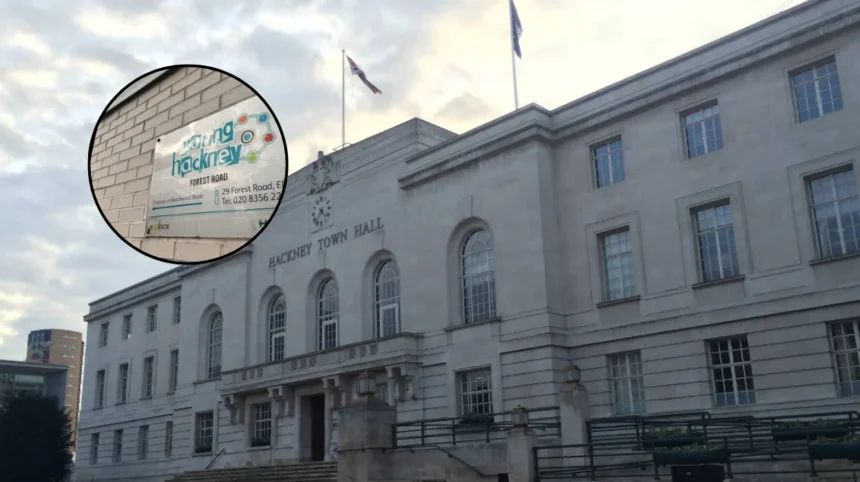
Key Points
- Hackney Council’s youth support service, Young Hackney, will receive up to £1.3 million in additional funding over the next two years.
- The money comes from the government’s Young Futures Hubs programme, part of a wider £70 million investment under the National Youth Strategy.
- Young Hackney runs four youth hubs and five adventure playgrounds, offering free activities and support for young people aged 10–19 (up to 25 with SEND).
- The funding will expand access to sports, creative workshops, mental health support, employment routes and crime-prevention services.
- Local young people and stakeholders will help decide how the extra funds are spent.
- The announcement follows a national survey of more than 14,000 young people that highlighted a lack of face-to-face youth services.
- Secretary of State Lisa Nandy said young people need “somewhere to go, something to do, and someone to talk to”.
- Hackney is among 42 local authorities selected to establish new Young Futures Hubs across England.
- Early adopter areas such as Tower Hamlets have already begun operating hubs, with further sites planned in boroughs including Waltham Forest and Camden.
- Cllr Soraya Adejare stressed the importance of properly funded youth services in a borough with high levels of child poverty.
Hackney (East London Times) September 26, 2026 – Hackney Council’s youth support service is set to receive an additional £1.3 million over the next two years under a government initiative, marking a significant expansion of local youth provision in one of London’s most deprived boroughs.
- How will the new funding change youth services in Hackney?
- Who announced the funding and what did they say?
- What services will Young Hackney provide with the extra money?
- How does Hackney’s funding compare with other areas?
- Background: How did the Young Futures Hubs programme develop?
- Prediction: How could this development affect young people and families in Hackney?
Young Hackney, which runs several initiatives including four youth hubs, trips and projects, will seek to extend its current work in the hopes of reaching more young people in the local community. The network currently provides those aged 10–19, or up to 25 with Special Educational Needs and Disabilities (SEND), with direct access to sports, creative workshops, and mental health support, and funds a range of voluntary sector youth organisations to assist in career development and future employment.
How will the new funding change youth services in Hackney?
The new investment from the government’s Young Futures Hubs programme will help Young Hackney work alongside local organisations to reach more people through its youth hubs and work in the community. Alongside providing open access to sports, creative activities and trusted youth workers, the hub will link to mental health support, skills and training, routes into employment, and crime prevention.
In developing the Young Futures programme, Young Hackney will work alongside young people and wider stakeholders to decide how the extra funds should be spent. The Young Futures Hub funding is designed to connect young people directly to the services that address the biggest challenges they are facing, from education and housing to health and employment.
Jason, 16, a student who grew up using the Young Hackney youth hubs, said:
“This is the perfect place for young kids. Their parents could be working, so instead of them being home alone, doing nothing, they could come here and meet friends.”
His comments were reflected by Cllr Soraya Adejare, Cabinet Member for Children, Young People and Early Intervention, who said:
“Hackney has one of the highest rates of children growing up in income-deprived households in the country. That means it’s vital that we offer high-quality, properly-funded youth services to help give every young person the best start in life.”
Who announced the funding and what did they say?
The ‘Young Futures Hubs’ funding comes as part of a wider £70 million investment drive spearheaded by the government’s national Youth Strategy. The 10-year plan has been devised following a survey of over 14,000 young people that highlighted the current reliance on online interaction in the absence of face-to-face opportunities.
Secretary of State for the Department for Digital, Culture, Media and Sport Lisa Nandy said:
“Young people told us that they needed somewhere to go, something to do, and someone to talk to. We believe in their generation and we know they can succeed.”
Today’s announcement, made by Lisa Nandy, confirms that local authorities in England will establish 42 new hubs. This builds on the eight early adopter hubs already up and running, including sites in Birmingham, County Durham, Leeds, Manchester, Nottingham, Bristol, Tower Hamlets, and Brighton and Hove.
They will each establish a Young Futures Hub, and receive further support through the Local Youth Transformation programme to strengthen leadership, train their workforce and build lasting local partnerships to deliver high-quality youth services in their area.
What services will Young Hackney provide with the extra money?
Young Hackney offers a network of four youth hubs and five adventure playgrounds that are free to people aged 10–19 (25 with SEND) and funds a range of local voluntary sector youth organisations. They offer support in areas such as education, employment, housing and health, alongside dedicated programmes to support young people who might get involved in antisocial behaviour or crime.
The programme is a key part of the government’s National Youth Strategy, Youth Matters, launched by Lisa Nandy in December 2025 and co-produced with 14,000 young people through a landmark ‘State of the Nation’ survey. In response, the National Youth Strategy set out how young people will benefit from over £500 million of government investment, with an ambitious delivery plan to rebuild youth services over the next decade.
Sophie, a local nanny who often makes use of the children’s centres, additionally spoke on the benefits projects like this have for parents.
“I meet a lot of first time mums who might not necessarily have a community, so it’s really nice to meet new people, to benefit from the socialisation as much as the children,” she said.
How does Hackney’s funding compare with other areas?
Similar hubs in other parts of the UK have already proved successful, with early adopters including Tower Hamlets, receiving additional payouts to establish further sites. Hackney is among 42 local authorities selected to establish new Young Futures Hubs across England, alongside boroughs including Camden, Waltham Forest, Barking and Dagenham, and Cornwall.
A total of £70 million is being distributed by the UK Government to local authorities to establish Young Futures Hubs and deliver Local Youth Transformation projects between 2026/27 and 2028/29. Up to £500,000 will be made available for each local authority delivering Local Youth Transformation projects, while up to £125,000 of capital funding will be available for each Young Futures Hub for light-touch refurbishments and/or digital projects.
Up to £300,000 will be made available per annum for each Young Futures Hub to operate. Early adopter local authorities Birmingham, County Durham, Leeds, Manchester, and Nottingham are receiving additional funding to establish a second Young Futures Hub as part of the wider rollout of this programme.
Background: How did the Young Futures Hubs programme develop?
The Young Futures Hubs programme emerged from growing concern over a decade of decline in local youth services, with spending falling by 73 per cent since 2010. The first wave of eight national Young Futures Hubs opened in April 2026 in Birmingham, Brighton and Hove, Bristol, County Durham, Leeds, Manchester, Nottingham, and Tower Hamlets, following a £70 million commitment to establish up to 50 hubs by March 2029.
On Tuesday 15 July, the Prime Minister set out plans to open 50 hubs over the next four years, with £2 million made available to eight local authorities in the first financial year to design and implement early adopter hubs. The programme was formally launched in December 2025 as part of the National Youth Strategy, Youth Matters, which was co-designed with thousands of young people to put power back in their hands, give them the skills they need and expand their opportunities.
The strategy was developed after a survey of more than 14,000 young people highlighted the current reliance on online interaction in the absence of face-to-face opportunities. In response, the government committed to creating Youth Hubs in over 360 locations so that all young people aged 16–24 – including those not on benefits – can access opportunities and wider employment support in every local area of Great Britain.
Explore More Hackney Council News
Hackney Council Receives Planning Applications For Local Properties Hackney 2026
Hackney Council Anti-Austerity Summit Debates 2027 No-Cuts Budgets Hackney 2026
Prediction: How could this development affect young people and families in Hackney?
The additional £1.3 million funding for Young Hackney is likely to increase the number of young people accessing face-to-face support in Hackney, particularly those from low-income households who currently have limited access to structured activities and trusted adults outside school and home. With four existing youth hubs and five adventure playgrounds already operating, the expansion could reduce isolation among teenagers, improve mental health outcomes, and provide clearer pathways into employment and training.
For parents and carers, especially those working long or irregular hours, the extended provision may offer a safe, supervised environment for children and teenagers after school and during holidays. This could alleviate pressure on families while strengthening community networks, as seen in the experiences of local parents who value the social opportunities created by children’s centres and youth projects.
If the co-design process with young people is effective, the services delivered through the Young Futures Hub in Hackney could become more responsive to local needs, potentially reducing youth involvement in antisocial behaviour and crime while improving educational and employment prospects. However, the long-term impact will depend on sustained funding beyond the initial two-year period and the ability of Young Hackney to maintain partnerships with voluntary sector organisations and mental health providers.