Key Points
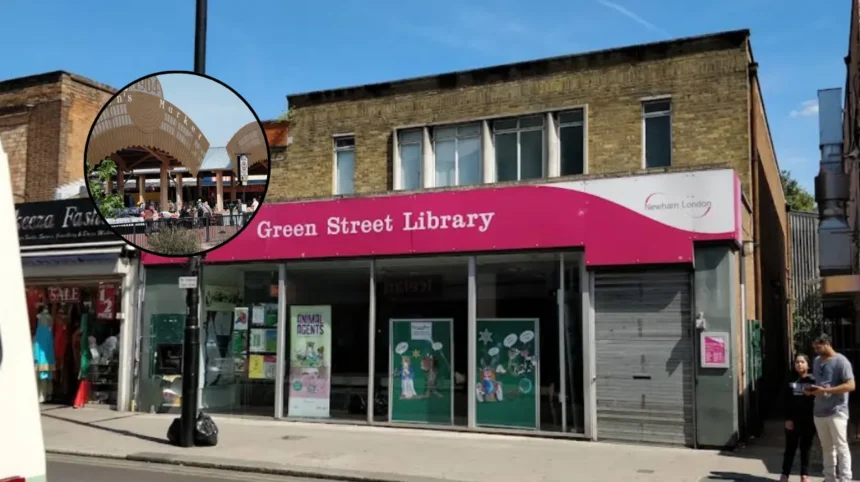
- A new £6.5m Green Street Library in the London Borough of Newham is set to open to the public on Monday, 28 September.
- The facility is twice the size of the former library it replaces and represents the completion of a six-year regeneration scheme targeting Queen’s Market and the surrounding area.
- Funding was secured through a joint effort involving the Greater London Authority’s Good Growth Fund, the Government’s Levelling Up Fund, and Newham Council.
- More than 1,600 local residents directly shaped the design, layout, and internal artwork through workshops, working groups, surveys, and Minecraft sessions.
- The facility sits directly below Hamara Ghar, a dedicated accommodation complex for residents aged over 55.
- Newham Council highlights the development as a counter-trend to nationwide library closures, which have seen nearly 200 council-run facilities close across England since 2016.
Newham (East London Times) September 26, 2026 — A major £6.5m regeneration project in East London will reach completion next week as the London Borough of Newham officially opens the doors to its new Green Street Library. Opening to the public on Monday, 28 September, the multi-purpose venue is double the floor space of the facility it replaces. The project marks the final milestone of a multi-year effort to revitalise the Queen’s Market precinct and surrounding infrastructure. Led by Newham Council’s placemaking team, the financial backing was assembled through a combination of local government capital, the Greater London Authority’s Good Growth Fund, and the central Government’s Levelling Up Fund. Over 1,600 members of the community contributed to the design phase through consultative panels, surveys, and digital modelling initiatives, resulting in custom floor plans and bespoke public art installations throughout the interior.
- Key Points
- What features does the new £6.5m Green Street Library offer to the local community?
- How does Newham Council view this library launch against national trends?
- What is the background of the Queen’s Market regeneration project?
- How will the opening of Green Street Library affect local residents and library users?
What features does the new £6.5m Green Street Library offer to the local community?
The newly constructed facility has been expanded to twice the physical footprint of the previous library, designed to act as a broad social and economic hub rather than solely a book-lending repository. Built to accommodate diverse demographic needs within the borough, the layout incorporates dedicated zones for remote working, business growth, public health resources, and digital learning.
Specific attention was directed toward accommodating two key local demographics: younger residents and senior citizens. The building sits beneath Hamara Ghar, a specialized residential complex for individuals aged 55 and over. Following feedback from these occupants requesting high visibility and barrier-free access, the architectural plan integrated enhanced accessibility routes directly into the public space. Simultaneously, youth consultation panels—which included interactive sessions utilizing Minecraft software to draft spatial ideas—led to the creation of designated quiet study areas, safe communal spaces, and public internet terminals. The interior decor also features large-scale community-inspired murals informed by local workshops.
How does Newham Council view this library launch against national trends?
The development arrives during a period of sustained reduction in municipal library networks across the United Kingdom. Speaking on the strategic motivation behind the opening, Forhad Hussain, Mayor of Newham, highlighted the borough’s divergence from nationwide patterns of municipal expenditure cuts.
Mayor Hussain stated that at a time when libraries across England are closing at a rate of nearly twenty a year, the London Borough of Newham is bucking the trend. He noted that since 2016, an estimated 190 council-run libraries have shut their doors across the country, framing Green Street as a direct challenge to that trajectory.
Expanding on the operational philosophy of the new facility, Mayor Hussain explained that rather than scaling back, Newham has invested in maximising the library’s full potential, making it an essential piece of social infrastructure that serves the range of needs that bring local people through its doors, from health and wellbeing to business support. He added that in developing and delivering the whole project, the council listened to the voices of residents, including those living in Hamara Ghar who requested a visible and accessible space, as well as Newham’s young people who asked for comfortable, safe places to spend time, meet, study, and access online services. Mayor Hussain concluded that the venue will be far from the hushed environment most often associated with libraries, serving instead as a vibrant hub of community activity and engagement.
What is the background of the Queen’s Market regeneration project?
The inauguration of the Green Street Library represents the culmination of a six-year statutory and physical regeneration plan centered around Queen’s Market, one of East London’s long-standing commercial traditional street markets. Over the past decade, local authorities in urban centers have faced increasing pressures regarding urban density, ageing public assets, and shifting commercial habits. In Newham, municipal planning teams sought to modernize surrounding public assets without displacing established commercial traders or local residential communities.
The Queen’s Market scheme was designed to upgrade public realm access, improve safety, and replace outdated civic buildings with modern social infrastructure. Funding pathways required coordinated applications to both regional and national development funds. The Greater London Authority’s Good Growth Fund provided capital targeting community-led urban regeneration, while national Levelling Up monies were allocated to modernize local services and stimulate regional economic activity. The integration of public accommodation—such as the Hamara Ghar sheltered housing directly above the library complex—reflects broader urban planning strategies focused on co-locating municipal services with residential infrastructure to maximize land-use efficiency in high-density London boroughs.
Explore More Newham News
Green Street Library Opens Following £6.5M Queen’s Market Project Newham 2026
Newham Council Commences Engagement for £416m Housing Contract East London 2026
How will the opening of Green Street Library affect local residents and library users?
The opening of the Green Street Library directly impacts several distinct groups within the London Borough of Newham, ranging from elderly residents to small business owners and students.
Impact on elderly and vulnerable residents
For the residents of Hamara Ghar and the broader senior population in Green Street, the co-location of the library directly beneath residential housing eliminates mobility barriers to essential civic services. The availability of health and wellbeing resources, digital access support, and accessible community spaces within the immediate building framework provides a localized venue for social interaction, reducing isolation among older demographics.
Impact on children, students, and young people
Young people gain access to specialized study facilities and digital infrastructure within a secure, supervised environment. In an area where household overcrowding can present challenges for quiet academic work, the provision of expanded study desks, high-speed internet access, and dedicated youth spaces offers critical support for primary, secondary, and higher education students.
Impact on local entrepreneurs and the broader community
Local traders, freelancers, and small business operators around Queen’s Market are expected to utilize the dedicated business support services embedded within the facility. By providing desk space, meeting areas, and enterprise resources alongside traditional council services, the library acts as an economic incubator. For the general public, the expanded capacity ensures continued access to literary resources, municipal guidance, and communal events, establishing a permanent public asset amidst wider national reductions in local government community services.