Key Points
- Havering Council launched its ambitious Havering 2040 – Creating London’s Super Suburb initiative at the London Real Estate Forum 2026 held at the Guildhall.
- Councillor Robert Whitton, Cabinet Member for Regeneration, declared the London Borough of Havering is “open for business” to investors, developers, and enterprises.
- The local authority plans to establish Invest Havering, creating a single point of entry (“one front door”) to streamline planning, development, and investment enquiries.
- The local governance structure will integrate the Havering Growth Company, enabling it to advise, invest, partner, develop, or act as a master developer on major projects.
- Strategic growth is split into two core missions under The Havering Plan 2040: Grow Havering (attracting investment and jobs) and Build Havering (delivering housing, infrastructure, and town centre regeneration).
- The borough aims to create specialist Economic Growth Districts targeting high-growth sectors, including data and digital services, artificial intelligence, robotics, life sciences, and logistics.
- Havering operates as part of the Local London sub-region, a joint alliance spanning nine boroughs representing 40 per cent of London’s land area and 55 per cent of its developable land, with individual investment proposals ranging from £30 million to over £960 million.
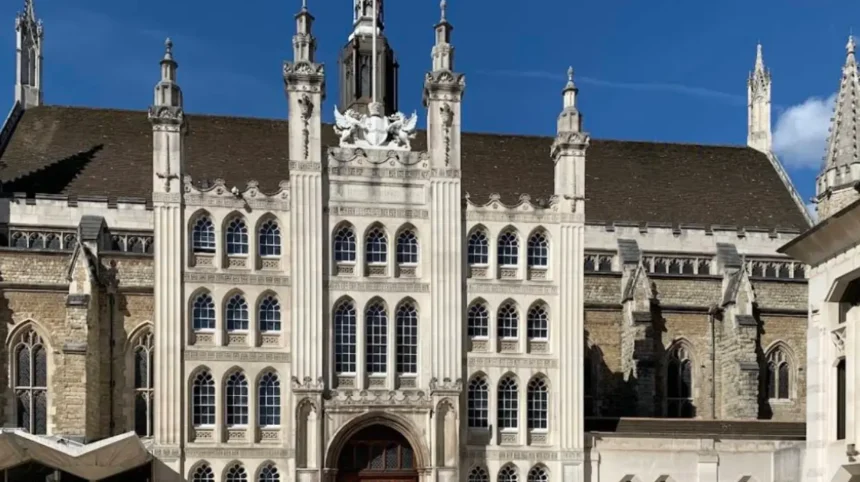
Havering (East London Times) September 29, 2026 – Havering Council has formally declared that the East London borough is “open for business,” unveiling a comprehensive strategic roadmap aimed at transforming the area into a principal hub for private investment, housing development, and commercial enterprise. Speaking on the Local London panel titled Delivering the Capital’s Next Wave of Growth at the London Real Estate Forum 2026 at the Guildhall, Councillor Robert Whitton, Cabinet Member for Regeneration, outlined the new administration’s strategic vision, designated Havering 2040 – Creating London’s Super Suburb. The event brought together local authority representatives, institutional investors, property developers, and urban planning leaders to discuss commercial opportunities and infrastructure requirements across northeast and southeast London.
- Key Points
- What Are the Key Operational Reforms Included in the Havering 2040 Strategy?
- How Will the Dual-Mission Framework Address Local Infrastructure and Economic Needs?
- What Is the Broader Context within the Local London Alliance?
- Background of the Havering 2040 Development Strategy
- Predictions: Impact on Key Stakeholders and Regional Groups
What Are the Key Operational Reforms Included in the Havering 2040 Strategy?
Central to the local authority’s new approach is a direct restructuring of how the council engages with commercial partners and developers. Acknowledging previous institutional hurdles that have historically slowed development in outer boroughs, Councillor Robert Whitton stated that if the local authority genuinely seeks sustained private capital, it must reform its internal processes to become significantly easier to conduct business with.
To resolve administrative fragmentation, the council is creating a unified portal named Invest Havering. This unit will function as a central access hub designed to prevent investors from having to navigate disparate municipal departments. Councillor Robert Whitton highlighted that behind this single point of access, the council will align its internal planning and administrative units with the Havering Growth Company. This corporate body will possess the operational capacity to advise, invest directly, form joint-venture partnerships, execute building works, or step in as a master developer on major complex regeneration sites across the borough.
How Will the Dual-Mission Framework Address Local Infrastructure and Economic Needs?
The framework governing The Havering Plan 2040 is built around two complementary missions intended to balance economic expansion with community infrastructure. The first arm, Grow Havering, focuses exclusively on business expansion, capital recruitment, and high-value job creation. The second arm, Build Havering, prioritises physical urban development, including new residential housing stock, transport infrastructure improvements, and commercial town centre regeneration.
In addition to residential and retail development, the plan establishes designated Economic Growth Districts designed to house emerging technology and scientific sectors. The targeted growth areas include data and digital services, artificial intelligence applications, robotics manufacturing and testing, life sciences, and modern commercial logistics networks. Councillor Robert Whitton emphasized that the long-term objective is to shift outer London away from being viewed purely as a residential dormitory zone for commuters. By taking advantage of its geographical location between central London and the county of Essex, the administration intends to build a local economy where residents can live, learn, and earn within the borough itself.
What Is the Broader Context within the Local London Alliance?
Havering’s investment showcase took place alongside partner local authorities forming the Local London partnership. Representing nine eastern and southeastern boroughs, the sub-regional sub-group accounts for approximately 40 per cent of Greater London’s total land area and holds 55 per cent of the capital’s total developable land. According to the partnership’s Investment Prospectus presented at the forum, development opportunities within this joint area range from localized projects valued at £30 million to strategic master-planned schemes exceeding £960 million.
Background of the Havering 2040 Development Strategy
Outer London boroughs have historically faced a distinct set of economic and structural challenges compared to inner London districts. Traditionally treated as suburban commuter zones, areas such as Havering have often seen high outbound transit movements every morning, leaving local high streets and commercial zones underutilised during working hours. Furthermore, navigating local authority processes across traditional council structures frequently created delays for commercial developers, leading institutional capital to favour central London sites.
The introduction of Havering 2040 – Creating London’s Super Suburb marks a formal transition towards municipal entrepreneurship and proactive planning policy. By forming the Havering Growth Company, the local authority joins a growing movement of UK municipalities taking direct commercial equity positions or serving as master developers on local regeneration schemes. This commercial approach is designed to generate sustainable revenue streams for the council while ensuring that local transport, health, and commercial facilities are constructed alongside new housing developments.
Explore More Havering Council News
Havering Council Faces Scrutiny Over £1.986bn Contract Register: Havering 2026
Havering Council Contracts Register Reveals £2 Billion Spending Havering 2026
Predictions: Impact on Key Stakeholders and Regional Groups
Property Developers and Institutional Investors
The creation of Invest Havering as a single point of entry is expected to reduce planning lead times, lowering early-stage capital risk for developers. The explicit willingness of the Havering Growth Company to co-invest or assume master developer status provides institutional investors with a clear mechanism for risk-sharing on large-scale infrastructure and residential regeneration projects.
Local Residents and First-Time Buyers
The dual focus under Build Havering will directly influence housing supply and local amenities. As development expands, residents are likely to see an increase in housing stock across diverse tenure models, alongside improvements to local town centers. However, during construction phases, local infrastructure may experience temporary pressure until new transport links, school places, and primary health facilities are brought fully online.
Commercial Businesses and Technical Sectors
The designation of specific Economic Growth Districts for fields like AI, life sciences, and logistics will likely attract tech firms and commercial tenants seeking lower floor-space costs than those in central London, while retaining direct transport links to the capital and the South-East. Small and medium enterprises already operating in Havering stand to benefit from increased supply-chain demand and higher footfall driven by local job creation.