Key Points
- Overnight Incident: A serious crash took place overnight near the Limehouse Link Tunnel, prompting an immediate response from emergency services and crash investigation teams.
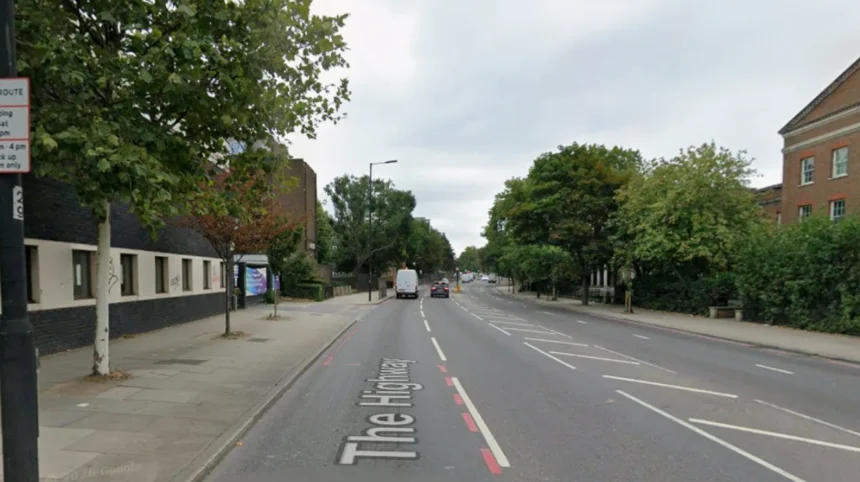
- Road Closure: The A1203 The Highway remains completely closed in both directions between Butcher Row and Butcher Row / Limehouse Link Tunnel while investigation work is carried out.
- Severe Congestion: Massive traffic queues have formed across East London, stretching back past Canary Wharf, deep into the Docklands, and affecting West India Dock Road towards the A13.
- Bus Diversions: Multiple major bus services, including route 100, have been forced onto local diversion routes, bypassing key stops near Limehouse.
- Ongoing Investigation: Metropolitan Police collision investigators remain on the scene to gather evidence, with no immediate timeframe confirmed for the reopening of the carriageway.
East London (East London Times) October 1, 2026 – Major disruption has gripped East London following an overnight collision that has forced the complete closure of a critical arterial route. Metropolitan Police collision investigators closed the A1203 The Highway in both directions near the Limehouse Link Tunnel in the early hours of Thursday, October 1, 2026. As peak rush hour commenced, the closure triggered severe traffic gridlock, creating long queues that stretched past Canary Wharf into the heart of the Docklands and onto surrounding connecting routes, including the West India Dock Road towards the A13. Emergency services, local council traffic controllers, and Transport for London (TfL) remain on site, working to clear the carriageway while collision specialists complete vital technical assessments.
- Key Points
- Why Is the A1203 The Highway Closed in Both Directions?
- Which Areas and Commute Routes Are Most Affected by the Delays?
- What Steps Are Authorities Taking to Resolve the Gridlock?
- Background of the A1203 and Limehouse Link Network
- Prediction: How Will This Development Affect East London Commuters and Local Businesses?
Why Is the A1203 The Highway Closed in Both Directions?
The prolonged closure of the A1203 The Highway is the direct result of an extensive crash investigation initiated by emergency services during the night. Metropolitan Police officers, along with crews from the London Ambulance Service, were dispatched to the scene following reports of a severe collision near the entrance of the Limehouse Link Tunnel. Due to the potential severity of the incident and the need to preserve essential physical evidence, collision investigation officers cordoned off the entire stretch of road in both directions.
Technical collision investigation involves high-precision measuring, scene mapping, vehicle inspections, and physical evidence recovery. Because the Limehouse Link Tunnel and The Highway form a high-speed, high-density traffic corridor, police units must ensure the area is fully safe and thoroughly analyzed before reopening the route to heavy vehicles. Local authorities confirmed that the carriageway will remain restricted until all forensic and physical site examinations conclude.
Which Areas and Commute Routes Are Most Affected by the Delays?
The road closure has created a widespread domino effect across the surrounding East London road network. Drivers attempting to navigate through Tower Hamlets, Limehouse, and the wider Docklands region are experiencing extreme delays.
Where Is the Traffic Queuing Most Severely?
The most acute congestion is concentrated along the following corridors:
- The Highway (A1203): Tailbacks stretch significantly past Canary Wharf, affecting residents and commuters attempting to travel west toward the City of London.
- West India Dock Road: Vehicles attempting to bypass the closure have backed up toward the A13 Commercial Road, creating severe bottlenecks at key junctions.
- Limehouse Link Tunnel Approaches: Tailbacks have spilled over into local arterial streets, forcing local commuter traffic onto residential thoroughfares ill-equipped for heavy volume.
- A13 East India Dock Road: Increased traffic density has been recorded eastbound and westbound as drivers seek alternative routes around the closure.
Transport for London has advised motorists to avoid traveling through Limehouse and the Docklands corridor entirely, recommending alternative routes via the A13 or public rail networks.
How Are Public Transport Services Impacted?
In addition to private vehicles and commercial freight, surface public transport has suffered substantial disruptions. Transport for London confirmed that multiple local bus services have been diverted away from their regular routes. Route 100, which serves key commuter routes between St Katherine Docks, Wapping, and Limehouse, is operating with major delays and running on modified diversions. Commuters are being urged to check live transit updates and rely on the London Underground, Docklands Light Railway (DLR), or Elizabeth line where possible to complete their journeys.
What Steps Are Authorities Taking to Resolve the Gridlock?
Metropolitan Police officers, TfL traffic management personnel, and local Tower Hamlets council teams are working on-site to mitigate the impact of the gridlock. Traffic signals across adjacent junction points have been manually re-timed to prioritize diverted traffic flows, and highway stewards have been deployed to key intersections to assist with vehicle direction. Transport for London issued real-time traffic alerts advising that while emergency services are expediting the investigation work, safety protocols dictate that the road cannot reopen until all physical debris is removed and the carriageway is inspected for highway damage or fluid spills.
Background of the A1203 and Limehouse Link Network
The A1203 The Highway, together with the Limehouse Link Tunnel, serves as one of the most vital east-west transport corridors in Greater London. Opened in its modern subterranean configuration in 1993, the Limehouse Link Tunnel was built to connect the City of London directly with the rapidly growing financial and residential hubs of Canary Wharf and the Isle of Dogs.
Handling tens of thousands of vehicles daily, the A1203 carries high volumes of personal vehicles, commercial logistics transport, and public service buses. Due to the high density of traffic and limited alternative thoroughfares passing through the tight geographical geography of the River Thames loops, any incident or closure on The Highway causes rapid gridlock throughout Tower Hamlets, Newham, and Southwark. Emergency protocol for this corridor necessitates immediate traffic diversions to prevent secondary collisions within the enclosed tunnel environment.
Prediction: How Will This Development Affect East London Commuters and Local Businesses?
This sudden and extended closure of the A1203 corridor will have several short-term and medium-term impacts on local stakeholders, commuters, and businesses across East London:
- Impact on Daily Commuters: Commuters traveling between Canary Wharf, Docklands, and central London face extended journey times throughout the day. With surface roads saturated, heavy pressure will shift onto the DLR and Underground networks, leading to platform crowding during peak travel hours.
- Impact on Logistics and Freight: Local delivery services, commercial freight operators, and supply chain logistics relying on the A1203 to move goods into the City and West End will experience delays, likely causing cascading disruptions for local deliveries across Tower Hamlets and neighboring boroughs.
- Impact on Local Residents: Residential areas in Limehouse, Wapping, and Poplar will contend with persistent traffic overflow and higher noise levels as drivers attempt to navigate narrow residential roads to bypass gridlocked main highways.
- Impact on Regional Traffic Operations: Should the crash investigation extend into the evening rush hour, transport authorities will likely implement emergency regional diversions, redirecting major arterial traffic further north toward the A11 and A12, spreading congestion across a broader area of Greater London.