Key Points
- Planning Recommendation: Havering Council planning officers have formally recommended the refusal of a proposal to convert a residential property at 2 Olive Street, Romford, into a House in Multiple Occupation (HMO) for up to six residents.
- Core Grounds for Refusal: Council planners identified three distinct grounds for rejection, focusing primarily on increased noise levels, heightened general disturbance, and the loss of traditional single-family housing stock.
- Policy Conflicts: The proposed development was found to directly violate Havering Council’s local development plan framework and statutory planning guidelines regarding residential density and living conditions.
- Decision Mechanism: The final planning notice is expected to be formally issued under delegated powers by local authority planning officers.
- Wider Regulatory Enforcement: The decision aligns with a broader borough-wide crackdown by Havering Council against unauthorised and unsuitable HMO developments across Romford and surrounding areas.
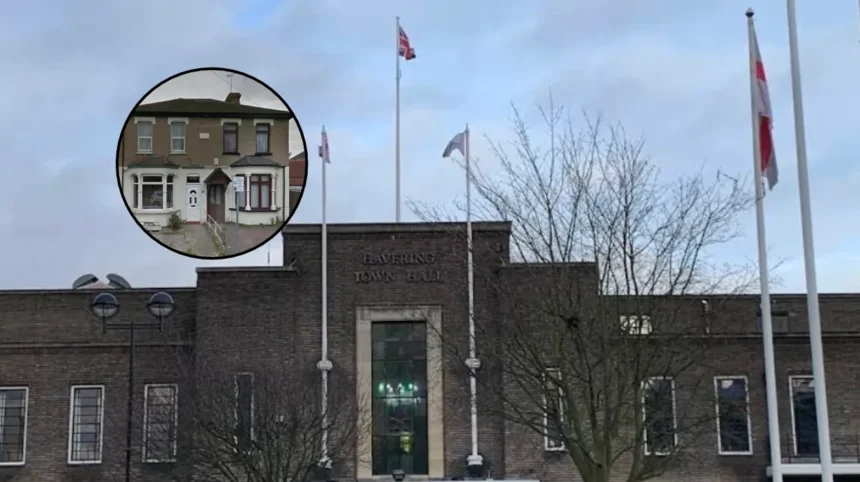
Romford (East London Times) October 16, 2026 – Havering Council planning officers have formally recommended the rejection of a planning application to convert a single-family residential dwelling located at 2 Olive Street, Romford, into a six-person House in Multiple Occupation (HMO). Following an extensive assessment by local authority urban planners, official documentation reveals that the scheme failed to comply with statutory local planning policies, leading officers to determine that the development would generate unacceptable levels of noise, disturbance, and activity for neighbouring residents within the residential street.
Why Has Havering Council Moving to Block the Olive Street HMO Scheme?
As reported by Annabel Stock of the Romford Recorder, planning officers concluded that the proposed conversion conflicted with Havering Council’s established planning policies on HMOs and determined that the application should be refused on three separate planning grounds. Officers noted that intensifying the use of a traditional family residential building to accommodate up to six un-related individuals would introduce an unneighbourly level of noise and environmental disturbance to the immediate vicinity.
According to official planning assessments cited by Annabel Stock of the Romford Recorder, local council officers highlighted that the conversion of single-family housing stock into high-density multi-occupancy units erodes the character of established residential areas. The council’s evaluation determined that the physical layout, potential vehicle movements, and cumulative intensity of multi-tenant living at 2 Olive Street were inconsistent with maintaining adequate living conditions for both adjacent occupiers and future tenants. A final formal decision notice confirming the refusal is set to be issued under delegated officers’ powers.
How Does This Refusal Fit Into Havering’s Wider HMO Enforcement Strategy?
The planning recommendation for the Olive Street property comes amid an intensified regulatory stance by the London Borough of Havering regarding Houses in Multiple Occupation across the borough. As reported by Gianni Cirillo of the Romford Recorder, Havering Council recently refused retrospective planning permission for a 10-person HMO operating above the former Triangle pub on North Street, Romford, ordering the operation to cease following concerns over community impact and unauthorized conversion.
Furthermore, as highlighted in broader local authority reporting by the Romford Recorder, council enforcement teams have recently issued formal enforcement notices against multiple unpermitted HMO operations, including properties situated on Thameshill Avenue in Collier Row, requiring property owners to halt illegal multi-occupancy operations or face legal proceedings. Local political representatives and community groups have increasingly raised objections regarding the impact of HMO conversions on local parking capacity, waste management services, and community cohesion.
Background of the Particular Development
Houses in Multiple Occupation (HMOs) have become a focal point of urban planning policy across Outer London boroughs, particularly within Havering, where demand for flexible and lower-cost private rented accommodation has risen significantly over the past decade. Local authorities utilize HMO policies to balance the supply of affordable rental housing with the preservation of existing single-family homes and neighborhood amenity standards.
Under Havering Council’s local planning framework, proposals to convert standard class C3 residential dwellings into HMOs undergo stringent assessments regarding room sizes, communal space standards, sound insulation, refuse storage, and off-street parking provision. Over recent years, local ward councillors and residents’ associations have actively lobbied the council to exercise tighter scrutiny over conversion applications, arguing that high concentrations of HMOs lead to over-development, parking congestion, and increased strain on localized public infrastructure. Consequently, Havering Council has increasingly applied strict policy thresholds, resulting in a higher rate of refusals and enforcement actions against non-compliant or unpermitted conversions.
Prediction: How This Development Can Affect Local Residents, Property Owners, and Renters
The decision by Havering Council planning officers to reject the Olive Street HMO proposal is likely to have direct short-term and long-term implications for several key stakeholder groups across the Romford area:
- Local Residents and Homeowners: For immediate neighbours on Olive Street and surrounding residential roads, the council’s refusal provides protection against increased density, noise pollution, and potential parking shortages. This outcome reinforces precedents that safeguard existing residential amenity standards, reassuring local homeowners that single-family residential character will be upheld by planning authorities.
- Property Landlords and Developers: Property investors seeking to convert single-family homes into HMOs within Havering will face higher barriers to entry. Landlords will need to ensure that future proposals demonstrate strict adherence to room size guidelines, noise mitigation, and community impact criteria before submitting applications. The threat of formal enforcement may deter prospective developers from attempting unauthorized or marginal conversions.
- Local Private Renters: While the rejection of high-density HMOs preserves traditional housing stock, it simultaneously limits the expansion of lower-cost, single-room rental accommodations in central Romford. Prospective tenants seeking affordable shared housing may experience heightened competition and upward pressure on rental prices for existing licensed HMO rooms across the borough.