Key Points
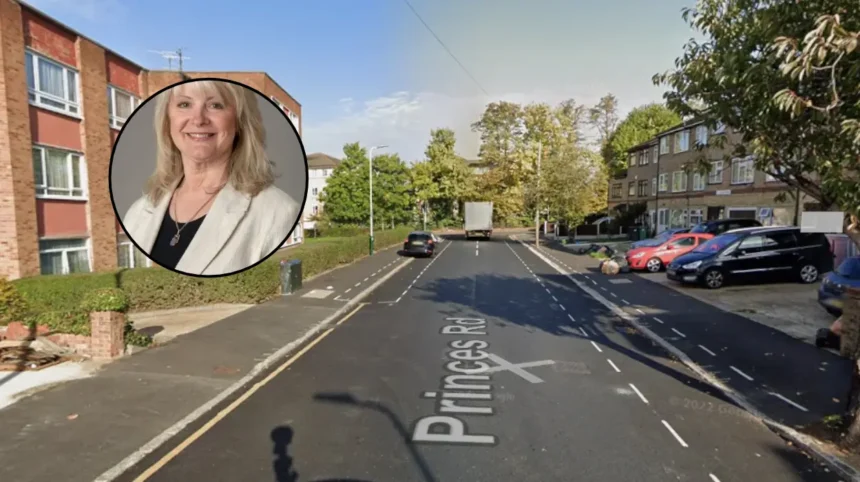
- Formal Objection Registered: Reform UK Councillors Diane Smith and Russell Smith have formally challenged planning application P1134.26 regarding 1 Princes Road, Romford.
- Requested Committee Review: The St Alban’s Ward representatives have exercised their privilege to call in the application, ensuring it is determined by the council’s planning committee rather than through delegated officer powers.
- Infrastructure and Amenity Concerns: The elected representatives argue that converting the family dwelling into a House in Multiple Occupation (HMO) will exacerbate local parking constraints and strain existing public services.
- Residential Impact: Issues concerning heightened noise levels, elevated daily disturbance, and a shift in the established suburban character of the street were highlighted as primary grounds for objection.
- Housing Stock Protection: The councillors emphasized the imperative need to preserve family-sized residential units within Havering to prevent the ongoing loss of standard housing stock.
- Broader Policy Context: This specific challenge coincides with broader efforts by Havering’s Reform UK administration to introduce a borough-wide Article 4 Direction to restrict permitted development rights for HMO conversions.
Havering (East London Times) October 20, 2026 – St Alban’s Ward Councillors Diane Smith and Russell Smith have lodged a formal objection to planning application P1134.26, which seeks to convert a single-family residential property at 1 Princes Road, Romford, into a House in Multiple Occupation (HMO). The Reform UK elected members have officially called in the proposal for detailed scrutiny by Havering Council’s planning committee, asserting that the transformation would harm the amenity of neighbouring properties, intensify competition for local curb space, and place undue strain on municipal infrastructure. The objection underlines a growing political debate within the borough regarding the retention of family housing stock against the backdrop of increasing high-density residential developments.
- Key Points
- Why are Romford councillors opposing the conversion of 1 Princes Road into an HMO?
- What statements were issued by Councillors Diane and Russell Smith regarding the Princes Road application?
- How does the Princes Road objection align with Havering’s broader housing policy?
- Background of the particular development
- Prediction: How this development can affect local residents and property owners
Why are Romford councillors opposing the conversion of 1 Princes Road into an HMO?
The formal challenge centered on 1 Princes Road reflects heightened scrutiny over the conversion of traditional single-family dwellings into multi-occupancy units within Havering. Planning application P1134.26 outlines the intention to alter the internal configuration of the property to accommodate multiple independent occupants sharing communal facilities.
In their formal submission to the local planning authority, Councillors Diane Smith and Russell Smith outlined specific structural and environmental objections. The representatives argued that the intensity of use associated with an HMO exceeds the baseline impact of a standard family home. They noted that an increase in the density of residents would naturally generate higher volumes of domestic waste, increased traffic movements, and heightened demand for on-street parking along Princes Road and adjacent residential corridors.
Furthermore, the objectors highlighted the potential for elevated noise levels and general disturbance stemming from the higher turnover of occupants typical of HMO properties. According to the submission, such factors risk disrupting the quiet enjoyment of surrounding properties and altering the established residential atmosphere of St Alban’s Ward.
What statements were issued by Councillors Diane and Russell Smith regarding the Princes Road application?
In a joint statement setting out their rationale for calling in planning application P1134.26, Councillors Diane Smith and Russell Smith reaffirmed their commitment to scrutinising residential proposals that potentially compromise local living standards.
Councillors Diane and Russell Smith stated that:
“We were elected to stand up for local residents, protect our communities and ensure that inappropriate developments are properly challenged.
“Turning another family home into an HMO raises serious concerns about parking, noise, pressure on local services and the wider character of our neighbourhoods.
“Family homes should be protected for families, and residents should not have to bear the consequences of unsuitable developments being imposed on their communities.
“That is why we have formally called in this application and will continue to stand up for the interests of residents across St. Alban’s Ward.”
The statement underscores the strategic stance taken by the ward members, who contend that the cumulative loss of family accommodation presents a long-term challenge to the structural balance of the local housing market.
How does the Princes Road objection align with Havering’s broader housing policy?
The specific objection to the Princes Road development occurs alongside a broader strategic push by Havering Council’s Reform UK administration to tighten planning controls across the entire borough. Local authorities across Greater London have increasingly scrutinised HMO conversions due to concerns regarding living conditions, over-concentration, and administrative oversight.
At present, national permitted development rights permit certain conversions from a Class C3 dwellinghouse to a Class C4 HMO without the necessity for a full planning application, provided specific criteria are met. However, local authorities retain the statutory power to enact an Article 4 Direction under the Town and Country Planning Act.
Havering’s administration is currently pursuing the implementation of a borough-wide Article 4 Direction. Once enacted, this legal mechanism effectively removes automatic permitted development rights for HMOs, forcing developers to seek explicit planning permission for any proposed conversion, regardless of scale. The stance taken on 1 Princes Road serves as a practical application of this policy direction, reflecting the administration’s stated goal of maintaining oversight over residential conversions.
Background of the particular development
The planning application for 1 Princes Road, submitted under reference P1134.26, represents the latest in a series of HMO applications within the Romford area over recent years. Romford, functioning as a primary commercial and transport hub within the London Borough of Havering, has experienced steady demand for flexible, lower-cost private rented accommodation. This demand has driven property owners and developers to convert traditional Victorian, Edwardian, and mid-twentieth-century family terraces into shared housing units.
Historically, Havering maintained a high proportion of owner-occupied, single-family suburban housing compared to inner London boroughs. However, shifts in housing affordability, demographic trends, and rental market dynamics have led to an increase in HMO submissions. In response to growing complaints from residents regarding street parking congestion, refuse management issues, and anti-social behaviour linked to high-density lets, local ward councillors have increasingly utilised the “call-in” procedure. This procedural step removes administrative delegation from planning officers, forcing a public debate and vote by elected members on the Planning Committee.
Prediction: How this development can affect local residents and property owners
The outcome of planning application P1134.26 and the associated policy trajectory in Havering are poised to impact several distinct groups within the local community:
Local Residents and Neighbouring Households
Should the planning application be refused following the committee review, immediate neighbours on Princes Road will likely see a stabilization of local parking availability and ambient noise levels. Conversely, if the application is ultimately approved or granted on appeal, surrounding households may experience increased competition for curb space and greater pressure on localized amenities such as refuse collection services. The ongoing challenge by ward councillors sends a clear signal to residents that community objections regarding residential density are receiving formal advocacy at the council level.
Local Housing Market and Prospective Families
A firm policy stance against HMO conversions helps safeguard the availability of traditional three- and four-bedroom family dwellings within St Alban’s Ward. Preserving these properties prevents the dwindling of standard housing stock, maintaining opportunities for young families seeking long-term accommodation in Romford. However, a restricted supply of HMO units could simultaneously limit options for single professionals, key workers, and lower-income tenants who rely on affordable shared housing within the borough.
Property Developers and Landlords
The active intervention by Reform UK councillors, combined with the proposed borough-wide Article 4 Direction, signals a stricter regulatory environment for property investors in Havering. Landlords and developers targeting Romford for high-yield HMO conversions face increased planning risk, longer approval timelines, and potential legal costs associated with planning appeals. This regulatory shift may encourage developers to pivot toward standard residential refurbishments or redirect shared-housing capital toward neighbouring boroughs with less restrictive planning frameworks.