Key Points
- Metropolitan Police Operation: Havering Police participated in Operation Zoridon, a major two-week London-wide initiative targeting retail units suspected of trading in illicit products and stolen items.
- Significant Enforcement Results: Across London, the operation led to 42 arrests, 11 shop closure notices, and visits to approximately 400 retail premises identified through months of joint intelligence work.
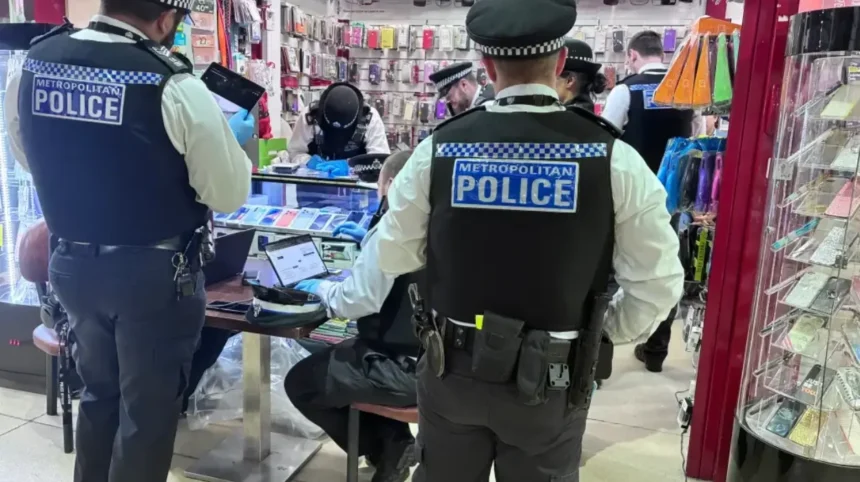
- Romford Enforcement Actions: Local officers targeted retail units in Romford on Tuesday, seizing mobile phones suspected of being stolen as well as illegal tobacco products.
- Substantial Seizures: Seized items across the capital included high-value cosmetics, electrical goods, mobile phones, and food products, with total suspected stolen stock valued in the tens of thousands of pounds.
- Multi-Agency Leadership: The operation was coordinated through joint intelligence gathering between the Metropolitan Police, local retailers, and Trading Standards, with Inspector Routley leading Operation Zoridon for the East Area alongside Inspector Harris overseeing actions in Romford.
Havering (East London Times) October 22, 2026 – Havering Police officers executed targeted visits against retail premises in Romford as part of a coordinated London-wide enforcement drive named Operation Zoridon. The multi-agency operation targeted rogue retailers suspected of purchasing and reselling stolen merchandise and dealing in non-compliant tobacco products.
- Key Points
- How did Operation Zoridon execute its London-wide strategy against rogue retailers?
- What specific actions were taken by Havering Police in Romford?
- Which legal measures and enforcement powers were utilized?
- How did multi-agency intelligence support the operation?
- What is the background behind this crackdown on retail crime in London?
- How will this enforcement action affect local retailers and the Romford community?
How did Operation Zoridon execute its London-wide strategy against rogue retailers?
The Metropolitan Police Service organized the two-week initiative across multiple boroughs following months of preparatory intelligence gathering. Officers visited approximately 400 retail shops identified as potential points of distribution for illicit stock and stolen goods.
The primary objective of the strategy was to disrupt the economic infrastructure supporting retail crime by targeting businesses that provide a commercial outlet for stolen goods and illegal items.
What items were seized during the borough-wide raids?
Search teams recovered a significant volume of suspected stolen merchandise and non-compliant goods across the visited locations. Items seized by police personnel included:
- Cosmetics and Beauty Supplies: High-value personal care items suspected of being stolen from high-street stores.
- Electrical Goods and Mobile Devices: Electronic consumer items, specifically including mobile phones removed from premises in Romford.
- Illicit Tobacco: Non-duty paid and illegal tobacco products removed from retail shelves.
- Packaged Food Products: Consumable goods suspected of entering illicit supply chains.
The Metropolitan Police reported that the total value of recovered stock across London reached the tens of thousands of pounds.
What specific actions were taken by Havering Police in Romford?
As part of the local phase of Operation Zoridon, Havering Police officers conducted targeted operations on Tuesday against specific retail units operating within Romford.
During these visits, officers inspected stock levels, checked serial numbers, and searched storage areas. The operation resulted in the removal of mobile devices suspected of being stolen property and the confiscation of illegal tobacco products found on the premises.
The operations within the East Area command were overseen by Inspector Routley, who serves as the lead officer for Operation Zoridon in the district, alongside Inspector Harris, who directed local activity across the Romford town centre and surrounding retail sectors.
Which legal measures and enforcement powers were utilized?
To stop illicit trading, police and municipal partners employed administrative and criminal procedures against non-compliant businesses.
How did multi-agency intelligence support the operation?
Operation Zoridon relied on a collaborative framework established months prior to the physical raids. The Metropolitan Police partnered directly with local Trading Standards departments and commercial retail groups to build intelligence profiles on rogue traders.
By cross-referencing reports from high-street retailers regarding repeated thefts with inventory checks and consumer complaints submitted to Trading Standards, authorities identified patterns of distribution. This multi-agency planning enabled officers to focus enforcement actions precisely on premises suspected of facilitating the resale of stolen inventory.
What is the background behind this crackdown on retail crime in London?
Retail theft and the illicit trade in high-street goods have seen increased scrutiny across Metropolitan Police sectors over recent years. Organised shoplifting networks frequently rely on dishonest or unregistered retail outlets—often referred to as “fencing networks”—to liquidate stolen inventory into cash quickly.
Items such as high-value cosmetics, prescription-free pharmaceuticals, branded food products, and mobile electronics are particularly vulnerable to organized theft due to their portability and high resale demand. Simultaneously, the distribution of illegal tobacco bypassing UK tax and safety standards presents persistent compliance challenges for local authority Trading Standards teams.
Previous localized actions highlighted that tackling shoplifting effectively requires addressing the commercial demand created by rogue shopkeepers. Operation Zoridon was instituted as a strategic, multi-borough solution to disrupt this supply chain at the retail point of sale, ensuring that businesses buying illicit stock face legal consequences alongside individual thieves.
How will this enforcement action affect local retailers and the Romford community?
This development is expected to produce significant operational, economic, and social effects across local business communities, consumers, and law enforcement agencies in Romford and the broader London area.
Impact on Law-Abiding Retailers
Legitimate shopkeepers and high-street chains in Romford are likely to experience a reduction in unfair competition. Rogue retailers selling stolen goods or non-duty-paid tobacco undercut compliant businesses by offering products below market price. By shutting down non-compliant shops and seizing illicit inventory, legitimate businesses gain a fairer trading environment and reduced financial loss from organized theft networks.
Impact on Organized Crime Networks
The confiscation of tens of thousands of pounds in stock and the arrest of key facilitators disrupt the financial pipeline of local criminal groups. Depriving thieves of local retail buyers increases the risk and difficulty associated with liquidating stolen merchandise, which may lead to a temporary decrease in opportunistic and organized shoplifting incidents in town centres like Romford.
Impact on Consumers and Community Safety
While consumers seeking low-cost items lose access to illicit vendors, public safety and consumer protection are significantly enhanced. Illegal tobacco products often fail safety testing and regulatory checks, posing increased health and fire hazards. Furthermore, curbing the street-level economy around rogue shops helps reduce anti-social behaviour and secondary crimes in retail corridors, creating a safer shopping environment for the general public.