Key Points
- Storm Austen Threat: Storm Austen, the first named storm of the 2026 UK storm season, is forecast to bring severe gales and heavy rainfall across southern England and east London between October 22 and October 23.
- Expert Roof Guidance: James Roe, the founder of Rainham-based trade business UK Roofing Specialist, has issued urgent preventative maintenance and safety advice to homeowners ahead of the gale-force winds.
- Ground-Level Inspections: Householders are urged to check their roofs strictly from ground level, utilizing mobile phone camera zooms to spot slipped tiles, loose guttering, or detached fittings rather than climbing onto property structures.
- Insurance Preparedness: Property owners should ensure insurer contact information is stored accessibly, take photo documentation of any structural damage from safe positions, and confirm policy guidelines prior to authorizing non-emergency repairs.
- Prohibition of DIY Ladder Work: Local residents are strictly warned against ascending ladders, scaling roofs, or attempting external structural repairs while high winds persist, with all physical interventions deferred until weather conditions stabilise.
- National Meteorological Warnings: The Met Office has issued severe weather yellow warnings for strong winds reaching up to 60 to 70 miles per hour across southern coastal districts and inland areas, with rapid atmospheric deepening caused by explosive cyclogenesis.
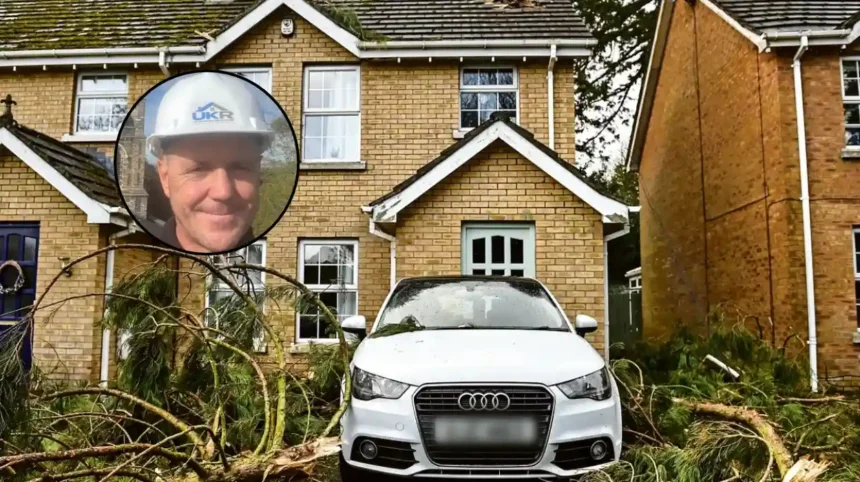
Rainham (East London Times) October 22, 2026 – As reported by Gianni Cirillo of the Romford Recorder, James Roe, the founder of the Rainham-based firm UK Roofing Specialist, has issued critical safety guidance to homeowners across east London as Storm Austen moves across the region on October 22 and October 23. The incoming weather system, which represents the initial named storm of the 2026/2027 British atmospheric season, is expected to bring heavy downpours and gale-force wind gusts that present a physical hazard to residential building infrastructure and domestic property boundaries.
- Key Points
- What Precautionary Steps Should Homeowners Take Before High Winds Arrive?
- How Should Residents Handle Insurance Claims and Emergency Repairs During the Storm?
- Why Are DIY Roof and Exterior Repair Attempts Strictly Discouraged?
- How Is Storm Austen Deepening Across the Southern United Kingdom?
- What Is the Background of This Particular Development?
- What Is the Prediction for How This Development Will Affect the Particular Audience?
What Precautionary Steps Should Homeowners Take Before High Winds Arrive?
As reported by Gianni Cirillo of the Romford Recorder, James Roe advised local residents that proactive steps taken prior to the arrival of severe weather conditions can significantly mitigate the risk of structural property damage. As reported by Gianni Cirillo of the Romford Recorder, James Roe stated that
“Taking a few simple precautions before the weather worsens can help protect your home.”
The primary recommendation involves evaluating the physical integrity of domestic roofs, guttering systems, and roofline accessories without exposing residents to physical danger. As reported by Gianni Cirillo of the Romford Recorder, James Roe recommended that property owners “Check your roof from ground level.” As reported by Gianni Cirillo of the Romford Recorder, James Roe further instructed residents to “Look for visibly slipped or missing tiles, loose guttering and anything hanging away from the roof.”
To ensure personal safety and avoid unnecessary elevation risks, homeowners are urged to avoid using ladders or scaling heights during period inspections. As reported by Gianni Cirillo of the Romford Recorder, James Roe advised residents to “Use your phone’s zoom – don’t climb up to investigate.”
How Should Residents Handle Insurance Claims and Emergency Repairs During the Storm?
In addition to visual structural checks, guidance has been provided regarding the administrative and logistical steps required should a home suffer structural damage during the passage of Storm Austen. As reported by Gianni Cirillo of the Romford Recorder, James Roe emphasised the importance of rapid administrative readiness, stating: “Keep your insurer’s details handy.”
If structural degradation, water ingress, or tile displacement occurs during the period of intense weather, householders must prioritize safety and accurate record-keeping over immediate physical intervention. As reported by Gianni Cirillo of the Romford Recorder, James Roe noted:
“If damage occurs, photograph it from a safe position and contact your insurer promptly.”
Furthermore, as reported by Gianni Cirillo of the Romford Recorder, James Roe added that residents should “Check their requirements before authorising permanent repairs.”
Why Are DIY Roof and Exterior Repair Attempts Strictly Discouraged?
A major element of the expert guidance centers on the severe personal safety hazards associated with amateur building maintenance during active meteorological warnings. As reported by Gianni Cirillo of the Romford Recorder, James Roe issued an explicit warning prohibiting individuals from climbing ladders, accessing roof structures, or attempting external physical maintenance while wind speeds remain high.
As reported by Gianni Cirillo of the Romford Recorder, James Roe stressed that “Professional inspections and repairs must wait until conditions and access are safe.” The guidance underscores that secondary structural damage or personal injury can be prevented by waiting for qualified roofing professionals to conduct physical surveys after gale-force conditions have fully subsided.
How Is Storm Austen Deepening Across the Southern United Kingdom?
As reported by Jamie Grierson of The Guardian, the Met Office officially named Storm Austen ahead of its arrival, issuing severe weather yellow warnings for strong winds across vast swathes of southern England, south Wales, and adjacent inland zones. As reported by Lucy Verasamy of ITV News, Storm Austen represents a deep low-pressure system that rapidly intensified over the Atlantic Ocean through a meteorological process known as explosive cyclogenesis. As reported by Lucy Verasamy of ITV News, this rapid intensification significantly increases the likelihood of disruptive weather patterns as the system tracks eastward toward the North Sea.
As reported by Dr Ambrogio Volontè of the University of Reading, Storm Austen’s rapid deepening was driven by its interaction with a powerful Atlantic jet stream, combining a sharpening atmospheric trough and jet streak dynamics. As reported by the Met Office news team, coastal areas exposed to the storm could experience peak wind gusts exceeding 70 miles per hour, while inland regions across southern England and east London are anticipating widespread gusts ranging between 50 and 60 miles per hour. Met Office forecasters warned that these wind levels carry a substantial risk of falling tree branches, loose debris, localized power outages, and disruption to regional transport networks.
What Is the Background of This Particular Development?
The arrival of Storm Austen marks the formal commencement of the 2026/2027 storm naming calendar established jointly by the Met Office, Met Éireann, and KNMI to heighten public awareness of severe weather events across the British Isles and western Europe. Over recent years, autumnal and winter storms impacting east London have increasingly highlighted structural vulnerabilities in urban and suburban housing stock, particularly regarding aging pitched roofs, clay tile fixtures, and domestic rainwater drainage systems.
East London boroughs such as Havering, Barking and Dagenham, and Redbridge feature high densities of Victorian, Edwardian, and mid-twentieth-century residential housing. These architectural styles are susceptible to high-wind events, where wind uplift forces can displace loose roof tiles, detach mortar beddings on ridge caps, and collapse compromised chimney structures. Consequently, trade organizations and local roofing specialists in areas such as Rainham regularly issue public safety guidance during named weather events to prevent preventable emergency incidents, lessen emergency service strain, and clarify insurance protocols prior to major storm landfall.
What Is the Prediction for How This Development Will Affect the Particular Audience?
The combination of gale-force winds, heavy localized rainfall, and hazardous travel conditions associated with Storm Austen is predicted to directly impact property owners, commuters, and small business operators across east London in the immediate term. Homeowners who adhere to ground-level inspection advice are significantly less likely to suffer personal injuries or incur uncoordinated financial outlays for unapproved emergency work. Conversely, properties with unaddressed roof defects, loose fascia, or blocked guttering may suffer immediate water infiltration, resulting in structural ceiling damage and insurance disputes if documentation protocols are overlooked.
For the wider community, localized travel delays are expected across road networks such as the A13, A127, and the M25 orbital route due to potential windblown debris, surface water flooding, and temporary speed restrictions. Public transport networks, including Transport for London rail services and suburban bus routes through Havering and surrounding boroughs, may experience temporary cancellations or speed curtailments. Furthermore, trade businesses and roofing contractors expect a significant surge in post-storm inspection requests once weather conditions calm on October 24, as residents seek formal assessments and permanent repairs for storm-damaged properties.