Key Points
- West Ham United hosted its latest Fan Advisory Board (FAB) meeting, providing an open forum between supporter representatives and club executives.
- Official minutes from the session reveal detailed discussions surrounding the ongoing operational, atmosphere, and infrastructural challenges at the London Stadium.
- Club leadership acknowledged historical promises made during the transition from Upton Park (Boleyn Ground) and addressed current fan dissatisfaction.
- Key operational topics raised included stadium seating configurations, ticketing policies, stadium concourse amenities, and matchday stewarding.
- Executive board members pledged to maintain continuous dialogue with venue owners, E20 Stadium LLP, and venue operators to push for infrastructure improvements.
- The meeting highlighted a commitment from club management to review matchday entry protocols and seating allocations for domestic and European fixtures.
West Ham United (East London Times) October 28, 2026 — West Ham United Football Club executives met with supporter representatives during the latest Fan Advisory Board assembly to address long-standing grievances regarding the matchday experience at the London Stadium. The release of the official meeting minutes has illuminated the internal discussions held between club authorities and the fanbase, bringing renewed focus to the operational friction that has persisted since the club vacated the Boleyn Ground in 2016. Club officials utilized the session to respond directly to supporter queries, outlining future operational objectives while confronting historical pledges made during the venue transition.
- Key Points
- What Was Discussed at the Latest West Ham Fan Advisory Board Meeting?
- Why Is the London Stadium Still a Point of Contention for Supporters?
- What Promises Were Made Regarding Matchday Operations and Ticketing?
- How Will Ticketing and Seating Policies Be Evaluated?
- How Are Infrastructure and Atmosphere Enhancements Being Handled?
- Background of the London Stadium Relocation and Tenant Governance
- Prediction: How Will These Developments Affect West Ham United Supporters and Club Operations?
What Was Discussed at the Latest West Ham Fan Advisory Board Meeting?
How did the session unfold between club representatives and supporter delegates? As recorded in the official documentation released by West Ham United, the Fan Advisory Board gathered to discuss a broad range of operational, financial, and logistical matters affecting match-going supporters. The board, established to facilitate direct communication between the club’s senior leadership and the fanbase, serves as a formal consultative body where key decision-makers hear feedback regarding stadium governance.
During the proceedings, supporter representatives submitted inquiries concerning matchday stewarding, queueing protocols outside the turnstiles, food and beverage pricing on the concourses, and the ongoing structural limitations of the multi-purpose arena. Executive directors present at the meeting reviewed these submissions, acknowledging the persistent friction points that affect supporters during Premier League and cup fixtures.
The minutes indicate that board members engaged in extended deliberations regarding how the club can better influence stadium management decisions. Because West Ham United operates as a tenant within the London Stadium, primary operational oversight rests with the venue operator and the landlord, E20 Stadium LLP. Club executives reiterated that while direct operational control remains divided, the club continues to advocate on behalf of its supporter base during joint operational committee meetings.
Why Is the London Stadium Still a Point of Contention for Supporters?
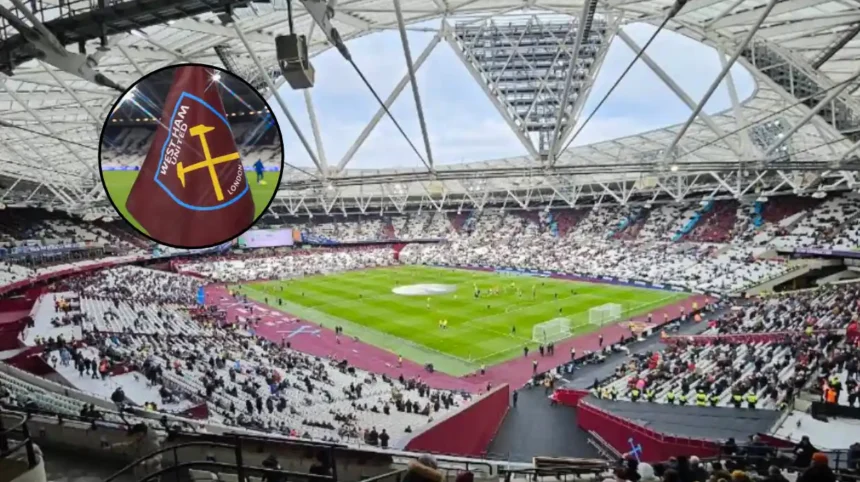
Why do issues surrounding the venue continue to create a divide between the board and the Hammers fanbase? Ever since the strategic relocation from Upton Park to the Queen Elizabeth Olympic Park, the transition has generated substantial debate among supporters. The physical design of the stadium—originally constructed as an athletics venue for the 2012 Olympic Games—inherently positions spectators further from the pitch compared to traditional football grounds.
As noted in the meeting minutes, supporter representatives highlighted that the distance between the stands and the playing surface continues to impact the home atmosphere. The lower bowl seating tracks, which require re-configuration between the football season and summer events, remain a central logistical challenge. Supporters raised concerns over the sightlines in specific sectors, as well as the aesthetic appearance of the temporary seating structures.
In response to these points, club representatives acknowledged the inherent challenges presented by the architecture. Senior leaders explained that while complete structural overhauls are constrained by the original venue design and lease agreements, incremental adjustments are being actively pursued. The club confirmed ongoing dialogue with the stadium owners to explore methods for bringing stands closer to the field where feasible, alongside potential visual enhancements to reinforce the club’s identity throughout the concourses.
What Promises Were Made Regarding Matchday Operations and Ticketing?
What concrete steps did the club outline to resolve current operational shortfalls? According to the released minutes, the dialogue covered critical policy decisions regarding ticket distribution, concession management, and matchday security protocols.
How Will Ticketing and Seating Policies Be Evaluated?
Supporter delegates expressed concern regarding ticket allocations, concession accessibility for younger fans, and digital ticketing systems. Club officials outlined the following commitments during the discussion:
- Digital Ticketing Support: The club pledged to deploy additional technical support personnel outside turnstiles on matchdays to assist fans experiencing issues with digital pass integration on mobile devices.
- Concessionary Rates: Executive members confirmed that concessionary pricing structures across various age categories remain under periodic review, with further data to be analyzed prior to season ticket renewals.
- Away Fan Allocation Management: The board discussed security and seating arrangements for visiting supporters, aiming to minimize disruptions to home fans in adjacent blocks while maintaining compliance with safety regulations.
How Are Infrastructure and Atmosphere Enhancements Being Handled?
Regarding the physical environment, club executives addressed inquiries on stadium branding and concourse navigation. Club officials reiterated their intent to install permanent West Ham United branding in key spectator areas, subject to approval from E20 Stadium LLP. Management emphasized that negotiations are continuing to ensure the venue feels increasingly like a permanent home for the club, despite its multi-use status.
Background of the London Stadium Relocation and Tenant Governance
The relationship between West Ham United, its fanbase, and the management of the London Stadium is rooted in the decisions surrounding the club’s departure from the Boleyn Ground. In 2013, West Ham United secured an anchor tenancy agreement to occupy the main stadium built for the 2012 London Olympics. The move was envisioned as a transformational step, allowing the club to increase matchday capacity from roughly 35,000 at Upton Park to over 60,000 at the Queen Elizabeth Olympic Park.
The tenancy agreement saw West Ham United enter into a long-term lease with E20 Stadium LLP, a subsidiary of the London Legacy Development Corporation (LLDC). Under the terms of the lease, the club pays an annual rent, while the landlord assumes responsibility for stadium maintenance, pitch preparation, stewarding, and summer event conversions.
While the increased capacity enabled thousands of additional supporters to attend matches and significantly boosted ticket revenue, the transition encountered immediate friction. Supporters cited the loss of the intimate, intense atmosphere characteristic of the Boleyn Ground, pointing to the wide perimeter track separation, the neutral aesthetic of the concourses, and initial security issues during the early fixtures in 2016. Over the subsequent decade, West Ham United and E20 Stadium LLP implemented several modifications, including bringing the end stands closer to the goals and installing new pitch-side seating configurations. However, the dual-ownership structure and shared operational framework mean that any alterations require mutual consent, leading to ongoing administrative complexity between the club, venue operators, and match-going supporters.
Prediction: How Will These Developments Affect West Ham United Supporters and Club Operations?
The publication of the Fan Advisory Board minutes marks a step toward structured transparency, but its real impact will depend on execution. For match-going West Ham United supporters, the formal acknowledgment of ongoing stadium issues offers reassurance that fan concerns are being communicated directly to senior management. However, because operational decisions are divided between the club and E20 Stadium LLP, physical and structural changes will likely remain incremental rather than immediate. Supporters can expect minor adjustments to matchday entry protocols, digital ticketing assistance, and concourse amenities over the coming months, but core structural challenges—such as seating distance from the pitch—will continue to require long-term negotiations.
From a club management perspective, maintaining an open line of communication through the Fan Advisory Board will be critical to preserving fan engagement and managing expectations. By documenting these sessions publicly, the executive board establishes a measurable record of accountability. If the club successfully collaborates with the venue operators to deliver noticeable improvements to the matchday experience, it could help bridge the historical divide between the fanbase and leadership. Conversely, if operational friction persists without tangible progress, the dialogue risk being viewed by supporters as merely administrative, potentially renewing pressure on executive management during future home fixtures.