Key Points
- The High Court has granted permission for a judicial review challenge regarding major housing adaptations for a disabled four-year-old child.
- Mr Justice Fordham, presiding in R (Abdul) v London Borough of Tower Hamlets [2026] EWHC 2738 (Admin), reprimanded the local authority for attempting to rely on evidence submitted shortly before the permission hearing.
- The court barred Tower Hamlets Council from introducing the late-filed documents for the purpose of the permission threshold determination.
- The judge issued a costs penalty, ruling that the council cannot recover any costs associated with preparing the late material or attending the permission hearing, regardless of the ultimate outcome of the judicial review.
- The decision emphasizes procedural discipline in public law proceedings involving vulnerable children and statutory local government obligations.
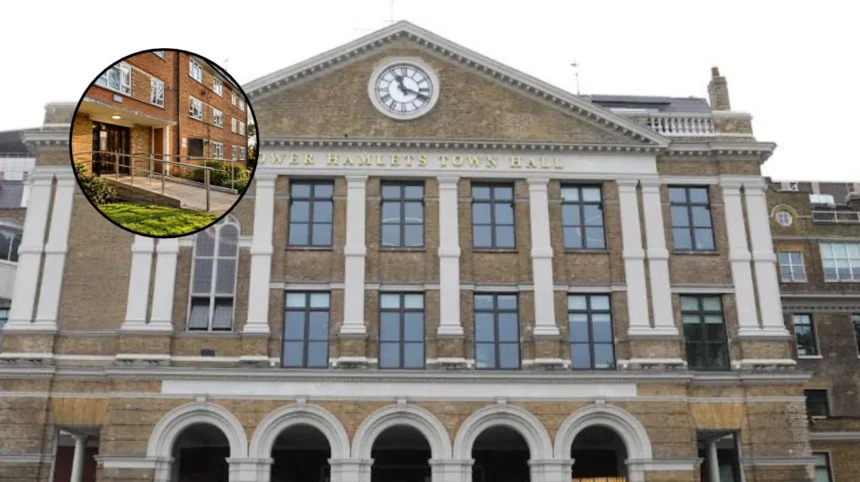
Tower Hamlets (East London Times) October 30, 2026 – The High Court of Justice has granted permission for a full judicial review challenge brought against the London Borough of Tower Hamlets over delayed housing adaptations required for a disabled four-year-old child, whilst simultaneously delivering a firm rebuke to the local authority over procedural non-compliance. In the administrative ruling of R (Abdul) v London Borough of Tower Hamlets [2026] EWHC 2738 (Admin), Mr Justice Fordham formally refused to allow the council to rely on evidence filed at the eleventh hour immediately prior to the scheduled permission hearing. Furthermore, the court imposed a costs order preventing Tower Hamlets Council from recovering any of its legal fees incurred in preparing those delayed submissions or participating in the permission proceedings, regardless of whether the local authority ultimately succeeds in defending the substantive claim.
- Key Points
- Why Has the High Court Granted Permission for This Judicial Review Against Tower Hamlets Council?
- Why Did Mr Justice Fordham Criticise Tower Hamlets Council for Late Evidence?
- What Sanctions and Costs Orders Did the High Court Impose on the Council?
- Background to the Judicial Review Development
- How Will This Ruling Impact Local Authorities and Claimants in Future Judicial Reviews?
Why Has the High Court Granted Permission for This Judicial Review Against Tower Hamlets Council?
The judicial review claim was brought on behalf of a four-year-old child, referred to in court documentation as Abdul, who requires substantial residential alterations to accommodate severe disabilities. The legal action asserts that Tower Hamlets Council failed to carry out its statutory duties under public housing and social care legislation to ensure the young child’s living environment was made safe and accessible.
Upon considering the initial application, Mr Justice Fordham established that the legal grounds submitted on behalf of the child demonstrated an arguable case with a realistic prospect of success at a full hearing. Judicial review permission hearings serve as a preliminary filter in administrative law to establish whether a public body’s decision, act, or omission warrants full judicial scrutiny. By granting permission, the court confirmed that the local authority’s handling of the child’s housing adaptation requirements demands a comprehensive legal examination.
Why Did Mr Justice Fordham Criticise Tower Hamlets Council for Late Evidence?
The primary contention during the preliminary hearing centered on procedural conduct, specifically the timing of the respondent authority’s evidentiary filings. Legal representatives for Tower Hamlets Council sought to submit substantive documentation shortly before the court convened to decide on permission.
Refusing to admit these materials into consideration, Mr Justice Fordham delivered a strict ruling regarding procedural compliance in Administrative Court matters. The court noted that late filing without adequate justification severely prejudices the claimant’s ability to respond, undermines the efficient administration of justice, and circumvents established Civil Procedure Rules (CPR) governing judicial review applications.
As noted in the judgment, public authorities are held to a duty of candour and are expected to follow strict timetables when defending administrative decisions. The decision to bar the late material ensured that the determination of whether the case was arguable remained grounded strictly on the timely submissions available to both parties.
What Sanctions and Costs Orders Did the High Court Impose on the Council?
In addition to excluding the late-filed evidence, the court applied a costs sanction to reinforce judicial expectations regarding local authority litigation standards. Mr Justice Fordham ordered that Tower Hamlets Council be barred from recovering the financial costs associated with preparing the rejected late materials, alongside the costs of the permission hearing itself.
Crucially, this financial sanction remains absolute and irrevocable. Even if Tower Hamlets Council subsequently prevails when the court considers the substantive merits of the judicial review at the final trial, the local authority cannot seek reimbursement for these specific expenses from the claimant or the legal aid fund.
Background to the Judicial Review Development
The underlying controversy highlights recurring friction between local government administration, social housing allocation, and statutory disability obligations within inner London boroughs. Under the Housing Grants, Construction and Regeneration Act 1996 and section 17 of the Children Act 1989, local authorities bear clear duties to assess and address the social care and structural modification needs of disabled children residing within their jurisdictions.
In recent years, the Administrative Court has consistently reiterated the imperative for public authorities to adhere to procedural deadlines in urgent welfare and housing matters. Late evidence submissions by local councils have repeatedly drawn judicial criticism due to the disproportionate burden they place on vulnerable claimants who rely on legal aid representation. The ruling in R (Abdul) v London Borough of Tower Hamlets [2026] EWHC 2738 (Admin) builds upon existing legal precedents aimed at enforcing strict case management discipline and discouraging systemic administrative delays in judicial review litigation.
How Will This Ruling Impact Local Authorities and Claimants in Future Judicial Reviews?
The High Court’s decisive stance in R (Abdul) creates a significant operational precedent that will directly influence local government legal departments, housing authorities, and public law practitioners across England and Wales.
For public authorities and municipal councils, the judgment serves as a clear warning regarding litigation conduct. Local councils can no longer assume that late-filed evidence will be routinely admitted by judges at the permission stage to defeat a judicial review application. Legal officers will be required to streamline internal administrative reviews and compile evidence strictly within procedural deadlines to avoid severe financial penalties and adverse case directions.
For disabled individuals, vulnerable families, and legal aid practitioners, the ruling provides essential procedural protection against ambush tactics or prolonged administrative inertia. By penalizing late filings and maintaining low thresholds for permission where statutory duties appear neglected, the court reinforces accessible accountability for public services responsible for vulnerable children.