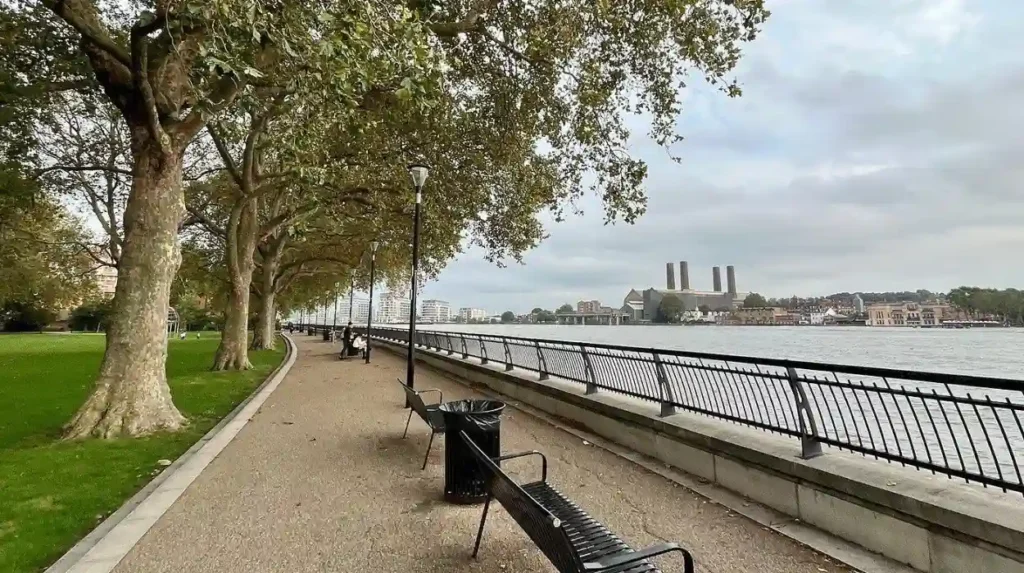
Island Gardens is one of the most distinctive riverside green spaces in Tower Hamlets, East London. Located at the southern tip of the Isle of Dogs, this historic public park overlooks the River Thames and provides panoramic views of Greenwich, including the Old Royal Naval College, the Queen’s House and the surrounding Maritime Greenwich skyline. Its combination of open lawns, mature trees, riverside pathways and historic architecture makes it an important destination for visitors exploring London’s waterfront.
- What Are Island Gardens and Where Are They Located?
- Why Are the Riverside Views from Island Gardens Famous?
- How Did Island Gardens Develop Historically?
- What Can Visitors See and Do at Island Gardens?
- How Does the Greenwich Foot Tunnel Connect Island Gardens with Greenwich?
- Which Walking Routes Can You Explore Around Island Gardens?
- What Nearby Attractions Can You Visit from Island Gardens?
- How Can You Reach Island Gardens by Public Transport?
- When Is the Best Time to Visit Island Gardens?
- What Environmental and Heritage Features Make Island Gardens Important?
- Is Island Gardens Suitable for Families, Photographers and Solo Visitors?
- How Can You Plan a Complete Day Around Island Gardens?
- What Should Visitors Know Before Visiting Island Gardens?
- Why Does Island Gardens Remain an Important Riverside Destination in East London?
The park offers a quieter outdoor experience away from the commercial activity of Canary Wharf. Visitors use Island Gardens for riverside walks, photography, picnics, sightseeing and access to the Greenwich Foot Tunnel. Its position also makes it a useful starting point for exploring the Isle of Dogs, connecting North Greenwich’s historic surroundings with the residential and commercial landscapes of East London.
Island Gardens has historical, architectural and recreational importance. Its development during the nineteenth century protected a celebrated view of Greenwich from industrial expansion on the Isle of Dogs. Today, the park remains a recognised heritage landscape and an accessible public space managed by the London Borough of Tower Hamlets.
What Are Island Gardens and Where Are They Located?
Island Gardens is a historic riverside public park at the southern end of the Isle of Dogs in Tower Hamlets, East London. Covering approximately 1.12 hectares, it provides open green space, Thames viewpoints, seating and direct access to Greenwich through an underground pedestrian tunnel.
The park is situated along Saunders Ness Road, London E14, beside the River Thames. Its geographical position gives visitors a direct view of Greenwich’s historic waterfront on the opposite riverbank. The surrounding neighbourhood forms part of the Isle of Dogs, a peninsula shaped by London’s maritime, industrial and commercial development.
Island Gardens is managed by the London Borough of Tower Hamlets. The council identifies it as a Green Flag Award-winning park, recognising its management and environmental standards. The site also has registered historic park and garden status, reflecting its architectural setting and importance within London’s heritage landscape.
The park’s main geographical features include:
- Riverside frontage: The southern boundary follows the River Thames and provides uninterrupted views across the water.
- Open lawns: Grass-covered areas provide space for relaxation, picnics and informal recreation.
- Mature trees: Established planting creates shaded areas along the park’s pathways.
- Pedestrian access: The Greenwich Foot Tunnel connects the park with Greenwich on the opposite bank.
- Visitor facilities: Seating, picnic tables and a refreshment kiosk support everyday recreational activities.
Island Gardens is particularly useful for visitors exploring the relationship between Tower Hamlets and Greenwich. Its location combines a residential East London neighbourhood with one of the capital’s most recognisable historic waterfront panoramas.
The park is free to enter, making it accessible to families, independent travellers, local residents and visitors planning a low-cost day out in London.
Why Are the Riverside Views from Island Gardens Famous?
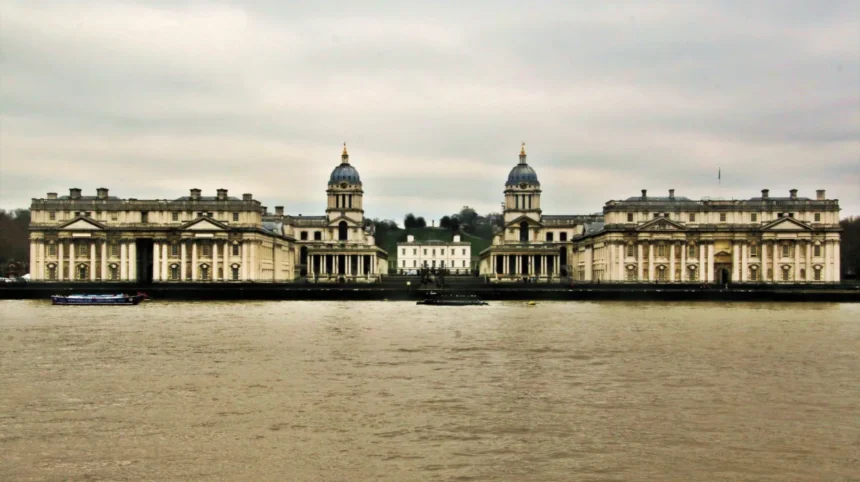
Island Gardens is famous for its panoramic view across the Thames towards Greenwich. The historic waterfront includes the Old Royal Naval College, Queen’s House and Royal Observatory, creating a distinctive architectural composition recognised in Canaletto’s eighteenth-century painting of Greenwich.
The viewpoint is one of the park’s defining attractions. From the riverside boundary, visitors look south across the Thames towards the historic buildings of Maritime Greenwich. The arrangement of these buildings creates a recognisable skyline that connects London’s maritime history with its modern urban environment.
The principal landmarks visible from Island Gardens include:
Old Royal Naval College
The Old Royal Naval College is a major architectural landmark on the Greenwich waterfront. Designed around the former Royal Hospital for Seamen, its buildings include the famous domes and symmetrical riverside frontage associated with Sir Christopher Wren and Nicholas Hawksmoor.
Queen’s House
The Queen’s House stands behind the Old Royal Naval College. Designed by architect Inigo Jones and completed in the seventeenth century, it is recognised as an important example of classical architecture in Britain.
Royal Observatory Greenwich
The Royal Observatory Greenwich stands on the hill within Greenwich Park. Its position above the surrounding buildings makes it a visible feature of the wider landscape.
National Maritime Museum
The National Maritime Museum forms part of the Maritime Greenwich heritage setting. Its collections document Britain’s naval, maritime and exploration history.
The view also has an important artistic connection. Italian painter Canaletto depicted Greenwich from the River Thames in his eighteenth-century painting, A View of Greenwich from the River. The modern panorama from Island Gardens retains the essential relationship between the river, historic buildings and elevated landscape.
This connection gives the viewpoint cultural significance beyond ordinary sightseeing. Visitors experience a recognisable historic composition from a publicly accessible East London park.
How Did Island Gardens Develop Historically?
Island Gardens developed from a nineteenth-century effort to protect the Greenwich waterfront panorama from industrial expansion. The land was acquired in 1850, and the London County Council subsequently established the public park, which officially opened on 3 August 1895.
The history of Island Gardens is closely connected with the development of the Isle of Dogs. Before large-scale industrialisation, much of the peninsula consisted of marshland, agricultural ground and sparsely populated riverside land.
During the nineteenth century, the Isle of Dogs became an important centre for shipbuilding, manufacturing and commercial activity. The expansion of docks and riverside industries transformed its landscape. Industrial buildings, warehouses and shipyards gradually occupied much of the waterfront.
The Greenwich Royal Hospital Commissioners acquired the Island Gardens site in 1850 to protect the view of Greenwich from this rapid development. The preservation of the panorama became an important consideration in the area’s planning.
The park’s development involved several historical stages:
- 1850: The Greenwich Royal Hospital Commissioners acquired the land to help preserve the Greenwich views.
- Late nineteenth century: Campaigns and negotiations supported the creation of public open space on the site.
- 1895: Island Gardens officially opened to the public on 3 August.
- 1902: The Greenwich Foot Tunnel opened, providing an underground pedestrian connection beneath the Thames.
- 1998: The park underwent refurbishment to improve its condition and public facilities.
Historic England records the park as a registered historic garden. Its documentation also identifies the importance of the earlier ferry crossing between Greenwich and the Isle of Dogs.
The area has a wider industrial history involving the West India Docks, Millwall Docks and shipbuilding facilities. These developments helped establish the Isle of Dogs as an important part of London’s international trading economy.
As you explore the modern park, you are crossing land with a deep maritime and industrial heritage. Discover the full [history of the Isle of Dogs and its maritime industrial development – Insert Anchor Text for History Article Here] to understand how the surrounding landscape evolved.
Island Gardens therefore represents an important contrast between industrial expansion and public landscape preservation. Its original purpose remains visible in the open waterfront setting.
What Can Visitors See and Do at Island Gardens?
Visitors can enjoy riverside sightseeing, photography, picnics, outdoor relaxation and walks through Island Gardens. The park combines open lawns, mature trees, waterfront seating and a historic viewpoint, providing several simple recreational activities without requiring an entrance ticket or advance booking.
The park’s layout makes it suitable for visitors with different interests. Some people arrive specifically to photograph Greenwich, while others use the green space as a stopping point during a longer walk around the Isle of Dogs.
Riverside sightseeing
The Thames-facing section is the main viewing area. Visitors can observe river traffic, historic buildings and the changing appearance of Greenwich throughout the day.
The viewpoint also provides opportunities to study London’s waterfront geography. The river separates two boroughs while connecting their histories through trade, transport and architecture.
Photography
Island Gardens provides several photographic opportunities. The open waterfront offers a clear composition of the Greenwich skyline, while trees and pathways create additional foreground elements.
Popular photography subjects include:
- The Old Royal Naval College and its domes.
- The Queen’s House and surrounding historic buildings.
- Riverboats travelling along the Thames.
- The Greenwich skyline during changing daylight.
- The park’s trees, lawns and riverside landscape.
Early morning and late afternoon provide different natural lighting conditions. Clear weather improves visibility across the river, while cloudy conditions create softer light for architectural photography.
Picnics and outdoor relaxation
The park includes tables and benches for visitors who want to spend time outdoors. Its lawns provide additional space for informal relaxation.
Families and small groups use the park as a picnic location, particularly during warmer months. Visitors should take their rubbish away or use the available waste facilities to help maintain the public space.
Walking and sightseeing breaks
Island Gardens also functions as a convenient stopping point for people walking around the southern Isle of Dogs. Its proximity to the Greenwich Foot Tunnel makes it easy to combine a park visit with sightseeing on the opposite riverbank.
The park’s relatively compact size makes it possible to explore its principal features during a short visit. Visitors with more time can extend their trip towards Cubitt Town, Mudchute or Greenwich.
How Does the Greenwich Foot Tunnel Connect Island Gardens with Greenwich?
The Greenwich Foot Tunnel is an underground pedestrian passage beneath the River Thames connecting Island Gardens on the Isle of Dogs with Greenwich on the southern bank. Opened in 1902, it provides a free alternative to river crossings and supports walking and cycling journeys.
The Greenwich Foot Tunnel is one of the most important transport and heritage features associated with Island Gardens. Its northern entrance stands inside the park, making the underground crossing particularly convenient for visitors.
The tunnel was constructed to improve communication between Greenwich and the Isle of Dogs. Before its opening, people depended on river ferries to cross between the two locations.
The tunnel opened in 1902 and remains a public pedestrian route. It extends approximately 370 metres beneath the Thames, according to Visit Greenwich.
Its main characteristics include:
- Two entrances: One entrance is located at Island Gardens and the other near Cutty Sark in Greenwich.
- Pedestrian access: People can walk through the tunnel without purchasing a ticket.
- Cycling access: Cyclists must dismount and push their bicycles through the tunnel.
- Lifts and stairs: Both entrances have lift access and staircases.
- Continuous access: The tunnel is generally open 24 hours, although temporary maintenance or closures affect availability.
The crossing is especially useful for visitors who want to explore both sides of the Thames during one trip.
From Island Gardens, visitors enter the northern tunnel entrance and walk beneath the river towards Greenwich. The southern entrance places them close to Cutty Sark and the historic Greenwich town centre.
The crossing also creates an opportunity to experience two distinct East and South-East London landscapes. The northern side features the residential and commercial development of the Isle of Dogs, while Greenwich offers historic buildings, museums and established visitor attractions.
Visitors should check local transport information before travelling if lift access is essential, as maintenance work can temporarily affect accessibility.
Which Walking Routes Can You Explore Around Island Gardens?
Island Gardens provides access to several walking experiences, including the riverside paths of the Isle of Dogs, the Greenwich Foot Tunnel crossing and routes towards Mudchute and Canary Wharf. These connections allow visitors to combine green spaces, industrial heritage and Thames viewpoints.
Walking is one of the most practical ways to explore Island Gardens and its surrounding neighbourhood. The area contains a mixture of waterfront paths, residential streets, parks and historic buildings.
Island Gardens to Greenwich
This route starts inside Island Gardens and continues through the Greenwich Foot Tunnel. It is a straightforward pedestrian journey beneath the river.
On reaching Greenwich, visitors can explore Cutty Sark, the Old Royal Naval College, the Queen’s House and Greenwich Market. The route connects two destinations with contrasting architectural and cultural identities.
Island Gardens riverside walk
The riverside walk provides views of the Thames and the surrounding Isle of Dogs. Visitors can follow nearby public paths towards Cubitt Town and observe the changing character of the waterfront.
The wider route includes residential buildings, former industrial sites and historic structures associated with shipbuilding.
Island Gardens to Mudchute Park
Mudchute Park and Farm offers a different outdoor experience from the formal riverside landscape of Island Gardens.
Mudchute is a large urban green space with a working city farm, open land and walking areas. Its development is connected with the disposal of dredged material from Millwall Docks. The site was established as a community park and farm in 1977.
Visitors can combine both parks to experience two important green spaces on the Isle of Dogs.
Island Gardens towards Canary Wharf
The wider Isle of Dogs walking network also provides connections towards Canary Wharf. This route introduces visitors to the modern commercial district, its high-rise architecture, public spaces and waterfront developments.
Canary Wharf provides a clear contrast with the historic landscape visible from Island Gardens. The journey illustrates how the former docklands developed into a major financial and business centre.
What Nearby Attractions Can You Visit from Island Gardens?
Island Gardens is surrounded by attractions that extend a visit beyond the park itself. Greenwich’s maritime landmarks, Mudchute Park and Farm, Canary Wharf and the wider Isle of Dogs offer opportunities for history, architecture, outdoor recreation and waterfront sightseeing.
The park’s location makes it a useful starting point for exploring different parts of East and South-East London.
Cutty Sark
Cutty Sark is a historic British tea clipper displayed in Greenwich. The ship was launched in 1869 and became associated with international tea and wool trading routes.
Visitors can explore its maritime history and exhibitions after crossing the Greenwich Foot Tunnel.
Greenwich Market
Greenwich Market is a covered historic market featuring independent traders, crafts, food and retail stalls. It provides a useful stop for visitors exploring the historic town centre.
Greenwich Park
Greenwich Park is a Royal Park with elevated viewpoints, landscaped grounds and connections to the Royal Observatory. Its position offers wider views across London and the Thames.
Mudchute Park and Farm
Mudchute combines urban green space with a working farm. It provides an opportunity to experience outdoor recreation and farm animals within the urban environment of the Isle of Dogs.
Canary Wharf
Canary Wharf is a major financial and commercial district. Its modern towers, shopping facilities, restaurants and public spaces provide a different perspective on the transformation of London’s former docklands.
Old Royal Naval College
The Old Royal Naval College is a major historic attraction on the Greenwich waterfront. Its architecture, Painted Hall and maritime connections make it an important destination for visitors interested in British history.
These attractions allow visitors to build a wider itinerary around Island Gardens rather than treating the park as an isolated destination.
How Can You Reach Island Gardens by Public Transport?
Island Gardens is accessible through the Docklands Light Railway, local buses and the Greenwich Foot Tunnel. Island Gardens DLR station is the nearest rail connection, while nearby bus services provide additional access to the Isle of Dogs and surrounding East London neighbourhoods.
Public transport is the most practical way to reach the park. The Isle of Dogs has limited parking in some residential streets, and visitors benefit from using London’s public transport network.
Docklands Light Railway
Island Gardens DLR station is located close to the park.
The Docklands Light Railway connects the area with destinations including Bank, Canary Wharf, Stratford and Lewisham through its wider network.
Passengers should check Transport for London’s journey planner for current service information, planned engineering works and accessibility details.
Local buses
Tower Hamlets identifies the following bus routes for access to Island Gardens:
Walking from Greenwich
Visitors already exploring Greenwich can reach Island Gardens through the Greenwich Foot Tunnel. This route avoids the need to travel around the river by road or rail.
Driving and parking
Driving is less convenient because parking availability around the Isle of Dogs is limited. Visitors should check local parking restrictions before travelling and avoid assuming that residential streets provide unrestricted visitor parking.
When Is the Best Time to Visit Island Gardens?
Island Gardens can be visited throughout the year, with spring and summer providing longer daylight hours, greener lawns and suitable conditions for picnics. Morning and late afternoon offer different photographic lighting across the Thames and Greenwich’s historic waterfront.
The best visiting time depends on the activity planned.
Spring
Spring brings fresh vegetation and increasing daylight. The park’s trees and lawns provide a pleasant setting for walking and photography.
Summer
Summer offers longer daylight hours and more opportunities for outdoor activities. Visitors frequently use the park for picnics, riverside relaxation and sightseeing.
The waterfront viewpoint is particularly useful during clear weather when the Greenwich skyline is visible across the river.
Autumn
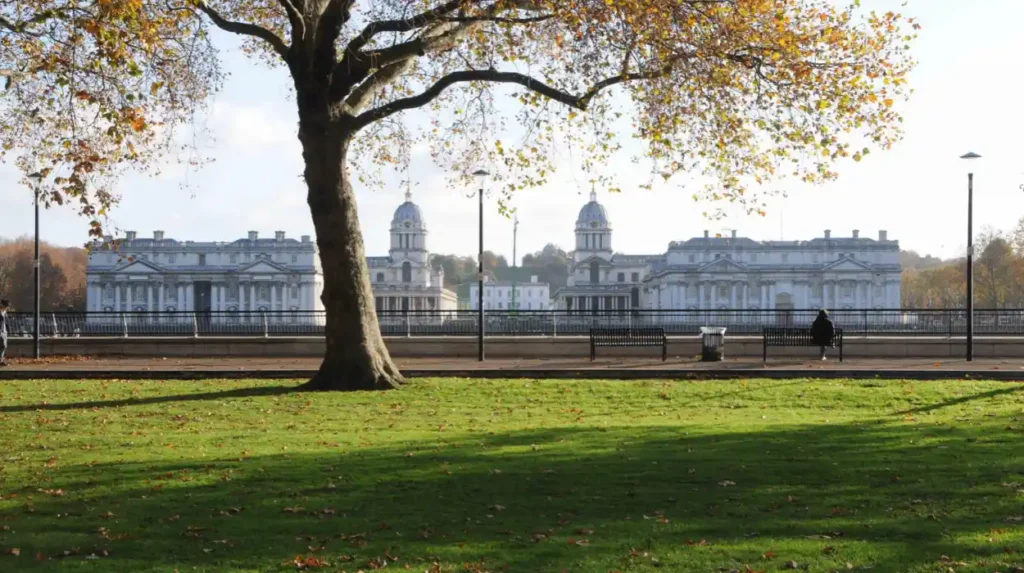
Autumn changes the appearance of the park through seasonal foliage. The combination of mature trees, open lawns and historic architecture creates different photographic opportunities.
Winter
Winter visits provide a quieter experience, although daylight hours are shorter and weather conditions are less predictable. Visitors should dress appropriately for exposed riverside conditions.
For photography, morning light provides opportunities to capture the waterfront with changing reflections, while late afternoon creates different tones across the historic buildings.
There is no requirement to book entry to the park. However, visitors planning to use the foot tunnel should check for maintenance announcements and temporary access restrictions.
What Environmental and Heritage Features Make Island Gardens Important?
Island Gardens is important because it combines public green space, historic landscape preservation and a distinctive Thames waterfront environment. Its protected heritage setting, mature planting and relationship with Greenwich contribute to the cultural and environmental character of Tower Hamlets.
The park provides a green recreational space within a densely developed urban environment. Its position beside the River Thames creates a direct relationship between public landscaping, the river corridor and the historic built environment.
Historic landscape protection
Island Gardens has a registered historic park and garden designation. Historic England records its opening in 1895 and identifies its importance in preserving the view towards Greenwich Hospital.
The surrounding Island Gardens Conservation Area was designated in March 1971. The designation recognises the area’s architectural character, historic buildings and relationship with the protected Greenwich waterfront panorama.
The park also falls within the wider setting associated with the Maritime Greenwich World Heritage Site. This connection strengthens its importance as a viewing location for internationally recognised historic architecture.
Urban green space
Green spaces provide important recreational opportunities within residential and commercial districts. Island Gardens offers outdoor access for people who live and work on the Isle of Dogs.
Its open lawns and tree-covered areas create a contrast with the surrounding built environment. Visitors can use the park for walking, sitting and informal outdoor activities.
River environment
The Thames is an important ecological and geographical feature of London. Its tidal river environment supports a changing relationship between urban infrastructure, river transport and wildlife.
Visitors observing the waterfront can encounter birds and other wildlife associated with urban riverside environments. However, Island Gardens is primarily a landscaped public park rather than a designated wildlife reserve.
Public landscape management
The Green Flag Award provides a recognised framework for assessing the management of public parks and green spaces. Island Gardens’ award status reflects its role as a maintained recreational landscape.
Responsible visitor behaviour supports the long-term condition of the park. Keeping pathways clear, disposing of rubbish correctly and respecting planted areas help maintain the site for the local community.
Is Island Gardens Suitable for Families, Photographers and Solo Visitors?
Island Gardens accommodates different visitor groups through its free public access, riverside seating, open lawns and pedestrian connections. Families use the park for outdoor breaks, photographers visit for Greenwich views, and solo travellers include it in independent sightseeing routes.
The park’s compact layout makes it relatively straightforward to explore. Visitors do not need specialist equipment or advance reservations to enjoy its main features.
For families
Families can use the open lawns and picnic tables for outdoor recreation. The Greenwich Foot Tunnel also provides an opportunity to introduce children to London’s transport and engineering history.
Parents should supervise children near the riverfront and follow the park’s safety notices. The Thames is a working tidal river, not a designated swimming area.
For photographers
The park is a recognised location for architectural and landscape photography. Its position provides a direct view of Greenwich’s historic buildings.
Photography subjects include:
- The symmetrical waterfront architecture of the Old Royal Naval College.
- The Queen’s House behind the riverside buildings.
- The Thames and passing river vessels.
- The historic foot tunnel entrance.
- Seasonal changes in the park’s trees and lawns.
Photographers interested in architectural history can use the viewpoint to document the relationship between the river and Greenwich’s historic buildings.
For solo travellers
Independent visitors can explore the park without joining a guided tour. The DLR station, nearby bus services and foot tunnel make it straightforward to include Island Gardens in a wider London itinerary.
For digital nomads and business travellers
People working in Canary Wharf can visit Island Gardens during leisure breaks or outside working hours. The park provides an outdoor alternative to the commercial district’s offices, cafés and shopping facilities.
It is primarily a recreational space rather than a dedicated coworking destination. Visitors requiring reliable Wi-Fi, charging points or indoor working facilities should use suitable cafés or business facilities elsewhere.
How Can You Plan a Complete Day Around Island Gardens?
A visit to Island Gardens fits naturally into a wider Isle of Dogs and Greenwich itinerary. Visitors can combine riverside photography, a park walk, the Greenwich Foot Tunnel, maritime attractions and local food stops into one day without extensive cross-city travel.
A practical itinerary starts at Island Gardens DLR station and continues through the park towards the Thames-facing viewpoint.
Morning: Explore Island Gardens
Begin with a walk through the park and spend time at the riverside viewing area. Photograph the Greenwich waterfront and explore the landscaped sections.
Allow approximately 30–45 minutes for a relaxed visit, depending on photography and outdoor activities.
Late morning: Cross the Greenwich Foot Tunnel
Walk towards the tunnel entrance and cross beneath the Thames. The journey connects Island Gardens with the Greenwich waterfront.
On the southern bank, visit Cutty Sark and the Old Royal Naval College. These landmarks provide insight into Britain’s maritime history.
Afternoon: Discover Greenwich
Continue towards Greenwich Market and the National Maritime Museum. Visitors interested in architecture and panoramic views can also explore Greenwich Park.
Allow additional time for museum visits and food stops, as these attractions require more time than the park itself.
Alternative afternoon: Explore the Isle of Dogs
Visitors who prefer to remain in Tower Hamlets can return through the tunnel and explore Mudchute Park and Farm.
Another option is to travel towards Canary Wharf to experience its commercial architecture, public spaces and waterfront developments.
The following map identifies the principal destinations for a combined visit.
Visitors should adjust the itinerary according to their interests, available daylight and museum opening times. The park itself does not require advance booking, but individual attractions have separate admission arrangements.
Explore More Area Guide
Muddy Stilettos Names Top London Living Spot: Walthamstow 2026
Shadwell, East London: Riverside Walks and Historic Places
What Should Visitors Know Before Visiting Island Gardens?
Island Gardens is a free public park with straightforward public transport connections and access to the Greenwich Foot Tunnel. Visitors should check transport services, tunnel accessibility, weather conditions and available facilities before travelling to make their visit more convenient.
The following practical details help visitors plan their trip.
Accessibility
The Greenwich Foot Tunnel has lifts and staircases at its entrances. This provides an accessible pedestrian connection when the lifts are operational.
Visitors with mobility requirements should check current lift availability before planning their journey. The park also contains pathways and seating areas, although individual surfaces and access conditions vary.
Food and refreshments
The park has a kiosk and visitor refreshment facilities. Opening arrangements can change, so visitors should check current information rather than assume every facility operates throughout the year.
Greenwich and Canary Wharf provide additional food and shopping options within the wider sightseeing area.
Safety
The River Thames has strong tidal currents and changing water levels. Visitors should remain behind appropriate riverside boundaries and supervise children near the water.
Cyclists must dismount inside the Greenwich Foot Tunnel. Visitors should also follow local park notices and respect other people using the public space.
Photography and responsible visiting
Visitors can photograph the public landscape and surrounding architecture. Respect for other park users, residential properties and wildlife helps maintain the area’s character.
Why Does Island Gardens Remain an Important Riverside Destination in East London?
Island Gardens remains an important Tower Hamlets destination because it preserves a historic Greenwich viewpoint while providing accessible green space beside the Thames. Its combination of heritage, walking connections, public transport and nearby attractions supports continued recreational and cultural value.
The park demonstrates how London’s historic waterfront can accommodate public recreation alongside urban development. Its original purpose was to protect the view of Greenwich from industrial expansion, and that defining feature remains central to its identity.
The relationship between Island Gardens and Greenwich also gives the location wider significance. The Greenwich Foot Tunnel provides a practical pedestrian connection, while the riverfront viewpoint allows visitors to understand the geographical and architectural relationship between the two riverbanks.
The surrounding Isle of Dogs adds another dimension to the experience. Its industrial history, dockland transformation, residential development and proximity to Canary Wharf demonstrate the changing character of East London.
For tourists, Island Gardens provides a free opportunity to experience a recognised London panorama. For local residents, it offers maintained green space and riverside recreation. For photographers and architecture enthusiasts, it provides a direct view of one of London’s most distinctive historic waterfront settings.
Island Gardens therefore remains an important part of Tower Hamlets’ public landscape and a valuable destination for anyone exploring London’s riverside heritage.
Where are Island Gardens located in London?
Island Gardens is located on Saunders Ness Road at the southern end of the Isle of Dogs in Tower Hamlets, East London. The park sits beside the River Thames, opposite Greenwich.