Key Points
- Demolition Approval: Elected officials on the Tower Hamlets Council development committee voted four to two in favour of approving redevelopment plans that involve demolishing the historic site occupied by the Bethnal Green Weightlifting Club.
- Proposed Redevelopment: The existing council-owned Professional Development Centre will be cleared to make way for a new public library and 44 residential homes, including 24 properties allocated for social rent.
- Relocation Concerns: Members and representatives of the club have voiced deep concern that being forced out of their home could “quietly end us” if a permanent, long-term operational agreement is not secured.
- Council Guarantees: Tower Hamlets Council, led by the Aspire Party, assured the committee that the club would not be required to move until a suitable alternative venue is operational, with relocation costs fully funded by the local authority.
- Terms Demanded: Representatives speaking on behalf of the club requested that any binding legal section 106 agreement include a minimum 15-year lease on the new facility under commercial and operational terms “no worse than today”.
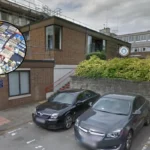
Bethnal Green (East London Times) November 9, 2026 – The historic Bethnal Green Weightlifting Club is set to be demolished after council-backed redevelopment plans were officially approved by elected officials during a local planning committee meeting. Tower Hamlets Council intends to clear the present site to facilitate the construction of a new branch library alongside 44 residential properties, 24 of which are designated as social housing units.
- Key Points
- Why Did Tower Hamlets Council Approve the Demolition of the Historic Site?
- How Have Club Leadership and Members Responded to the Relocation Notice?
- Background of the Turin Street Site and Bethnal Green Weightlifting Club
- Prediction: How Will This Development Affect Local Athletes and the East London Community?
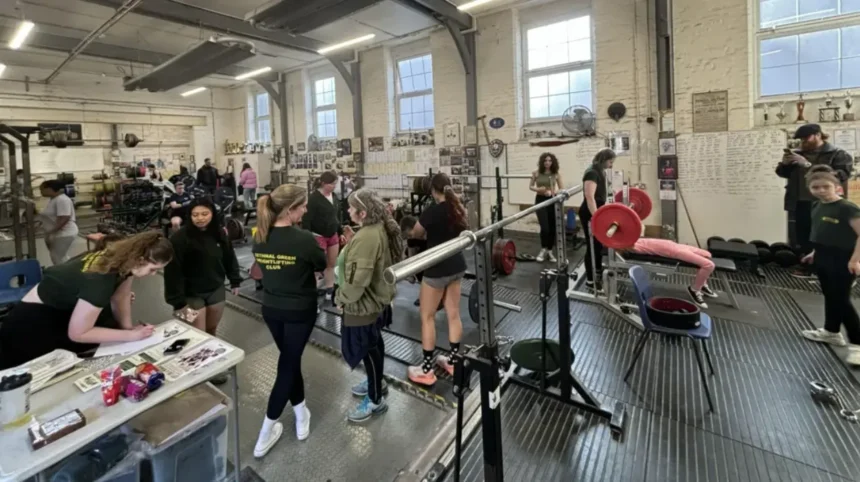
The local authority, led by the Aspire Party, has offered explicit assurances to the public that the weightlifting facility will not be required to vacate its premises until a “suitable” alternative location has been fully prepared. However, club members and representatives have warned that, without a robust long-term operational solution, relocation “would quietly end us”. The historic organisation has operated from its venue on Turin Street and Bethnal Green Road since 1927, housed inside the council-owned Professional Development Centre. The local council previously informed the club leadership in 2024 that its lease arrangement would not be extended.
Why Did Tower Hamlets Council Approve the Demolition of the Historic Site?
As reported by Nick Clark and Patrick Daly, Local Democracy Reporting Service (LDRS) reporters for The Evening Standard, councillors formally considered whether to grant planning permission at a crucial development committee hearing on Thursday. During the proceedings, council planning officers noted that the weightlifting club had received a “significant level of community support” throughout the public consultation phase of the redevelopment application. Despite these objections, committee members voted to approve the planning application, with four councillors voting in favour and two voting against the proposal.
As reported by Charlotte Macaulay of The Evening Standard, Tom Ruff, speaking on behalf of the weightlifting organisation during the committee hearing, asserted that any formal legal agreement linked to the redevelopment must explicitly include a guarantee granting the health outfit a lease on the replacement property of at least 15 years. Mr Ruff emphasized that the future lease must be provided “on terms no worse than today” to safeguard the club’s financial survival.
As reported by Nick Clark and Patrick Daly of The Evening Standard, council representatives confirmed during the committee hearing that the financial “costs of relocation will be met by the council”, and reassured stakeholders that the new venue would be fully completed and ready for occupation before any demolition work begins on Turin Street.
How Have Club Leadership and Members Responded to the Relocation Notice?
As reported by Ruby Gregory, Senior Local Democracy Reporter for MyLondon, Head Coach Martin Bass stated that the non-profit organisation had continuously been urging the local authority “to just sit down and have a conversation” regarding the future of the building and its long-term tenure. Speaking on the unique character of the historic gym, Mr Bass added:
“In London you’re not going to find a place like this, we’ve got something quite historic here so we should probably try and improve the facility rather than take it away.”
As reported by Ruby Gregory of MyLondon, Team GB Paralympian Ali Jawad, who utilizes the facility for elite training, expressed grave concern over the disruption caused by the decision. Highlighting the broader impact on British athletics, Mr Jawad stated:
“I think if Tower Hamlets Council decide to completely shut this place down, they’re potentially denying a Paralympian another shot at the games. Do they really want to do that to the national team?”
As reported by Ruby Gregory of MyLondon, long-standing club member Reece Smith, who travels to train at the venue multiple times a week, highlighted the irreplaceable community spirit inside the gym, stating:
“I’ve never been anywhere so welcoming, I’ve never been anywhere where people are so helpful to me, everyone here is really trying to help each other. It’s just so sad that [the council] is trying to get rid of it, it really is the most amazing place.”
Background of the Turin Street Site and Bethnal Green Weightlifting Club
The Bethnal Green Weightlifting Club stands as one of the oldest established weightlifting and strength training institutions in the United Kingdom. Founded originally in 1926, the club established its permanent home at the Turin Street site inside the Professional Development Centre in Bethnal Green in 1927. Over the course of nearly a century, the volunteer-led non-profit organisation has served as a cornerstone for grassroots athletics in East London, training international competitors, Paralympic athletes, and generations of local residents.
The site itself is owned by Tower Hamlets Council. Under the local administration’s Mayor’s Accelerated Housing Programme, the council identified the Professional Development Centre as a strategic location to address regional housing shortages and improve civic infrastructure. In 2024, the council formally served notice to the club that its lease would not be renewed beyond its existing term, setting in motion the planning application for total demolition. The master plan for the plot involves erecting a modern municipal library alongside 44 high-density housing units, designed to deliver 24 units of social rent housing to alleviate local waiting lists.
Prediction: How Will This Development Affect Local Athletes and the East London Community?
The decision to approve the demolition of the Turin Street site will directly impact both elite athletes and the wider East London community in several distinct ways:
- Disruption to Elite and Paralympic Athletic Preparation: Elite lifters and Paralympic athletes who depend on the club’s specialized, accessible heavy-training equipment face potential disruption to their preparation schedules for international competitions. If the transition between the current premises and the proposed alternative facility experiences construction delays, athletes risk losing continuous access to specialized coaching and training apparatus.
- Risk of Community Displacement: For the diverse grassroots membership in Bethnal Green, the physical loss of the historic venue risks fracturing a rare community hub. If the council’s alternative location is smaller, constrained by higher operational costs, or situated outside the immediate neighborhood, local residents may lose access to affordable health and fitness facilities.
- Financial Strain on Non-Profit Operations: Despite assurances from Tower Hamlets Council that relocation costs will be fully covered, operating out of a modern commercial space could bring increased service charges or adjusted lease conditions. Without strict legal protections ensuring terms “no worse than today,” the non-profit club could struggle to maintain its low-cost membership structure, potentially pricing out local residents who rely on the facility for their physical and mental well-being.