Key Points
- Derailment Incident: A freight train derailment occurred on 23 October near Barking, causing severe damage to rail infrastructure.
- Infrastructure Repairs: Network Rail engineers have repaired over 1.2 km of track and rebuilt damaged bespoke points.
- Service Resumption Date: Network Rail has confirmed that passenger and freight train operations will resume on 11 November 2026.
- Affected Rail Lines: The closure impacted c2c services between Barking, Dagenham Dock, Rainham, and Purfleet, alongside London Overground services operating from South Tottenham to Barking Riverside.
- Temporary Distortions & Station Skips: Direct train calls to Dagenham Dock, Rainham, and Purfleet remained suspended until the reopening date, alongside service suspensions at Limehouse for London-bound trains and no interchange access to the Docklands Light Railway (DLR) from Platform 1.
- Ticket Acceptance: Inter-operator ticket validity remains active across Greater Anglia services and Transport for London (TfL) bus networks until normal operations resume.
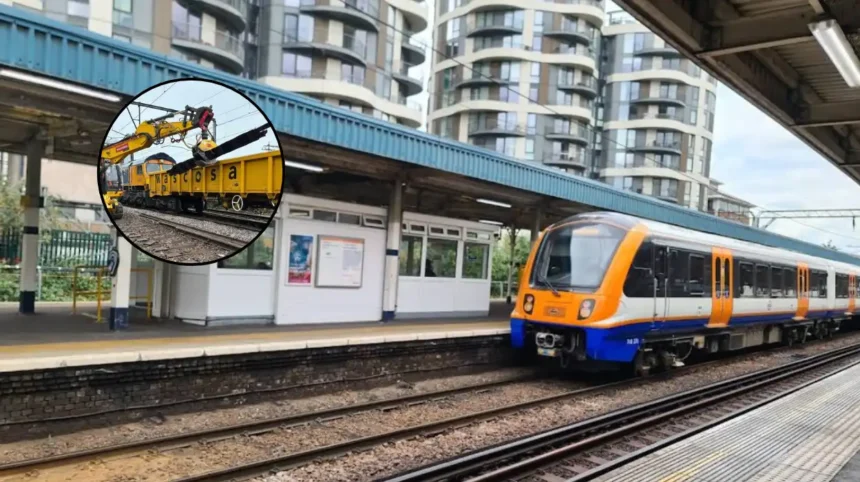
Barking (East London Times) November 10, 2026 – Rail transport services across East London are scheduled to recommence on Wednesday, 11 November 2026, following extensive infrastructure repair work undertaken by Network Rail engineers. The reopening comes after a freight train derailment occurred on 23 October 2026, which rendered a key section of the route impassable and caused severe damage to local tracks and switching systems.
As stated in official updates from Network Rail, technical teams have worked over a fortnight to repair more than 1.2 kilometres of damaged track. The engineering operation included rebuilding a bespoke set of points that were ruined during the incident. With safety checks and physical restorations nearing final completion, rail operators are preparing to restore services across all previously suspended corridors connecting Barking with wider London and Essex transport links.
Which Specific Services and Stations Have Been Affected by the Line Reopening Plan?
The reopening will see c2c rail passenger services resume standard operations from Barking through to Dagenham Dock, Rainham, and Purfleet. Simultaneously, London Overground services operating between South Tottenham and Barking Riverside will resume their full scheduled routes.
Throughout the closure period leading up to the scheduled reopening date, trains were unable to serve Dagenham Dock, Rainham, or Purfleet. Supplementary work carried out at Limehouse also altered standard journeys, with London-bound services bypassing the station entirely. Furthermore, commuters at Limehouse faced the temporary removal of the interchange facility connecting Platform 1 directly to the Docklands Light Railway network.
To mitigate passenger disruption during the closure period, transport authorities arranged for existing rail tickets to be accepted across alternative travel systems, including Greater Anglia train services and Transport for London bus routes operating throughout the affected regional zones.
Background
The railway line passing through Barking serves as a vital arterial link for both freight traffic and daily commuter transportation in East London and Essex. The derailment on 23 October 2026 disrupted one of the busiest rail corridors in the region, requiring specialized engineering teams to deploy heavy equipment and custom materials. Because the derailment severely impacted a bespoke set of points—specialized railway switches that allow trains to move from one track to another—engineers could not simply replace standard rails. The customized component had to be manufactured, assembled, and stress-tested alongside the structural relaying of over 1.2 kilometres of damaged track to ensure full compliance with national safety standards.
Prediction
The planned reopening of the line on 11 November 2026 will immediately restore essential travel capacity for thousands of daily commuters travelling into Central London and across East London suburbs. Passengers using c2c and London Overground connections will experience a return to regular timetables, relieving congestion on local TfL bus routes and parallel Greater Anglia services that absorbed diverted travel volumes during the suspension. For regional logistics operators, the restoration of track capacity through Barking eliminates costly freight re-routing, restoring reliable supply chain movement across the Thames Gateway corridor.