Key Points
- Proposals have been submitted to Newham Council to increase the London Stadium’s attendance capacity from 60,000 to 85,000 for major events, including boxing.
- The expanded capacity aims to help the venue compete directly with Wembley Stadium and the Tottenham Hotspur Stadium.
- Former Manchester City financial adviser Stefan Borson has stated that West Ham United will likely see “very limited upside” from the non-footballing event proposals.
- According to Borson, financial benefits from non-footballing events above 60,000 are likely carved out of West Ham’s stadium agreement, with proceeds instead going to the London Authority.
- Borson emphasised that West Ham’s primary focus must remain on securing promotion back to the Premier League during a turbulent 2026-27 season under manager Scott Parker, who replaced Nuno Espirito Santo.
Stratford (East London Times) November 14, 2026 – West Ham United may struggle to gain any financial benefit from new proposals to expand the capacity of the London Stadium to 85,000 for major boxing events, according to former Manchester City financial adviser Stefan Borson.
- Key Points
- Why are London Stadium operators looking to increase the venue’s capacity?
- Will West Ham United profit from the proposed 85,000 capacity increase?
- What should West Ham United’s main priority be during the 2026-27 season?
- What is the background of West Ham United’s London Stadium tenancy?
- How could this development affect West Ham United supporters and matchday operations?
Why are London Stadium operators looking to increase the venue’s capacity?
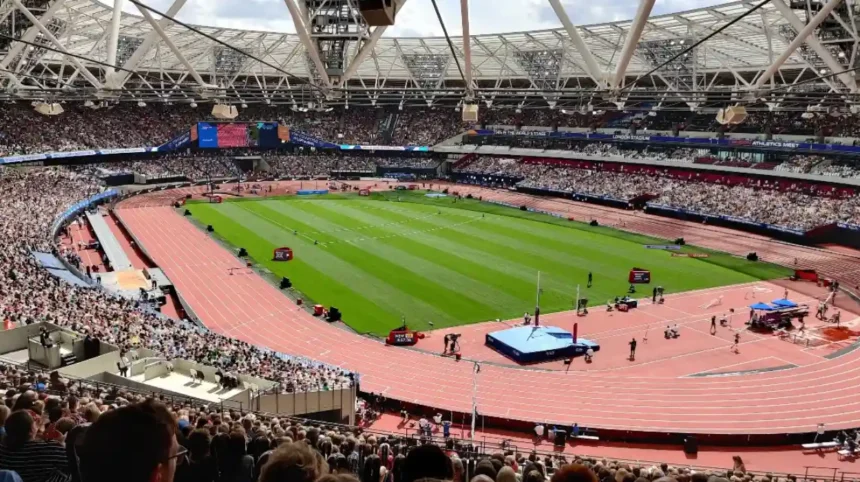
Plans have been submitted to Newham Council that would permit the London Stadium to raise its maximum attendance limit from 60,000 to 85,000. The primary objective behind this proposed expansion is to allow the East London venue to host a greater number of high-profile boxing events. By increasing its capacity to 85,000, the London Stadium would be positioned to compete directly with other major capital venues, specifically Wembley Stadium and the Tottenham Hotspur Stadium, for lucrative combat sports cards and large-scale entertainment spectacles.
Will West Ham United profit from the proposed 85,000 capacity increase?
Despite the potential for increased revenue generated by larger crowds at the venue, West Ham United are unlikely to see a financial windfall from the development. Speaking exclusively to Football Insider, former Manchester City financial adviser Stefan Borson dismissed the notion that the Championship club would significantly benefit from the expanded non-footballing events.
As reported by Football Insider, Stefan Borson stated:
“I actually think it’s carved out of the deal. All the benefit goes to the London Authority, from memory.”
Borson noted that while the exact contractual terms would require verification, the structure of the club’s tenancy agreement limits their commercial participation in events outside of their own football matches.
“I’m not sure that they would get any upside at all from the use of the stadium for a non-footballing event above 60,000. But we’d need to check the terms,”
Borson added, as reported by Football Insider.
What should West Ham United’s main priority be during the 2026-27 season?
Borson maintained that even if a minor financial benefit were accessible to West Ham United, it would be negligible compared to the commercial value of top-flight football. The 2026-27 campaign has proven difficult for the East London side, who are currently competing in the second tier with an immediate return to the Premier League far from assured. The club has already undergone managerial upheaval this season, with Nuno Espirito Santo’s tenure coming to an abrupt end and Scott Parker subsequently taking over the helm, though Parker’s spell in charge has experienced a difficult opening.
As reported by Football Insider, Stefan Borson said:
“So whatever it is, it’s very limited upside for the club. It’s just not going to move the dial significantly compared to everything else that’s important for them, i.e. promotion. West Ham can’t really be thinking about anything else right now other than getting back into Premier League.”
What is the background of West Ham United’s London Stadium tenancy?
West Ham United relocated from their historic Boleyn Ground (Upton Park) to the former Olympic Stadium in Stratford ahead of the 2016-17 season under a 99-year concession agreement. Because the stadium remains publicly owned and managed by stadium operators on behalf of the London Legacy Development Corporation and the Greater London Authority, West Ham act as anchor tenants rather than outright owners. Under the terms of this lease, the club pays an annual usage fee for matchdays while the stadium operators retain control—and the vast majority of commercial revenues—from non-footballing events such as concerts, athletics, and boxing held at the venue.
How could this development affect West Ham United supporters and matchday operations?
For West Ham United supporters and club stakeholders, the proposed capacity increase to 85,000 will have no direct impact on the club’s transfer budget or financial fair play headroom, meaning fans should not expect the stadium expansion to fund squad improvements during their promotion push. However, hosting more high-capacity boxing events in Stratford could place additional wear on the playing surface and create heightened logistical and transport congestion around Queen Elizabeth Olympic Park during overlapping event weekends, requiring careful scheduling coordination between stadium operators and the club.