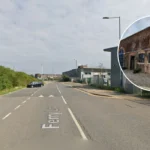
North Ockendon sits at the eastern edge of Greater London, within the London Borough of Havering, right up against the border with Essex. It is the only inhabited place that lies physically outside the traditional administrative boundary of Greater London while still being governed as part of London. That quirk alone makes it stand out on the map for anyone curious about where “London” really ends.
- A Short History of North Ockendon
- Manors, families and estates
- From rural Essex to Greater London
- North Ockendon’s Landscape and Green Belt Character
- St Mary Magdalene Church: Heart of the Village
- Transport, Roads and Connections
- Education, Community and Local Life
- Planning, Conservation and the Future
- Why North Ockendon Still Matters to East Londoners
Historically, North Ockendon was an ancient parish in south‑west Essex, stretching from the Thames marshes in the south all the way north to clay uplands around the Weald.
Over time, local government reforms moved it from being a parish in Orsett Rural District to being divided between Hornchurch Urban District and a new Thurrock Urban District in the 1930s, before it eventually became part of modern Havering. Despite these bureaucratic changes, the basic pattern of a small village with outlying farms has stayed remarkably stable since the Middle Ages.
A Short History of North Ockendon
The ancient parish of North Ockendon had a distinctive elongated east–west shape, unlike the more compact, perpendicular parishes to its north and west. Together with neighbouring parishes, this long strip pattern hints at a very old estate layout that may go back to middle‑Saxon times, and possibly as far as the Roman or even Bronze Age landscape.
This deep time depth is part of what gives the area its enduring, evergreen historic interest.
By the time of the Domesday Book, North Ockendon parish lay at the centre of Chafford Hundred, a large administrative division that included extensive marshland sheep pastures towards the Thames. For centuries, agriculture defined local life here, with farmsteads scattered across the clay and marsh, feeding into markets in the growing city to the west.
Manors, families and estates
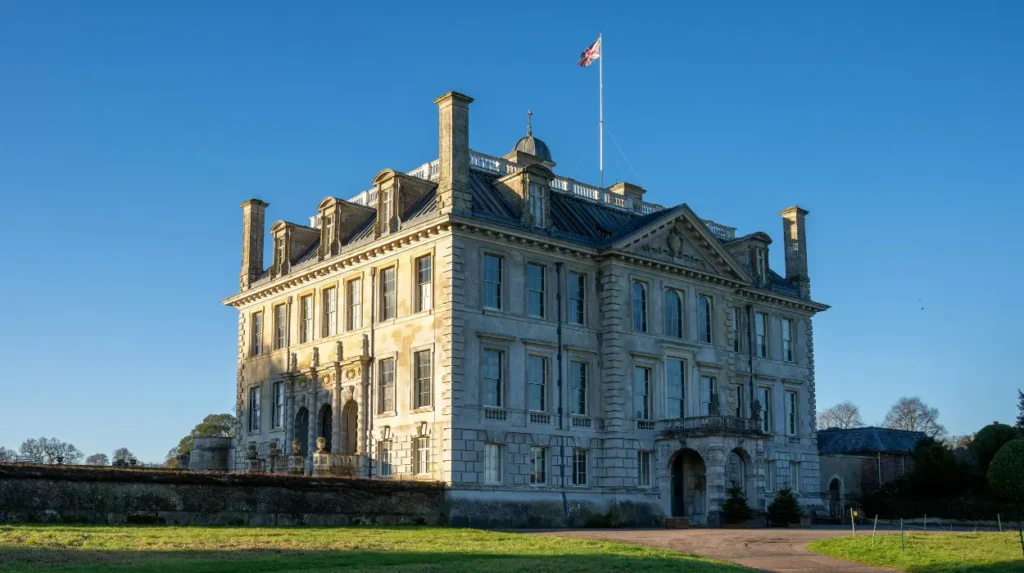
From the early 1200s, the local manor came into the hands of the Setfountayn family, who held it through much of the thirteenth century. By the late fourteenth century, the manor was controlled by the Poyntz family, a prominent gentry line that built North Ockendon Hall in the early sixteenth century in a moated enclosure just south of the parish churchyard.
The presence of a manor house, church and surrounding farmsteads created a classic English village layout that still shapes the conservation area today.
Other estates in and around North Ockendon included Stubbers, which was associated with families such as the Russell family by the later seventeenth century. Documentary records from the sixteenth and seventeenth centuries show manorial transactions, land sales and obligations such as maintaining local highways, revealing a community woven into wider patterns of Essex rural society. These estates helped preserve large areas of open countryside — something that continues to define North Ockendon’s character.
From rural Essex to Greater London
For many years, North Ockendon functioned as a parish within Orsett Rural District in Essex. In the wake of the Local Government Act 1929, county planners considered transferring the parish into Purfleet Urban District, but the proposal met local objections. By 1933, a compromise was reached: the parish was divided, with most of the area joining an expanded Hornchurch Urban District and a smaller portion becoming part of the newly created Thurrock Urban District.
Even with these shifts, North Ockendon retained its countryside feel well into the twentieth century, and by the 1930s many expected it to be swept up in London’s outward housing expansion. Instead, the creation of the Metropolitan Green
Belt stopped continuous urban building just before it reached the village, freezing a sharp edge between suburb and field that you can still see on today’s satellite maps. That planning decision is a major reason why North Ockendon remains such a compelling place for anyone in East London who values green space and heritage.
North Ockendon’s Landscape and Green Belt Character
One of the most striking, evergreen features of North Ockendon is how rural it feels while technically being part of a world city. Roads like Fen Lane and local lanes are lined with hedgerows, fields and farms, and the village’s scale has changed little since the Middle Ages. This pattern of a compact settlement core plus outlying farmsteads is specifically highlighted in conservation appraisals as a defining historic trait.
The Metropolitan Green Belt around London was created to limit sprawl and protect open countryside. When it was established, the Green Belt boundary was drawn just before large‑scale housing reached North Ockendon, effectively preserving the parish’s agricultural land and rural outlook. As a result, residents and visitors today enjoy long views over fields, tree‑lined lanes and a sense of separation from the continuous built‑up areas of nearby Upminster and the rest of outer East London.
For East Londoners looking for everyday access to nature, this landscape matters. It offers walking routes, quiet country roads for cycling and a living example of how planning policy can keep a traditional rural settlement intact within metropolitan boundaries. This rural‑urban edge is central to North Ockendon’s identity and helps ensure that information about it stays relevant for people searching for green escapes close to the city.

St Mary Magdalene Church: Heart of the Village
At the centre of North Ockendon stands the parish church of St Mary Magdalene, a key landmark and one of the oldest structures in the area. The current building dates largely from the fourteenth century and replaced an earlier church on the same site, underlining the long continuity of Christian worship here. The church occupies a prominent position beside the old manor site and forms the visual and historic core of the conservation area.
Architecturally, St Mary Magdalene combines elements from different periods, including a north aisle dating from the mid‑thirteenth century and subsequent medieval additions and restorations. The surrounding churchyard, with mature trees and historic gravestones, contributes strongly to the rural atmosphere of the village centre. Conservation documents emphasise how the church, hall site, and adjacent green spaces create a coherent historic ensemble that defines North Ockendon’s character.
The church has also played a social role beyond worship. In the nineteenth century, St Mary’s Church of England school was built in 1842 on land owned by the Benyon family and then rebuilt in 1902, again with Benyon involvement. This association between landowning families, parish institutions and village education is typical of rural England and adds another layer to North Ockendon’s story.
Transport, Roads and Connections
North Ockendon may feel tucked away, but its history is closely tied to the evolution of transport in south‑west Essex and Greater London. In the nineteenth century, the railway to Romford opened in 1848, beginning a new era of connectivity between rural parishes and London markets. Later, the London, Tilbury and Southend Railway expanded across the region, supporting commuter and freight movements on the northern side of the Thames estuary.
Within North Ockendon itself, historic routes such as Fen Lane formed the backbone of the village’s layout. Fen Lane runs east–west through what conservation appraisals call the “east hamlet,” and the village originated around this road junction, with farms radiating outwards. Over centuries, these lanes have remained relatively narrow and informal, contributing to the rural sense of place even as modern traffic passes through.
Today, residents typically look to nearby Upminster for rail services into central London and further afield, while road links connect North Ockendon to the A127, A13 and M25 corridors. This balance between easy regional access and local seclusion is one of the reasons the area appeals to those who want quiet living while staying connected to the rest of East London and Essex.
Education, Community and Local Life
Education has long been a feature of North Ockendon’s community life. St Mary’s Church of England school, first established in 1842, reflects the nineteenth‑century push to provide parish‑based schooling across rural England. Its rebuilding in 1902, still on Benyon family land, shows both local patronage and the gradual modernisation of village facilities in the Edwardian era.
More broadly, North Ockendon has maintained a village identity based around its church, farms, and dispersed housing rather than dense suburban streets. Conservation assessments note that the settlement pattern visible today — a compact village core, a linear hamlet along Fen Lane and outlying farmsteads — has changed very little since medieval times. This stability gives residents a strong sense of continuity and place.
Community life here often revolves around traditional rural activities, local churches, and connections to nearby centres such as Upminster and Cranham for shopping, secondary education and leisure. For East Londoners considering a move, or simply exploring the outskirts of the city, North Ockendon offers a slower pace while remaining part of the capital’s wider social and economic orbit.
Planning, Conservation and the Future
North Ockendon is formally recognised in local planning documents, including conservation area appraisals that set out its special architectural and historic interest. These documents highlight key features such as the medieval parish church, the site of North Ockendon Hall, the pattern of historic lanes and the open, agricultural landscape surrounding the village. Together, these elements justify extra protections for buildings, trees and spaces to ensure they are not eroded by unsympathetic development.
The village’s inclusion within the Metropolitan Green Belt has been central to preserving its setting. Green Belt policies restrict large‑scale urban expansion and emphasise maintaining openness, safeguarding the countryside from encroachment and preventing neighbouring towns from merging. In practice, this means North Ockendon is likely to remain a distinctive rural enclave for the foreseeable future, even as nearby parts of Havering continue to grow and change.
For residents, this planning framework offers both reassurance and responsibility. It reassures by making large‑scale change less likely, and it imposes a responsibility to balance everyday needs — from housing improvements to local businesses — with the long‑term stewardship of a historic landscape. For anyone interested in sustainable growth models on London’s edge, North Ockendon provides a real‑world example of how conservation, planning policy and community identity can align.
Why North Ockendon Still Matters to East Londoners
North Ockendon’s significance for an East London audience goes beyond its quirky status as a London parish sitting outside the usual boundary line. It offers a living connection to the region’s agricultural past, visible in its field patterns, old lanes, church and manor site. In an era when many outer‑London districts have become fully suburban, that kind of authenticity is increasingly rare.
The area also illustrates how strategic planning decisions — especially the creation of the Metropolitan Green Belt — can have lasting effects on local character and quality of life. For anyone interested in where to walk, where to live, or simply where to escape for a few hours from denser parts of East London, North Ockendon is a name worth knowing and a landscape worth exploring. As London continues to evolve, this small village on its edge remains a quiet reminder of how deep the city’s rural roots really run.