The London Borough of Hackney represents a critical cultural and geographical anchor within East London, bounded by Islington to the west, Tower Hamlets to the south, and the River Lea to the east (Davis, 2016). Historically defined by its agrarian landscapes, waterways, and rapid nineteenth-century industrialisation, modern Hackney has transitioned into a primary urban hub for recreation, gastronomy, and independent enterprise (Davis, 2016; Shaw, 2005). This administrative territory spans exactly 19.06 square kilometres, containing a diverse network of public green spaces, operational inland navigations, and designated conservation areas (Area, 2016). For international tourists, domestic leisure travellers, digital nomads, and corporate visitors, the borough offers an intricate layout of infrastructure that supports both daytime recreation and evening commerce. Understanding the spatial distribution and functional mechanisms of these urban assets is essential for navigating the locality effectively.
- What are the primary green spaces to visit in Hackney?
- How can visitors navigate and experience the waterways of Hackney?
- The Canal Network Architecture
- Towpath Pedestrian and Cycle Routes
- Boating, Kayaking, and Waterborne Recreation
- Where are the top food spots and markets located in Hackney?
- What cultural and historical attractions define Hackney?
- How can digital nomads and business travellers utilise workspace infrastructure in Hackney?
As you explore the modern site, you are crossing land with a deep heritage. Read about the full [historical development of East London’s infrastructure] to understand its origins.
What are the primary green spaces to visit in Hackney?
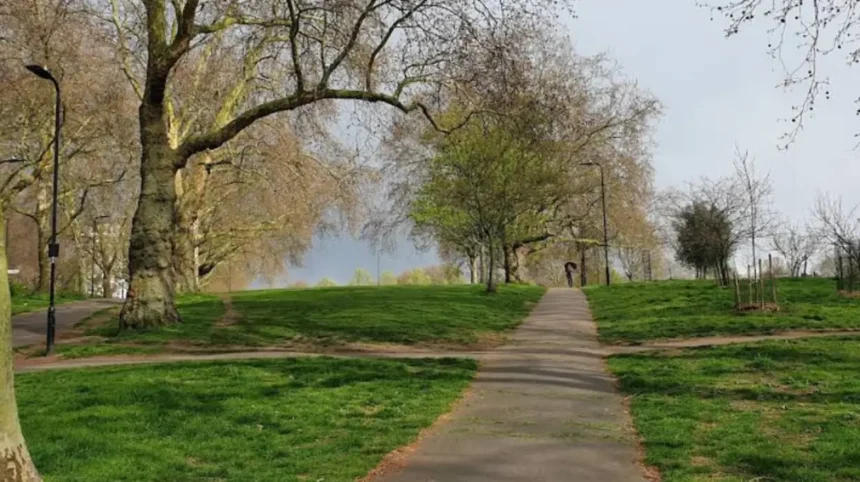
The primary green spaces to visit in Hackney are Victoria Park, London Fields, and Hackney Marshes. These public areas provide urban ecological infrastructure, supporting biodiversity, active outdoor recreation, structured athletic sports, and community-led conservation initiatives across the borough.
Victoria Park
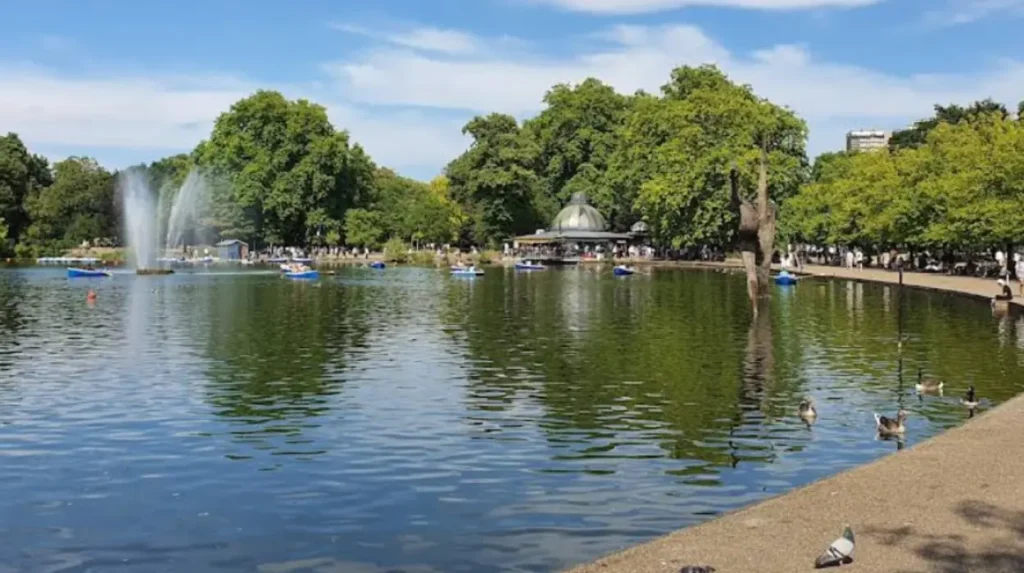
Victoria Park occupies the southern perimeter of the borough boundary. Established via an Act of Parliament in 1841 and opened to the public in 1845, this grand municipal park encompasses 86.18 hectares of managed parkland. The layout splits into two distinct zones separated by Grove Road. The western section contains the ornamental tier, featuring the historic Regent’s Canal links, a boating lake, and the replica Chinese Pagoda originally constructed in 1842. The eastern section functions as a recreational zone, housing the multi-use sports pitches, running tracks, and the concrete Victoria Park Skatepark. The space acts as a critical wildlife corridor, protecting mature stands of London plane trees (Platanus × acerifolia) and providing nesting habitats for waterfowl.
London Fields
London Fields comprises 12.65 hectares of public common land situated directly north of the Broadway Market thoroughfare. Documented as common grazing land since the thirteenth century, the modern park serves as a primary recreational hub for central Hackney. The space incorporates a dedicated cricket pitch, floodlit tennis courts, two separate children’s play areas, and a designated, regulated barbecue zone. The defining feature of London Fields is the London Fields Lido, a 50-metre, Olympic-sized open-air swimming pool. Originally opened in 1932, closed in 1986, and fully restored with a heated filtration system in 2006, the lido remains operational 12 months a year, accommodating up to 150 swimmers simultaneously during peak operation.
Hackney Marshes
Hackney Marshes constitutes a vast, flat expanse of low-lying wetland and regularised meadowland covering 136.15 hectares along the western bank of the River Lea (Davis, 2016). Historically part of the ancient Lammas lands, the marshes underwent extensive land drainage and raising during the late nineteenth and early twentieth centuries (Davis, 2016). Today, the site functions as the foundational home of grassroots amateur association football in the United Kingdom. The grounds maintain exactly 82 full-sized grass football pitches, alongside dedicated rugby and cricket fields. The central Hackney Marshes Centre provides changing facilities, briefing rooms, and event spaces for the hundreds of amateur sports teams competing weekly in the Hackney and Leyton Sunday Football League.
How can visitors navigate and experience the waterways of Hackney?
Visitors can navigate and experience the waterways of Hackney by walking, cycling, or boating along the Regent’s Canal and the Hackney Cut navigation network. These industrial-era transport canals connect central London directly to the River Lea valley infrastructure.
The Canal Network Architecture
The maritime infrastructure of Hackney relies on two primary engineered waterways constructed to transport industrial freight during the Industrial Revolution (Davis, 2016). The Regent’s Canal, designed by architect John Nash and completed in 1820, enters the borough from Islington in the west, tracking eastward past Kingsland Basin and Broadway Market before converging with the Hertford Union Canal. The second channel is the Hackney Cut, a straight navigational canal excavated in 1770 under the River Lee Navigation Acts to bypass the natural, meandering loops of the River Lea (Davis, 2016). These artificial waterways maintain a minimum depth of 1.2 metres and utilise traditional brick-lined locks, such as the historic Acton’s Lock, to manage water displacement and allow continuous vessel passage.
Towpath Pedestrian and Cycle Routes
The continuous concrete and gravel towpaths running alongside the Regent’s Canal and the Hackney Cut form an integrated active travel network (Waterways, 2018). These pathways are managed by the Canal & River Trust and connect directly to National Cycle Network Route 1. Pedestrians and cyclists can traverse the borough completely separated from vehicular traffic, moving smoothly from the western edge of Haggerston through to the industrial edgelands of Hackney Wick (Davis, 2016). The towpath infrastructure features safety elements including historic cast-iron bollards, access ramps for disabled users, and solar-powered directional markers designed to regulate shared use between fast commuters and leisure walkers (Waterways, 2018).
Boating, Kayaking, and Waterborne Recreation
Recreational usage of the Hackney waterways includes private narrowboat navigation, commercial passenger vessels, and non-motorised watersports. The Lee Valley Boat Centre and local clubs supply public access to the water via kayaks, canoes, and stand-up paddleboards. Navigational rules require all vessels to maintain a strict speed limit of 4 miles per hour (6.4 kilometres per hour) to prevent wash damage to the canal banks and local wildlife habitats. Users must navigate through the historic lock chambers by manually operating the timber balance beams and iron paddle gear. The waterways support a large resident boating community living on permanent and itinerant “continuous cruiser” moorings, which require vessels to relocate a minimum of once every 14 days.
Where are the top food spots and markets located in Hackney?
The top food spots and markets are located along Broadway Market, Ridley Road in Dalston, and within the commercial food hubs of Hackney Wick. These distinct districts specialize in artisanal dining, international produce trading, and independent culinary innovation.
Broadway Market
Broadway Market is an ancient cart pathway and designated street market structure operating between London Fields and the Regent’s Canal. While brick-and-mortar storefronts operate daily, the historic street market occurs every Saturday from 09:00 to 17:00. The market features over 135 structured stalls retailing hot street food, organic agricultural produce, artisan cheeses, and baked goods. The street functions as a strict culinary incubator where independent vendors must pass rigorous quality and sourcing assessments enforced by the Hackney Council Markets Department. Notable permanent establishments along the strip include traditional East End pie-and-mash shops, vegan bakeries, and specialty third-wave espresso bars.
Ridley Road Market
Ridley Road Market is situated in Dalston, running parallel to the A10 Kingsland Road. Established formally in the late 1880s, this market provides essential food security and affordable retail goods to the diverse local population. Operating Monday through Saturday from 06:00 to 18:00, the market consists of approximately 150 outdoor stalls. The culinary inventory prioritises Afro-Caribbean, Asian, and Mediterranean food items, including fresh cassava, plantains, specialized spices, halal meats, and fresh Atlantic seafood. Ridley Road represents a critical historical monument of the borough’s multicultural evolution, serving as an operational counterweight to the rapid commercial gentrification observed in surrounding districts.
Hackney Wick Gastronomic Hub
The industrial conservation zones of Hackney Wick house a dense cluster of independent restaurants, microbreweries, and experimental kitchens (Davis, 2016). Situated inside repurposed nineteenth-century factories and printing works, these venues focus on seasonal British dining, wood-fired pizza concepts, and craft beer production (Davis, 2016). Many establishments feature canal-side terraces built over historical industrial wharves, allowing visitors to dine directly adjacent to the water. The area is highly concentrated with microbreweries that operate public taprooms, serving unfiltered beer brewed on-site using traditional fermentation vessels and locally sourced hops.
Explore More Area Guide
Best Cafes, Markets, and Leisure Activities to Experience in Hackney, East London
Top Outdoor Activities and Scenic Places Across Hackney in London
What cultural and historical attractions define Hackney?
The cultural and historical attractions that define Hackney are the Hackney Empire theatre, the Hackney Museum, and the preserved architectural heritage of the Sutton House estate. These public institutions preserve and exhibit the artistic, social, and political development of East London.
The Hackney Empire
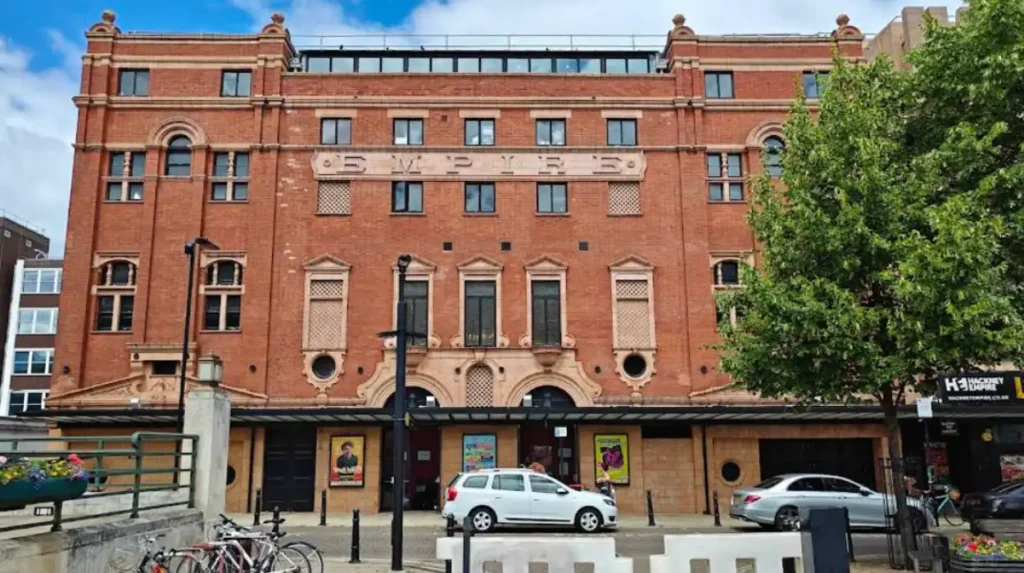
The Hackney Empire is a Grade II* listed Edwardian theatre located on Mare Street. Designed by the renowned theatre architect Frank Matcham and opened in 1901, the venue originally functioned as a premier music hall hosting legendary performers such as Charlie Chaplin and Marie Lloyd. The architectural structure features a striking terracotta facade and an ornate interior auditorium holding exactly 1,275 seats across three tiers. Following an extensive £17 million restoration project completed in 2004, the theatre operates as a modern performing arts center. It produces a yearly calendar of opera, stand-up comedy, contemporary drama, and its critically acclaimed annual traditional pantomime.
Sutton House
Sutton House is the oldest residential building surviving within the boundaries of the London Borough of Hackney. Constructed in 1535 by Sir Ralph Sadleir, a prominent diplomat and Secretary of State to King Henry VIII, the Tudor manor house is currently owned and operated by the National Trust. The brick structure retains architectural elements spanning five centuries, including original linenfold oak panelling, carved Tudor hearths, a seventeenth-century courtyard, and a preserved 1980s anarcho-punk squatters’ room. The property serves as an educational museum, delivering structured tours and workshops that detail the transformation of Hackney from a wealthy rural retreat into a dense, urban industrial landscape.
Hackney Museum
The Hackney Museum is located within the Technology Centre complex on Reading Lane, adjacent to the Hackney Town Hall. This municipal museum collects, preserves, and exhibits the personal histories and material culture of the diverse communities that have settled in the borough. Permanent displays track human migration to the area from the Anglo-Saxon era through to modern refugee movements, showcasing clothing, domestic items, oral history recordings, and industrial tools. The archive holds over 8,000 discrete objects and photographs, including materials from the historic “Mapping the Change” project, which documented the socio-economic impacts of the London 2012 Olympic Games on local residents (Dodd, 2013).
How can digital nomads and business travellers utilise workspace infrastructure in Hackney?
Digital nomads and business travellers can utilise workspace infrastructure in Hackney through a comprehensive network of specialized co-working spaces, public libraries, and work-friendly independent coffee shops. These facilities provide high-speed fiber-optic connectivity, ergonomic furniture, and flexible hot-desking options.
Commercial Co-working Spaces
The economic growth of the creative and technology sectors in East London has driven the establishment of multiple commercial co-working hubs across Hackney (Shaw, 2005). These facilities offer flexible access agreements, ranging from day passes to monthly dedicated desk rentals. The internal infrastructure is tailored specifically for remote digital professionals:
- Connectivity: Synchronous fiber-optic broadband links providing upload and download speeds exceeding 100 Mbps.
- Amenities: Soundproof telephone booths for confidential video calls, fully equipped meeting spaces with digital projection screens, and ergonomic seating options.
- Locations: Highly concentrated within the converted industrial warehouses of Shoreditch, Haggerston, and Hackney Wick (Davis, 2016).
Public Workspace Infrastructure
For professionals seeking free public workspaces, the Hackney Council Library Service operates a network of 8 public libraries distributed across the borough. The central hub is the Hackney Central Library on Mare Street, supplemented by specialized branches including the Dalston C.L.R. James Library. These public institutions provide free access to high-speed wireless networks, dedicated study carrels with universal electrical outlets, and cheap desktop printing facilities. Users do not require permanent residency to access the workspaces, though a free temporary library membership is required to log into the secure municipal data networks.
Work-Friendly Cafes and Etiquette
Hackney contains a large volume of independent coffee shops that explicitly accommodate remote workers during standard business hours. These venues typically feature large communal tables, abundant power sockets, and natural lighting. To maintain a functional balance with local hospitality businesses, remote workers must observe established local workspace etiquette. This includes purchasing food or beverage items at a minimum interval of once every two hours, avoiding peak lunchtime dining hours (12:00 to 14:00) for laptop usage, and using headphones for all audio playback to ensure a quiet environment for other patrons.
What are the main green spaces to visit in Hackney?
The main green spaces in Hackney are Victoria Park, London Fields, and Hackney Marshes. These areas support recreation, sports, biodiversity, and outdoor leisure activities.