Victoria Park in Hackney, often called Vicky Park or the People’s Park, stands as London’s oldest public park, opened in 1845 to serve the East End’s working class. Spanning 86 hectares in the London Borough of Tower Hamlets with its northern edge in Hackney, this beloved green space draws over 9 million visitors yearly for its history, nature, and community vibe. Perfect for locals seeking an evergreen escape, it blends Victorian heritage with modern leisure.
Rich Historical Roots
Victoria Park emerged from 19th-century public health crises, spurred by epidemiologist William Farr’s push for green spaces amid East London’s overcrowding and cholera outbreaks. A massive petition to Queen Victoria in 1840, backed by MP George Frederick Young, led to the 1841 York House and Victoria Park Act, enabling the Crown Estate to buy 218 acres of former Bonner Fields, brickfields, and gravel pits. Architect James Pennethorne, pupil of John Nash, designed it between 1842-1846, echoing Regent’s Park’s grandeur.
The park opened informally in 1845, instantly popular despite incomplete works, with locals flocking before full landscaping. Queen Victoria visited in 1873, admiring its horticultural displays of surplus plants given to residents. By the late 1800s, it earned its “People’s Park” moniker as a hub for political rallies at Speaker’s Corner, drawing socialists like William Morris and Annie Besant, outshining even Hyde Park in radical fervor. This non-conformist spirit, bridging Tower Hamlets’ poverty and Hackney’s dissent, fueled debates on everything from socialism to atheism.
World War II transformed it into an anti-aircraft site with gun emplacements, POW camps, and allotments; bombs destroyed features like lodges and the pagoda. Post-war, the lido (opened 1936, damaged, closed 1986) vanished, but a £12 million refurb in 2011-2012 restored heritage elements. Today, it’s Grade II* listed, holding Green Flag and Green Heritage awards, including 11 straight People’s Choice wins.
Iconic Features and Layout
Bounded by Regent’s Canal (west) and Hertford Union Canal (south), Grove Road (A1205) splits the park into east and west halves. Key entrances include Royal Gates, Crown Gates, and St. Augustine’s Gate, with 20 gates total for easy access.
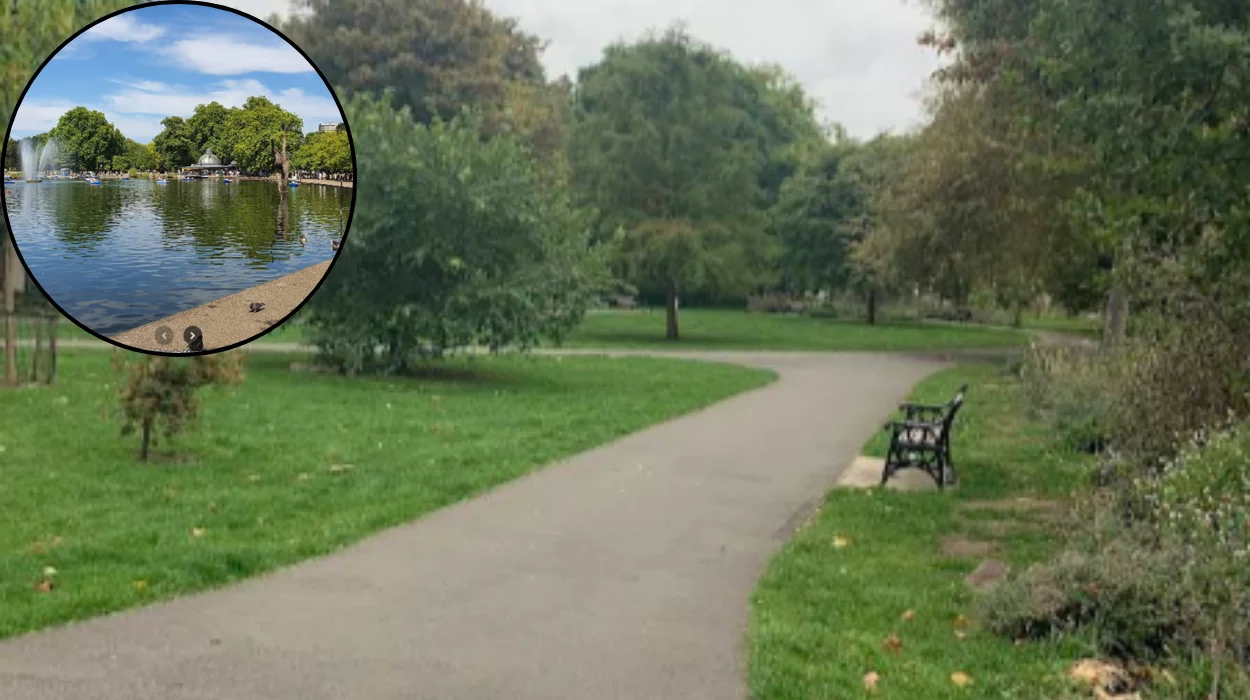
Standouts include the West Lake’s replica Chinese pagoda—originally from Hyde Park’s 1842 exhibition—on a restored island linked by Pennethorne’s long-lost bridge, now with pedalos and rowboats. The Burdett-Coutts fountain, partially restored with mirror pools and beds, anchors ornamental gardens. Historic gems: Dogs of Alcibiades statues at Bonner Gate (replicas post-vandalism), Grade II-listed London Bridge alcoves (1760), and Gothic fountains.
East side boasts The Hub cafe, community rooms, and adult play; west has Pavilion Cafe overlooking the lake. Two lakes host wildlife, plus a model boating lake for Victoria Model Steam Boat Club (oldest worldwide, since 1904). Decorative gardens feature roses and yews; wilder zones include grasslands and the Memoryscape audio trail sharing WWII tales and local memories.

Family-Friendly Activities
Victoria Park shines for families with diverse play options. The main adventure playground boasts London’s longest slide, wooden towers, sandpits, and toddler climbing frames. Summer splash pool (11am-5pm, May half-term to late August) delights kids, shutting only in rain.
Sports abound: tennis courts, football pitches, cricket nets (refurbished 2005), bowls green, skatepark, and running tracks for Victoria Park Harriers. Hire rowboats on West Lake or join model boat regattas. One O’Clock Club offers under-fives activities; summer programs include paddling pools. Cyclists and pedestrians thrive on paths; BBQs banned, dogs barred from play areas.
Vibrant Events and Culture
Vicky Park pulses with community life. Weekly Sunday markets and seasonal food stalls draw crowds; free outdoor cinema, live music, and street food via “In the Neighbourhood” program. Major festivals like All Points East, Lovebox, Field Day, and High Voltage showcase global acts, from Radiohead to Tiësto.
Political legacy lives on with occasional marches; Rock Against Racism (1978, Clash headlining) combated far-right rise. Bandstand hosts free summer concerts; Shore Field suits medium festivals and wellness events. Films like Pride (2014) and John Lewis ads feature it; novels like Tipping the Velvet set rallies here.
Wildlife and Green Credentials
A biodiversity hotspot, Victoria Park supports common birds like great tits, blackbirds, and waterfowl (Canada geese, coots, mallards). Lakes host fish-attracting herons and kingfishers; grasslands and shrubs aid butterflies and invertebrates. Part of a Thames-to-Olympic green corridor, it links Mile End Park and Queen Elizabeth Olympic Park.
Green Flag status since 2011, plus London in Bloom golds, reflect top maintenance. Conservation area (designated 1977, extended 2013/1994) protects fronting buildings like London Chest Hospital. Refurbs reinstated wildflower meadows and reptile habitats nearby.

Practical Visitor Guide
Open 7am-dusk daily; check boards for exact times. Reach via Mile End Tube (Central/District/H&C lines, 10-min walk or 277/425 bus), Cambridge Heath/Hackney Wick rail. Buses: 277, 425 (inside), 8, 339, D6 nearby. Cycle NCR1 along canals; Blue Badge parking in main lots (5mph limit).
Toilets accessible; Changing Places facility at community buildings. Cafes wheelchair-friendly; follow byelaws—no cars (except Blue Badge), considerate cycling. Download park map for historic points. Follow @vickyparklondon for updates.
Why Victoria Park Endures
This evergreen gem offers timeless appeal for Hackney residents—history walks, picnics, sports, or festivals amid 9 million annual guests. From Victorian origins to modern awards, it remains East London’s heart, fostering community and nature. Plan your visit to Vicky Park for an authentic slice of local life.