Key Points
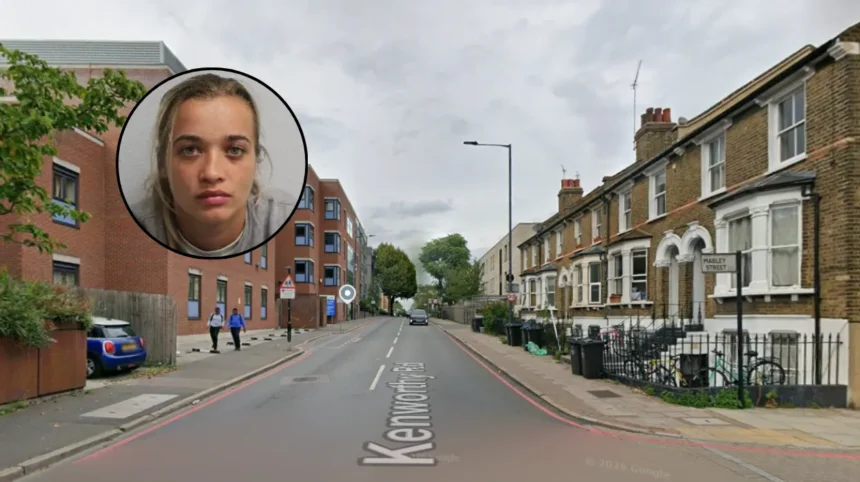
- Driver Sentenced: 27-year-old Tiffany Treanor-Johnson was sentenced to 10 years and nine months in prison at Snaresbrook Crown Court for causing death by dangerous driving.
- Tragic Incident: Treanor-Johnson drove an Audi at 53mph in a designated 20mph zone in Hackney and struck 27-year-old cyclist Harry Webb.
- Substance Use: The court heard that Treanor-Johnson had inhaled class C drug nitrous oxide (laughing gas) prior to the collision. Fragments of balloons used for inhaling the gas were recovered from her vehicle.
- Left Scene of Crime: Following the impact at the junction of Kenworthy Road and Hassett Road, Treanor-Johnson mounted the pavement, struck another car, and drove off, leaving the victim critically injured.
- Victim’s Background: Harry Webb was a music student at the London College of Contemporary Music (LCCM) and was speaking to his father on the telephone at the moment of impact. He died in hospital days later and was posthumously awarded his master’s degree.
- Driving Ban: In addition to her custodial sentence, Treanor-Johnson was disqualified from driving for 10 years.
Hackney (East London Times) October 10, 2026 – A 27-year-old driver who inhaled laughing gas before driving at over double the legal speed limit and fatally striking a cycling music student in East London has been jailed for 10 years and nine months.
Tiffany Treanor-Johnson, resident of Bramshaw Road in Hackney, pleaded guilty to causing death by dangerous driving at Snaresbrook Crown Court. The court heard that on the evening of September 10, 2023, Treanor-Johnson was operating an Audi at 53mph inside a 20mph zone along Kenworthy Road when she struck 27-year-old cyclist Harry Webb. After the collision at the junction with Hassett Road, Treanor-Johnson mounted the pavement, crashed into another vehicle, and drove away from the scene, leaving Mr Webb critically injured on the road. Mr Webb was transported to hospital with severe traumatic head injuries and succumbed to his wounds days later. He was awarded his master’s degree posthumously by the London College of Contemporary Music (LCCM).
What Evidence and Statements Were Presented in Court?
As reported by Tristan Kirk of The Evening Standard and Clara Margotin and Adam Care of MyLondon, prosecutor Fiona Robertson detailed the events leading to the collision, explaining that Mr Webb was on the phone with his father, Mike Webb, when he was struck. Mr Webb had finished moving into his new accommodation earlier that day to begin his second year at LCCM and was calling his father to thank him for his assistance. Prosecutor Fiona Robertson noted that “the call suddenly went silent as Harry was struck and fatally injured on Kenworthy Road.” A passer-by subsequently located the phone on the road and instructed his father to return immediately to London.
Police investigators recovered fragments of balloons used to inhale nitrous oxide from inside Treanor-Johnson’s vehicle. The court noted that nitrous oxide was classified as a Class C drug.
During the hearing, poignant victim impact statements were delivered by the family and friends of Mr Webb, while Treanor-Johnson wept in the dock.
As reported by Clara Margotin and Adam Care of MyLondon, Pat Webb, the victim’s mother, told the court:
“My life ended on September 10, 2023 after receiving a call from the surgeon. We had just moved him into his new accommodation that day. How can someone smash into him and drive away? Watching someone you love die is an image you’ll never forget. I cannot bear waking up without him every day. We have no future left, each day is painful.”
As reported by Clara Margotin and Adam Care of MyLondon, the victim’s father, Mike Webb, stated in a statement read by the prosecutor:
“The sound of the emergency sirens rushing to the scene will always haunt me. We both miss Harry constantly.”
As reported by Clara Margotin and Adam Care of MyLondon, Mr Webb’s friend, identified in court as George, stated:
“Nothing could have prepared me for suddenly losing Harry. He was the most fun, caring, intelligent and wonderfully caring person you could ever meet. I will surely suffer from the loss of him for the rest of my life.”
Presiding Judge Rosa Dean sentenced Treanor-Johnson to 10 years and nine months in prison alongside a 10-year driving disqualification. Addressing the defendant directly, Judge Rosa Dean stated:
“You are solely to blame for the collision. I am sure that you were probably impaired due to taking balloons. We must all hope that you truly are sorry.”
What Is the Background of This Particular Development?
The fatal incident occurred on September 10, 2023, along Kenworthy Road in Hackney, an area that has seen increased local campaigning regarding cyclist safety and traffic calming. Following the death of Harry Webb, community members and cycling safety advocates erected a “ghost bike” memorial at the crash site as a tribute to the musician and as a call for stricter road safety enforcement.
The case also intersected with UK government policy changes regarding substance regulation. In late 2023, the UK Government officially classified nitrous oxide—commonly known as “laughing gas”—as a Class C drug under the Misuse of Drugs Act 1971. The legal shift made the possession and recreational misuse of the drug illegal, following growing public concern over its link to anti-social behaviour, dangerous driving, and neurological harm.
How Will This Development Affect Cyclists, Motorists, and Local Communities?
This legal outcome establishes a strict judicial precedent regarding drug-impaired driving and excess speed within urban residential zones.
For road users and cyclists across London and the UK, the custodial sentence of over a decade provides a strong signal that the judicial system is taking collisions involving vulnerable road users seriously. Cycling advocacy groups often monitor such trials as benchmarks for justice and safety enforcement on metropolitan roads.
For motorists, the ruling underlines the severe legal consequences of driving while impaired by psychoactive substances such as nitrous oxide, as well as exceeding low-speed urban limits (20mph zones). The severe sentence and 10-year driving ban serve as a deterrent against driving under the influence of recreational inhalants.