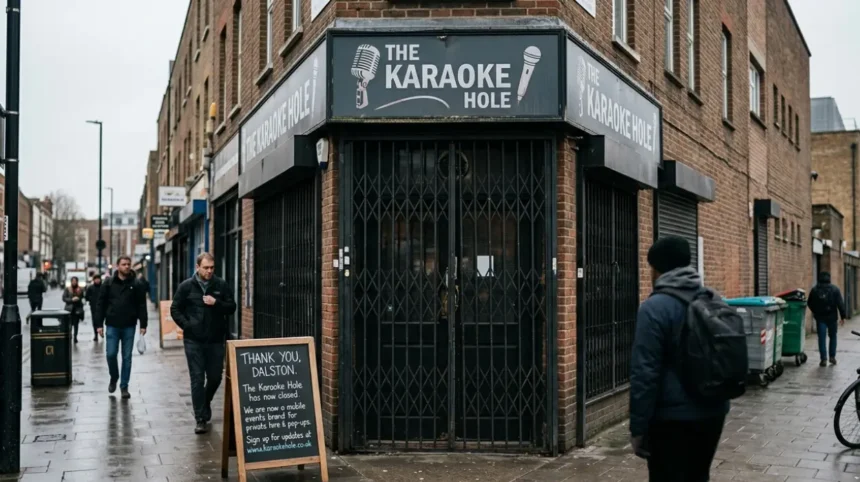
The Karaoke Hole in Dalston closed on 31 January 2026 after eight years of operation, with the operators saying the venue will stop nightly trading and continue as a mobile events brand for private hire and pop-ups.
- Why did the Dalston drag karaoke bar close?
- When did the closure happen and what is the official timeline?
- Who ran the Dalston drag karaoke bar and who are the key people?
- What is the venue’s history and cultural significance?
- Were there financial or regulatory reasons for the closure?
- What will happen to the physical site at 95 Kingsland High Street?
- How will the closure affect Dalston’s LGBT+ nightlife and community?
- What evidence shows the closure is part of a wider trend?
- What are the immediate next steps the operators announced?
- What alternatives exist locally for performers and audiences?
- What are the legal and licensing concepts relevant to such venue closures?
- What data or statistics contextualise nightlife venue losses in London?
- What are possible future scenarios for the brand and the site?
- How should readers, performers, and local policymakers respond?
Why did the Dalston drag karaoke bar close?
The venue closed because its operators decided to end the fixed-site lease and pivot to events and private hires, citing the end of the venue’s run and plans to take the concept on the road.
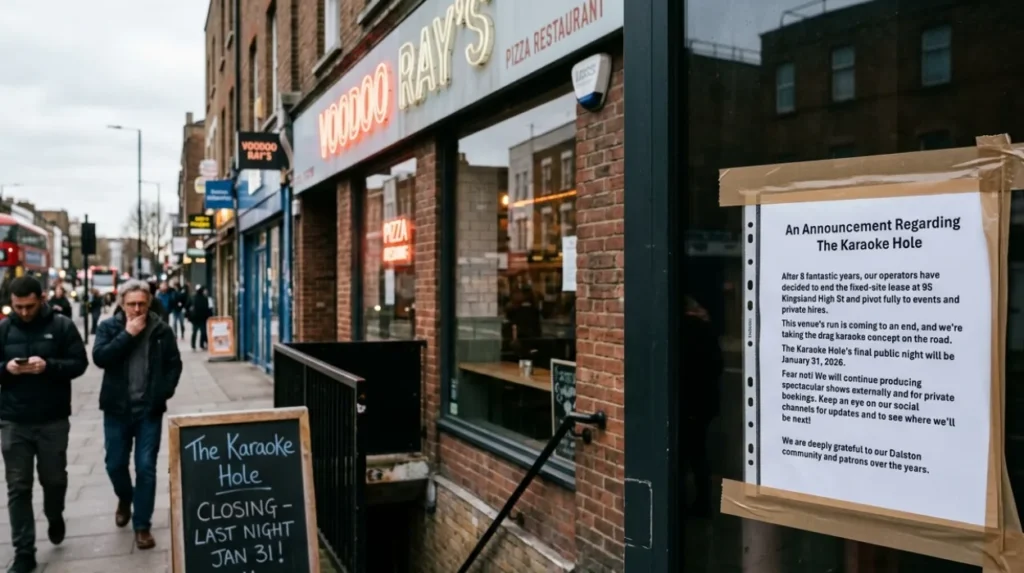
The Karaoke Hole opened in 2018 beneath Voodoo Ray’s at 95 Kingsland High Street, Dalston, as a drag-focused karaoke basement linked to Dalston Superstore. The operators announced the final public night as 31 January 2026 and posted that they will continue producing shows externally and for private bookings. The closure followed a formal public announcement on social channels and local press coverage.
When did the closure happen and what is the official timeline?
The bar’s last public night was 31 January 2026; the closure was publicly announced in January 2026 with a statement that programming will continue off-site and as private events.
The Karaoke Hole ran from 2018 to January 2026, operating primarily Thursday–Saturday nights and hosting drag karaoke, cabaret, and queer club programming. The timeline includes the original launch in May 2018 and eight years of events culminating in the final scheduled night at the end of January 2026.
Who ran the Dalston drag karaoke bar and who are the key people?
The Karaoke Hole was run by the Dalston Superstore team and local drag performers; the operators stated they will continue as event producers and private-hire hosts.
Dalston Superstore is an established East London LGBT+ venue and events organisation that created The Karaoke Hole as a sister basement venue at 95 Kingsland High Street. Dalston Superstore’s programming team and resident drag artists regularly performed and curated nights at The Karaoke Hole, and that same team announced the closure and the plan to take the brand “on wheels” for future events.
What is the venue’s history and cultural significance?
The Karaoke Hole opened in 2018 in a former basement club space and became a notable local drag karaoke and queer nightlife venue, contributing to Dalston’s LGBT+ nightlife for eight years.
The space occupied the former Dance Tunnel basement below Voodoo Ray’s pizzeria and developed a reputation for drag karaoke, cabaret, and queer nights. The venue functioned as a grassroots performance space and a feeder for larger Dalston Superstore events, hosting regular drag performers and community nights. The closure mirrors a wider London trend: the city lost roughly 60% of dedicated LGBT+ venues since 2006, a long-term decline noted in coverage of queer nightlife.
Were there financial or regulatory reasons for the closure?
Public statements named the end of the venue’s run and a strategic shift to events as the reasons; no formal public notice linked the closure to specific regulatory action or insolvency in press reports.
Local coverage and the venue’s announcement emphasised a planned transition rather than forced closure by authorities or immediate insolvency. No council enforcement notices, licensing revocations, or insolvency filings were reported in the cited coverage at the time of public announcement. Broader pressures on nightlife venues in London—rising rents, development, and declining dedicated LGBT+ spaces—form the sector context for many closures, as documented in previous reporting on venue losses across the city.
What will happen to the physical site at 95 Kingsland High Street?
The operators confirmed the fixed-site business will stop trading while the brand will operate at events; the future tenancy or redevelopment of 95 Kingsland High Street depends on the property owner and local planning decisions.
The building’s basement previously housed Dance Tunnel and later The Karaoke Hole. After a venue gives up a lease, options typically include a new hospitality operator taking the lease, conversion to a different use (retail or leisure), or redevelopment subject to landlord decisions and planning permission. No public, authoritative notice about a new tenant or planning application was available in the cited local coverage at the time of the closure announcement.
How will the closure affect Dalston’s LGBT+ nightlife and community?
The closure removes a regular drag performance and queer social space from Dalston’s night-time economy, while the operators’ move to mobile events preserves the performance network but reduces fixed-site community capacity.
Fixed venues provide consistent safe space, programming, and walk-in access for community members and performers; losing such venues reduces daily/weekend options and strains remaining sites. The team behind The Karaoke Hole said they will continue hosting events externally and for private hire, which preserves artist opportunities and audience engagement but changes accessibility and frequency compared with a permanent venue.
What evidence shows the closure is part of a wider trend?
London has lost a substantial share of dedicated LGBT+ venues since the mid-2000s; multiple reports document around a 60% decline in licensed LGBT+ venues since 2006, affecting community access and nightlife diversity.
Reports and coverage of London nightlife show long-term reductions in dedicated queer venues, driven by property market pressures, changing nightlife habits, and licensing shifts. City-level programmes such as the Mayor’s LGBTQ+ Venues Charter exist to support venues, indicating official recognition of the sector’s vulnerability.
What are the immediate next steps the operators announced?
The operators announced they will continue programming as a touring or private-hire events brand and remain available for booking at external venues and festivals.
Public statements invited followers to attend final nights and explained the team will “take it on the road” with pop-ups and private events, maintaining the brand’s programming while ending nightly trading at the Dalston basement. The operators also said their artists remain available for hire and that curated events will continue under the brand. This model uses existing performer networks and event infrastructure to sustain bookings without a leased venue.
What alternatives exist locally for performers and audiences?
Audiences can attend Dalston Superstore, remaining East London queer nights, and citywide LGBTQ+ events; performers can join community club nights, private-hire events, festivals, and touring bookings.
Dalston Superstore remains an operating nearby LGBT+ venue that produces events and supports local performers. Citywide queer nights, charity club nights, and festival circuits continue to programme drag and cabaret, and organisations run booking networks for freelance performers. The Mayor’s LGBTQ+ Venues Charter and similar initiatives list venues and pledges that support safer, programmed queer nightlife.
What are the legal and licensing concepts relevant to such venue closures?
Venue closures intersect with commercial leases, premises licences under the Licensing Act 2003, planning use classes, and landlord decisions; changes require lease surrender, licence variation or transfer, and potential planning approval for different uses.
A premises licence under the Licensing Act 2003 governs alcohol sale, regulated entertainment, and opening hours; licence holders can surrender licences or apply for transfer if a new operator takes the site. Commercial leases have break clauses, notice periods, and landlord consent rules; tenants exit by surrendering the lease or negotiating assignment. Planning rules control use classes and material changes to property use; redevelopment or change of use requires planning approval from the local borough council. No public records in the cited articles indicated regulatory enforcement caused this particular closure.
What data or statistics contextualise nightlife venue losses in London?
Since 2006, reporting indicates London lost about 60% of dedicated LGBT+ venues, and sector surveys show rising operational costs and property pressures as key drivers.
Coverage from cultural reporting and sector articles quantifies long-term venue decline and links losses to economic pressures such as rent increases and changing urban development. City-level support initiatives exist in response, indicating the scale of the issue and the policy attention it receives.
What are possible future scenarios for the brand and the site?
Scenario A: the brand runs touring events and private hires while the venue stays empty or is re-let; Scenario B: a new hospitality operator opens a different nightlife venue in the basement; Scenario C: the site converts to non-nightlife use subject to landlord and planning decisions.
The operators’ stated plan aligns with Scenario A—continuing programming via bookings and pop-ups—preserving artist networks but removing a permanent community venue. If a new tenant assumes the lease, the site could reopen under different branding and programming, which requires lease assignment and premises licence transfer. If the landlord pursues redevelopment, planning applications and council decisions will determine future use. No evidence in cited reporting confirmed which scenario will occur.
How should readers, performers, and local policymakers respond?
Readers should attend remaining events and support local queer venues; performers should register with local promoters and networks; policymakers should prioritise protections for cultural venues through planning, tenancy support, and charter schemes.
Local attendance and bookings sustain remaining venues financially, while promoters and performers can maintain visibility through festivals and private events. Policy levers include planning protections for cultural uses, business-rate relief, and supportive licensing practice; schemes such as the Mayor’s LGBTQ+ Venues Charter formalise venue support and safety commitments. These practical steps preserve night-time economy diversity and performer livelihoods.
Why Did The Karaoke Hole in Dalston Close?
The Karaoke Hole closed because the operators decided to end the venue’s fixed-site run and continue the brand as a mobile events and private-hire business. The team announced they would stop nightly trading in Dalston while continuing drag karaoke events, pop-ups, and external bookings elsewhere.