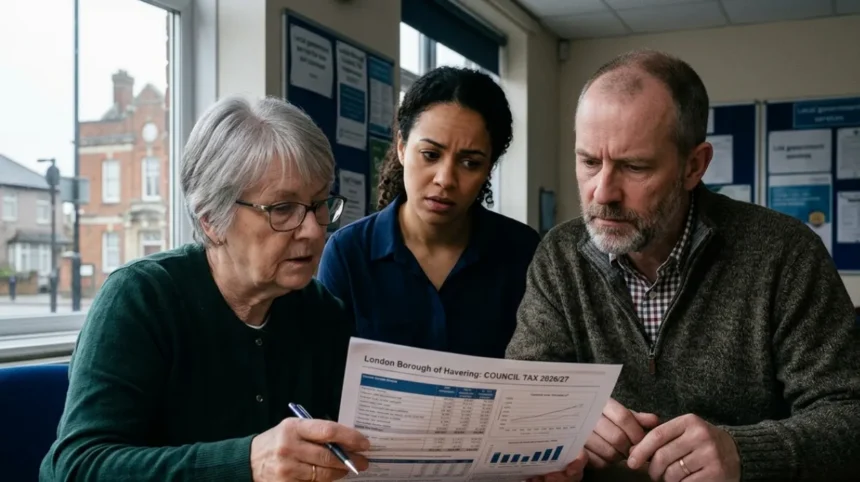
Havering Council Tax funds local services in the London Borough of Havering. The 2026/27 rates feature a 4.99% increase, with Band D at £2,424 including precepts.
- What Is Havering Council Tax?
- How Are Havering Council Tax Bands Determined?
- What Are the Havering Council Tax Bands and Charges for 2026?
- How Much Council Tax Do You Pay in Havering 2026 by Band?
- Why Did Havering Council Tax Rise in 2026?
- How Do You Check and Challenge Your Havering Council Tax Band?
- What Discounts and Exemptions Apply to Havering Council Tax 2026?
- When and How Do You Pay Havering Council Tax 2026?
- What Services Does Havering Council Tax Fund in 2026?
- Can Havering Council Tax Increase Further After 2026?
What Is Havering Council Tax?
Havering Council Tax is a local property tax levied by the London Borough of Havering on residential properties to fund essential public services such as waste collection, street cleaning, education, social care, and policing. Rates for 2026/27 rose 4.99%, setting Band D at £2,424 annually from April 2026, split among Havering Council, Greater London Authority, and parish precepts.
Council Tax originated under the Local Government Finance Act 1992, replacing the Community Charge (poll tax). Havering, a suburban borough in East London covering 43 square miles with 263,710 residents as of 2021, administers this tax through its democratic council elected every four years.
The tax bases valuation on property capital value as of 1 April 1991, determined by the Valuation Office Agency (VOA), part of HM Revenue and Customs. Properties fall into eight bands (A to H). Havering’s taxbase for 2026/27 stands at 91,122 Band D equivalents, reflecting population growth and housing demand.
Payments occur in 10 monthly instalments from April to January, with options for 12 months via direct debit. Non-payment triggers reminders, court summons, and potential enforcement like distress warrants. Discounts reduce liability: 25% for single occupants, up to 100% for severe disabilities or students.
This system ensures equitable funding proportional to property size. Implications include budgeting pressures from rising social care costs, which consume 70% of Havering’s budget amid London’s fastest child population growth.
How Are Havering Council Tax Bands Determined?
Havering Council Tax bands range from A to H based on a property’s 1991 market value set by the Valuation Office Agency. Band A covers properties valued under £40,000; Band H exceeds £320,000. Check your band on gov.uk or contact VOA for appeals; bands remain fixed until revaluation.
The banding process starts with VOA assessors estimating 1991 open-market values using sales data, property features, and comparables. Havering properties, typically semi-detached homes in Romford or Rainham, often fall in Bands C-D.
England’s last full revaluation occurred in 1991; Scotland revalues every five years. No national revaluation has happened since, despite property prices rising over 300% in London. Appeals succeed if evidence shows banding error, like neighbour discrepancies; 2025 saw 1,200 successful UK appeals averaging £150 savings.
Key components include dwelling size, bedrooms, location, and improvements post-1991 ignored unless structural. Examples: a two-bedroom flat in Hornchurch (Band C, £40,001-£52,000); a five-bedroom detached in Upminster (Band G, £160,001-£320,000).
Implications affect mobility: upgraders face jumps, e.g., Band D to E adds hundreds yearly. Future relevance ties to potential 2026+ revaluations debated in government reviews for fairness amid inflation.
What Are the Havering Council Tax Bands and Charges for 2026?
Havering Council Tax 2026/27 bands charge: Band A £1,616.07; B £1,884.41; C £2,152.74; D £2,421.08 (Havering portion £1,914.15); E £2,957.74; F £3,494.41; G £4,031.07; H £4,837.29. Full bills include GLA precept (£387 monthly average) from April 2026.
Bands reflect proportional charges: each rises uniformly. Havering’s basic Band D rose from £1,858 prior year to £1,914.15, a 4.99% hike approved March 2026.
Full bills combine: Havering precept (core services), GLA precept (Mayor of London/Sadiq Khan funding transport, police), and local parish precepts (e.g., Noak Hill adds £50 Band D). Average Band D totals £2,424, up £111 or £9.25 monthly from £2,313.
Examples: Band A one-bed flat pays £2,041 total; Band F four-bed house pays £3,881. Data shows 52% Havering properties in C-D bands, generating £221 million yearly revenue.
This structure incentivizes efficient services. Rising precepts reflect £72.7m deficits from housing surges (5,000+ units planned) and care demands.
How Much Council Tax Do You Pay in Havering 2026 by Band?
In Havering 2026/27, full Band D bills total £2,424 yearly (£202 monthly); Band A £2,041; B £2,381; C £2,721; E £2,957; F £3,494; G £4,031; H £4,837, including all precepts from 1 April 2026 to 31 March 2027.
Calculate via formula: (Band multiplier × Havering Band D rate) + GLA precept (£471 Band D) + parishes. Multipliers: A 6/9, B 7/9, up to H 18/9 of D.
Real-world: Romford terraced house (Band C) pays £2,721; Cranham bungalow (Band E) £2,957. Statistics: 91,122 taxbase yields £221m; 5% non-collection budgeted.
Direct debit spreads costs: 10 instalments deduct automatically. Council Tax Reduction Scheme aids low-income: full relief for under £217 weekly earnings post-housing costs.
Implications: 4.99% cap avoids referendum; exceeds inflation (2.5% CPI 2026 forecast). Bands unchanged since 1991 skew burdens on unchanged areas.
Why Did Havering Council Tax Rise in 2026?
Havering Council Tax rose 4.99% in 2026/27, maximum without referendum, to address £72.7m deficits from social care inflation, child population growth (London’s highest), housing demand, and stagnant central grants. Band D increased £111 to £2,424, approved March 2026.
Historical context: UK councils average 4.99% rises since 2022 levelling-up rules. Havering froze 2019-2021, then 2.99% 2025, accumulating pressures.
Mechanisms: Cabinet proposes; full council votes. March 2026 meeting approved post-debate, Labour amendment rejected.
Data: Adult social care up 10% costs; children services 20% rise. Population: 270,000 projected 2026, +18,000 children since 2011.
Examples: Similar rises in Redbridge (4.99%), Barking (4.95%). Implications: Funds £500m budget; sustains services amid £1.2bn national care gap.
How Do You Check and Challenge Your Havering Council Tax Band?
Check Havering Council Tax band on gov.uk ‘Find Council Tax band’ using postcode; view bill or contact Havering revenues at 01708 432777. Challenge via VOA formal appeal with evidence like sales, photos; 60% success if errors proven, changes backdated.
Process: Enter postcode online; VOA lists band, valuation. Common errors: post-1991 extensions ignored, neighbour mismatches.
Steps: Gather comparables (Rightmove 1991 sales proxies); submit online form; VOA inspects if needed. Timeline: 6 months average; urgent for bills.
Examples: Hornchurch flat downbanded from C to B saved £200 yearly; Upminster appeal failed on garage addition.
Implications: 10,000 annual London appeals; successes average 15% bill cut. Future: Mass appeals possible pre-revaluation.
What Discounts and Exemptions Apply to Havering Council Tax 2026?
Havering Council Tax 2026 offers 25% discount for single occupants; 50% for two+ students; 100% for armed forces, severe mental impairment, unoccupied new builds. Council Tax Reduction for low-income covers 50-100% based on needs; apply online.
Categories defined: Single Person Discount (SPD) automatic via form. Exemptions: full for empty annexes, <18 occupants, diplomatic properties (50 total UK).
Council Tax Support (CTR): Means-tested; working-age get 91.5% max, pensioners 100% passported. 35% Havering households claim CTR, saving £50m yearly.
Examples: Student house (Band D) pays 50%; carer (SMI) zero; jobseeker £1,200 yearly reduction.
Mechanisms: Annual review; changes reported within 21 days. Implications: Eases 20% child poverty rate; fraud checks recover £2m misclaims.
When and How Do You Pay Havering Council Tax 2026?
Pay Havering Council Tax 2026/27 in 10 instalments April-January via direct debit (preferred), online, phone 01708 432666, post, or in-person Romford Town Hall. Full £2,424 Band D due by 31 March 2027; setup online at havering.gov.uk.
Schedule: 1 April bill arrives; payments 11th monthly. Direct debit auto-deducts; 12-month option available.
Mechanisms: Online portal accepts cards; Standing Order too. Arrears: 7-day reminder, final notice, liability order.
Data: 85% pay direct debit; £5m collected monthly. Examples: Band C £227 monthly; annual lump sum discount none.
Implications: Timely payment avoids 2.5% enforcement fees; supports cashflow for services.
What Services Does Havering Council Tax Fund in 2026?
Havering Council Tax 2026 funds waste/recycling (£30m), highways (£15m), education (£80m), adult/child social care (£250m), housing benefits, libraries, parks across 17 wards like Cranham, Rainham. GLA precept covers Met Police, fire, TfL.
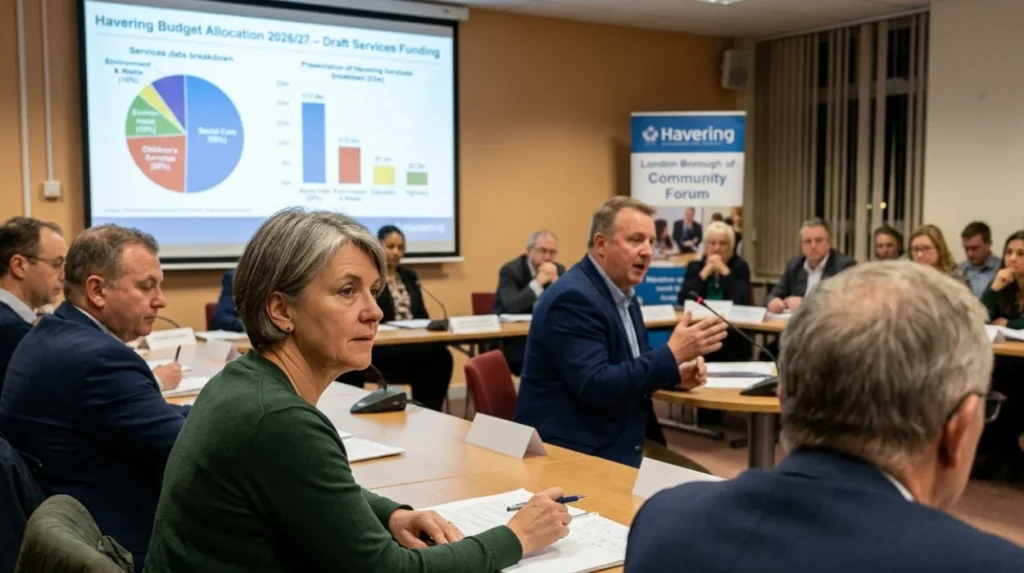
Budget breakdown: 50% social care; 20% children; 10% environment. £500m total spend, tax covers 40%.
Examples: Romford recycling centre operations; Upminster library hours; Brooklands fire response via GLA.
Mechanisms: Annual budget sets priorities; overspends cut services. Statistics: Funds 5,000 foster placements, 20,000 care hours weekly.
Implications: 4.99% rise sustains amid 3% national grant cuts; performance measured by Ofsted (Good rating 2025).
Can Havering Council Tax Increase Further After 2026?
Havering Council Tax faces 3% government cap 2027+, barring referendum for more; pressures from care costs, 5% yearly population rise suggest steady 3-5% hikes. Monitor March budgets; reductions unlikely without grants.
Historical: Capped at 5% since 2019. Processes: Referendum threshold Band D £5+ over 3-5%.
Data: Projections show £100m deficits by 2030 absent efficiency. Examples: Barnet 6.9% 2019 triggered vote (failed).
Implications: Residents budget 5% yearly; efficiencies like digital services save £10m.
What is Havering Council Tax?
London Borough of Havering Council Tax is a local property tax used to fund services such as waste collection, education, social care, and policing.