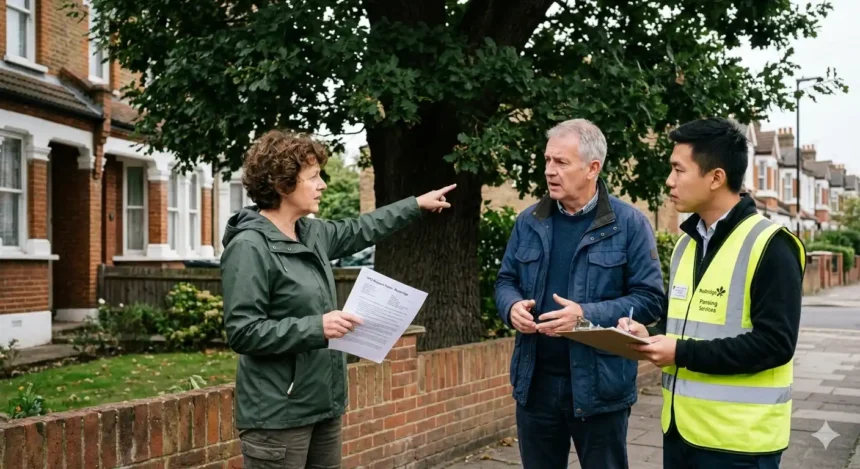
If you want a tree protected in Redbridge, you cannot “apply for a Tree Preservation Order” yourself in the same way you apply for a permit or licence. Instead, you make a formal request or report to Redbridge Council’s Planning Service so they can assess the tree and, if appropriate, serve a Tree Preservation Order (TPO) on the owner.
- What a Tree Preservation Order is
- Why this issue matters to local residents
- Who actually “applies” for a TPO?
- Step‑by‑step: asking Redbridge to make a TPO
- 1. Check whether the tree is already protected
- 2. Gather clear information about the tree
- 3. Explain why the tree should be protected
- 4. Contact Redbridge Council’s Planning Service
- 5. Council assessment and possible TPO
- Which council service handles TPOs?
- Information and documents you may need
- Expected response time
- What to do if follow‑up is required
- Rights and responsibilities under UK rules
- Practical tips to avoid problems in future
This guide explains how local residents in Redbridge – and across East London – can raise concerns, ask for protection, and follow the proper UK planning rules around TPOs.
What a Tree Preservation Order is
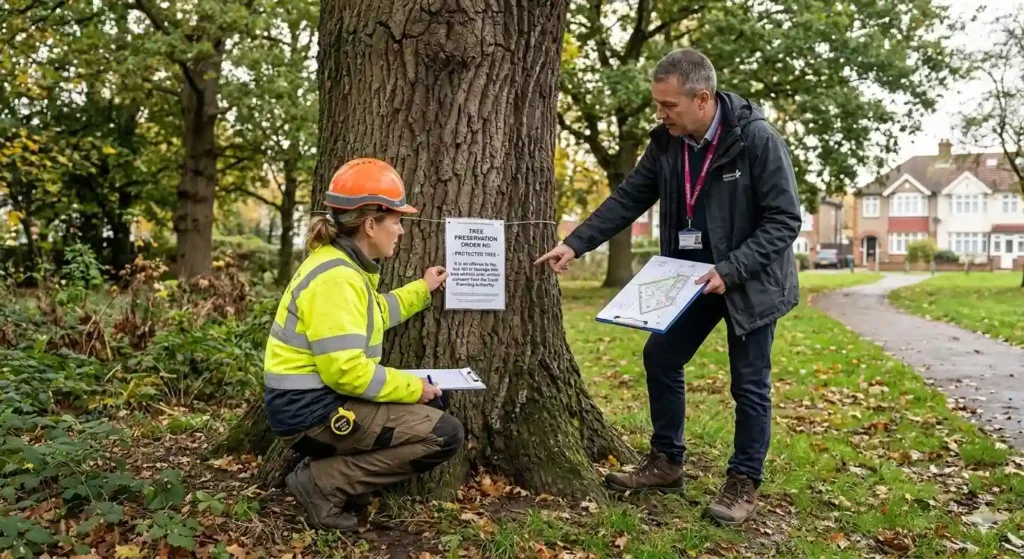
A Tree Preservation Order is a legal tool used by a local planning authority to protect specific trees, groups of trees or woodlands where it is “expedient in the interests of amenity”. Once a TPO is made, it becomes an offence to cut down, uproot, top, lop, wilfully damage or destroy a protected tree without the council’s consent, apart from some limited exemptions.
TPOs are made and enforced by the local planning authority – in this case Redbridge Council – under the Town and Country Planning Act 1990 and the Tree Preservation (England) Regulations 2012. They normally specify which trees are protected on a map and schedule, and are recorded in the council’s planning records.
Why this issue matters to local residents
For people living in Newham, Tower Hamlets, Hackney, Waltham Forest, Redbridge, and Barking & Dagenham, mature trees contribute to air quality, shade, flood management, privacy and the character of streets and estates. When development, parking changes or garden works are proposed, there is often concern that important trees could be lost.
Because TPOs carry legal weight, they can:
- Help local residents prevent unsuitable felling or over‑pruning of valued trees.
- Make sure East London council planning decisions properly consider amenity, biodiversity and climate resilience.
- Provide a clear process if owners do need to carry out justified works, such as for safety reasons.
Who actually “applies” for a TPO?
Only the local planning authority – here, Redbridge Council – can make and confirm a Tree Preservation Order. Members of the public, community groups or ward councillors cannot issue an Order themselves, but they can ask the council to consider making one.
In practice, you can:
- Report a tree you think is at risk and worth protecting.
- Provide evidence of the tree’s value (visual, historic, ecological or community importance).
- Request that Redbridge’s Planning Service considers a TPO before any works or development proceed.
This approach is similar across Newham Council, Tower Hamlets Council and other East London authorities, although contact routes and forms may differ.
Step‑by‑step: asking Redbridge to make a TPO
Follow these steps if you are worried about a tree in Redbridge and want it considered for a TPO.
1. Check whether the tree is already protected
Before asking for a new Order, confirm if protection already exists:
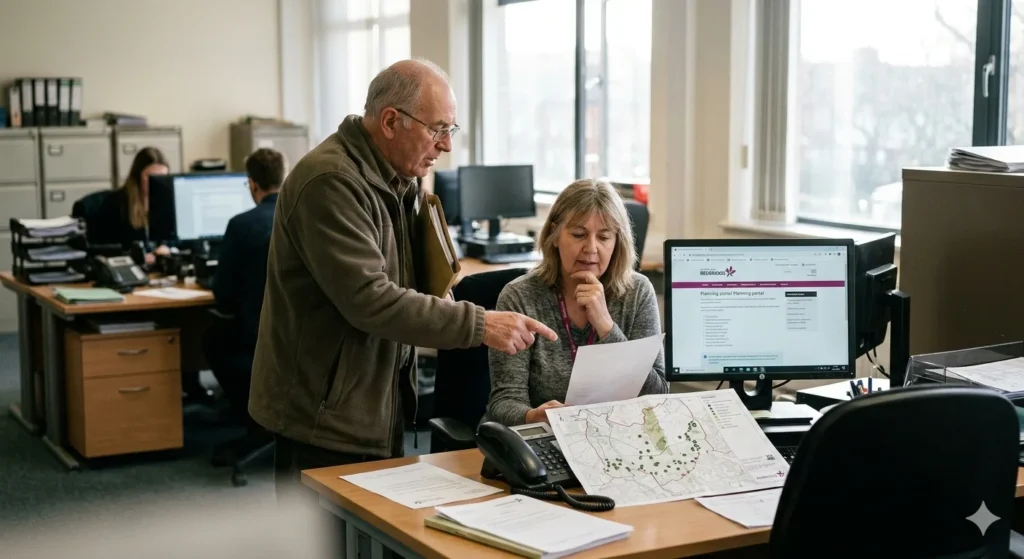
- Check if there is an existing TPO on the property via the council’s planning records or interactive map, where available.
- Confirm if the site lies within a conservation area, as trees there already benefit from separate protections.
If a TPO or conservation‑area protection is already in place, any works will already need permission from Redbridge Council, meaning a new Order is unnecessary.
2. Gather clear information about the tree
Prepare accurate and specific information to support your request:
- Exact location: address, postcode, and a simple description or sketch plan showing where the tree stands.
- Tree details: species (if known), approximate height, and whether it is a single tree, group or part of woodland.
- Ownership: whether it is in a private garden, communal grounds, a block managed by a housing association, or council land.
- Current situation: any imminent threat, such as planning permission, a recent felling notice, or site clearance.
Photographs from different angles are helpful but not compulsory.
3. Explain why the tree should be protected
Redbridge Council must judge whether making a TPO is expedient and in the interests of public amenity. In your request, briefly describe:
- How visible the tree is from public places (roads, paths, parks).
- Its contribution to the local street scene, character of a conservation area, or setting of nearby homes.
- Any known wildlife value, such as nesting birds or bats, or contribution to shade, screening and noise reduction.
- Any community significance – for example, if local residents have campaigned to keep it.
The council is more likely to act where the tree has clear public value and is under a genuine risk of being lost or harmed.
4. Contact Redbridge Council’s Planning Service
You then need to send your request to the service that deals with tree protection and TPOs. Typically this will be within Planning or Development Management.
Your request should:
- Clearly state that you are asking the council to consider making a Tree Preservation Order for the specific tree or trees.
- Include the location, tree details and reasons set out above.
- Attach any photos or plans you have prepared.
Other East London councils – such as Newham Council, Tower Hamlets Council, Hackney, Waltham Forest and Barking & Dagenham – use similar processes, often via their planning or tree protection web pages.
5. Council assessment and possible TPO
If Redbridge agrees that the tree appears worthy of protection and is at risk, it can make a provisional TPO immediately. The council will then:
- Serve notice of the Order on people with an interest in the land (such as the owner and occupier).
- Allow a period for objections and representations.
- Decide whether to confirm, vary or revoke the Order after considering comments received.
If confirmed, the TPO becomes long‑term protection, and any future works will require formal consent.
Which council service handles TPOs?
In Redbridge, TPOs and tree‑work consents sit under the Planning Service, usually within development management or a specialist trees team. They keep the official register of TPOs and handle applications for works to protected trees.
Across East London, each council’s planning department usually provides:
- Online pages about “trees, tree protection and hedges” or similar.
- Links to the standard application form for works to trees subject to a TPO and trees in conservation areas.
- Contact details for tree officers who assess amenity value and safety.
Information and documents you may need
When asking for a TPO, there is no national form, but good supporting information makes a decision easier. You should aim to provide:
- Your contact details as the person making the request.
- Full site address and clear identification of the tree or trees.
- A simple plan or annotated aerial image showing their position.
- A short statement explaining visibility, amenity value and why you believe protection is expedient.
- Any evidence of threat, such as planning references or recent notices to neighbours.
If the tree is already protected and the owner wants to carry out work, they must use the national “Application for tree works: works to trees subject to a TPO and/or trees in a conservation area” form, available via the Planning Portal or council website.
Expected response time
There is no fixed statutory deadline for a council to decide whether to make a new TPO after a resident’s request, but they should act promptly where there is an immediate risk. If the owner later applies for permission to work on a tree already covered by a TPO, the local authority normally has up to 8 weeks (or two months, depending on the age of the Order) to determine the application.
Planning practice guidance states that once a valid application to work on a protected tree is received, the authority should acknowledge it and aim to determine it within that period, or the applicant may appeal to the Secretary of State for non‑determination.
What to do if follow‑up is required
If you have asked Redbridge to consider a TPO and have not heard back, you can:
- Check whether any TPO has been made or any tree‑work application submitted for the site via planning searches.
- Politely chase the Planning Service, quoting the address and any reference number.
- Raise the issue with your ward councillor if you believe there is an urgent risk and no action is being taken.
Where there is already a TPO and you have applied for works (for example, to prune or remove a dangerous limb), you can:
- Ask for an update if the 8‑week period is approaching.
- Use the appeal route to the Planning Inspectorate if your application is refused or not decided in time.
Rights and responsibilities under UK rules
TPOs create duties for both landowners and councils. Key points include:
- Landowners must not carry out prohibited works to protected trees without formal consent, unless a specific exemption applies (for example, urgent work to remove an immediate safety risk).
- Deliberate unauthorised works can lead to prosecution and potentially substantial fines.
- Councils must consider amenity and expediency before making Orders, keep a public register and follow statutory procedures when confirming, varying or revoking TPOs.
- Anyone can apply for consent to carry out works to a protected tree, but the landowner’s consent is still needed to enter the land.
- Applicants have a right of appeal against refusal of consent or against conditions attached to a consent.
These rules apply across England, so local residents in Newham, Tower Hamlets, Hackney, Waltham Forest and Barking & Dagenham are subject to the same national framework, even though each East London council may manage its processes slightly differently.
Practical tips to avoid problems in future
To reduce disputes and protect valued trees across East London:
- Act early: if you hear about development or major garden works that might remove important trees, contact the relevant council’s planning team as soon as possible.
- Check protections before starting work: tree owners should always confirm whether there is a TPO or conservation‑area protection before pruning or felling.
- Use clear, detailed applications: when works to protected trees are genuinely needed, use the correct tree‑works form and give precise, well‑evidenced reasons.
- Communicate with neighbours: sharing information about proposed works can prevent misunderstandings and encourage joint requests for protection where appropriate.
- Consider professional advice: for complex cases, a qualified arboriculturist can provide reports that help both owners and councils make sound decisions.
By understanding how Tree Preservation Orders work and how to ask Redbridge Council to use them, local residents can play a positive role in safeguarding the trees that define many East London streets and estates.
How do I apply for a Tree Preservation Order in Redbridge?
To apply for a Tree Preservation Order (TPO) in London Borough of Redbridge, you must submit a request to the council’s planning department asking them to assess the tree for protection.
Start by checking whether the tree is already protected through the council’s planning portal or if it is located within a conservation area. If it is not protected, send a written request (via email or letter) including the tree’s exact location, clear photographs, and reasons why it should be preserved — such as its public visibility, environmental importance, or risk of removal.
A council tree officer will then inspect the tree and assess its condition and amenity value. If it meets the criteria, the council may issue a provisional TPO, followed by a consultation period before making a final decision.