
To apply for “Better Renting” support against illegal evictions, contact your local East London council’s housing options team immediately or reach out to the Mayor’s Safer Renting and Better Renting programmes via the Greater London Authority pathways. Provide evidence of the eviction attempt, such as changed locks or threats, and follow their step-by-step guidance to secure urgent intervention and sustain your tenancy. Local residents in Newham, Tower Hamlets, Hackney, Waltham Forest, Redbridge, and Barking & Dagenham can access this help quickly through council portals or approved partners.
Why This Matters to Local Residents
Illegal evictions threaten housing stability for many private renters in East London. These actions, often involving changed locks or threats without court orders, put families at risk of homelessness amid high demand for affordable homes.
In boroughs like Newham and Tower Hamlets, where rental properties dominate, “Better Renting” support helps sustain tenancies and upholds legal protections. It empowers local residents to stay in their homes while authorities address rogue landlord behaviour through formal channels.
This issue affects thousands yearly, making prompt access to “Better Renting” essential for community wellbeing and preventing crises in areas such as Hackney and Waltham Forest.
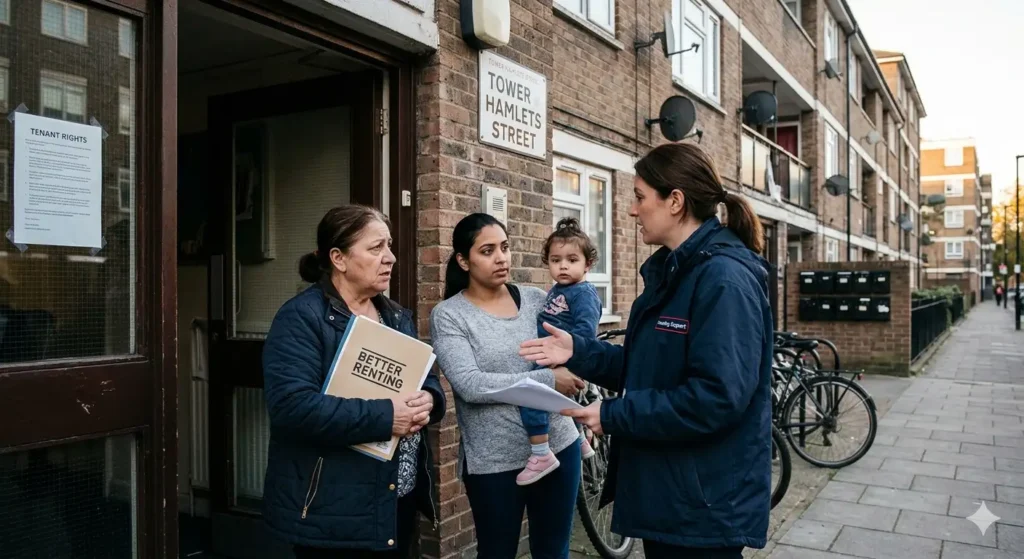
Step-by-Step Actions
Gather initial evidence right away, including photos of locks, messages from the landlord, or witness statements.
- Report the incident to your local council’s housing team online or in person; specify it’s an illegal eviction under “Better Renting” pathways.
- Request emergency intervention from Safer Renting partners, who can attend your property to negotiate with the landlord.
- Follow up with police if locks are changed or belongings removed, as this constitutes a criminal offence.
- Submit a formal complaint to the council’s private rented sector enforcement team for investigation.
- Attend any arranged mediation or court preparation sessions provided through the programme.
These steps ensure swift resolution while keeping records for your case.
Council Services Involved
Each East London council handles “Better Renting” support via dedicated teams. Newham council’s Housing Options service leads on homelessness prevention and illegal eviction reports.
Tower Hamlets council directs cases to its Private Sector Housing team, which coordinates with Better Renting for doorstep interventions. Hackney council’s Tenancy Relations officers manage referrals, while Waltham Forest, Redbridge, and Barking & Dagenham councils use their Environmental Health or Housing Advice units.
East London councils link residents to the Mayor’s funded programmes, ensuring seamless support across boroughs.
Information and Documents Needed
Prepare tenancy proof first, such as your agreement, deposit receipt, or rent payment records.
Include ID like a passport or council tax bill, plus evidence of the eviction attempt: dated photos, emails, texts, or neighbour notes. Utility bills confirm residency duration.
For “Better Renting” applications, councils may request income details or household composition to assess vulnerability. Keep digital copies ready for online submissions.
Expected Response Time
Councils aim to acknowledge reports within one working day. Urgent “Better Renting” interventions, like Safer Renting visits, often occur same-day or next-day for imminent threats.
Full investigations take 10-20 working days, depending on case complexity. Police respond to criminal lock changes within hours if reported as harassment.
Local residents can expect initial advice promptly, with follow-up actions prioritised to prevent homelessness.
Follow-Up Actions Required
If no response arrives within 48 hours, email or visit the council again, referencing your original report number.
Escalate to the council’s senior housing officer or the Greater London Authority’s renters’ support line if delays persist. Track progress via online portals in Newham or Tower Hamlets.
For court involvement, “Better Renting” partners assist with possession order defences. Persistent issues may need a formal complaint under council procedures.
Rights Under UK Rules
UK law requires landlords to obtain court orders for evictions, banning self-help measures like lock changes. The Protection from Eviction Act 1977 makes illegal evictions a criminal offence, punishable by fines or imprisonment.
Renters hold rights to quiet enjoyment of their home and protection from harassment. Under recent reforms, no-fault evictions are restricted, requiring landlords to prove grounds via Section 8 notices.
Responsibilities include paying rent on time and reporting repairs promptly, balancing tenant protections with fair tenancy obligations.
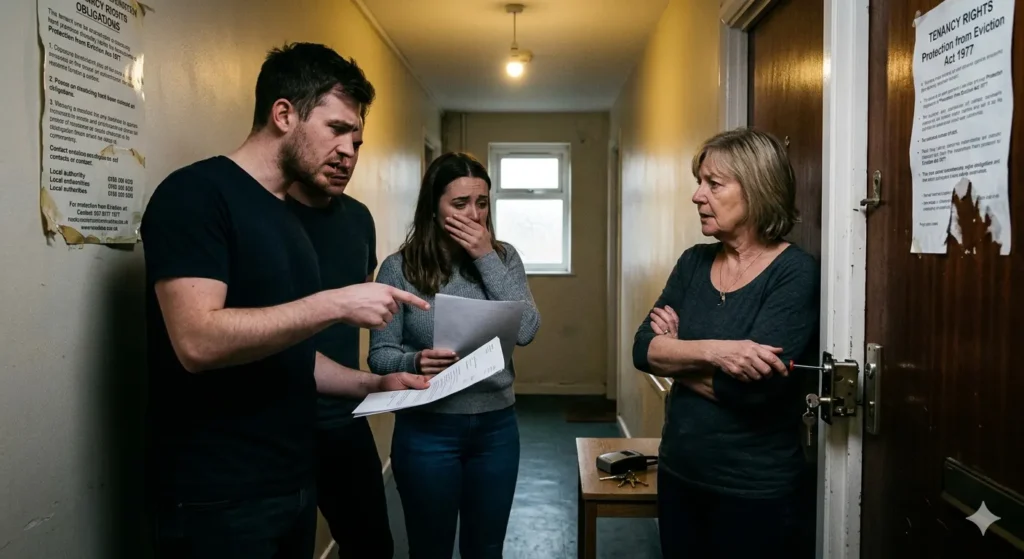
Practical Tips for Prevention
Vet landlords before signing by checking references and licensing on council websites. Request a written tenancy agreement outlining terms clearly.
Document all communications and payments digitally for evidence trails. Join tenant unions or local resident groups in East London for ongoing advice.
Insist on professional repairs and report issues early to environmental health teams in Hackney or Redbridge. Consider rent guarantee schemes for added security.
What is the penalty for illegal eviction in the UK?
Illegal eviction is a criminal offence. Landlords can face unlimited fines, prosecution, and up to 2 years in prison, along with potential compensation claims from tenants.