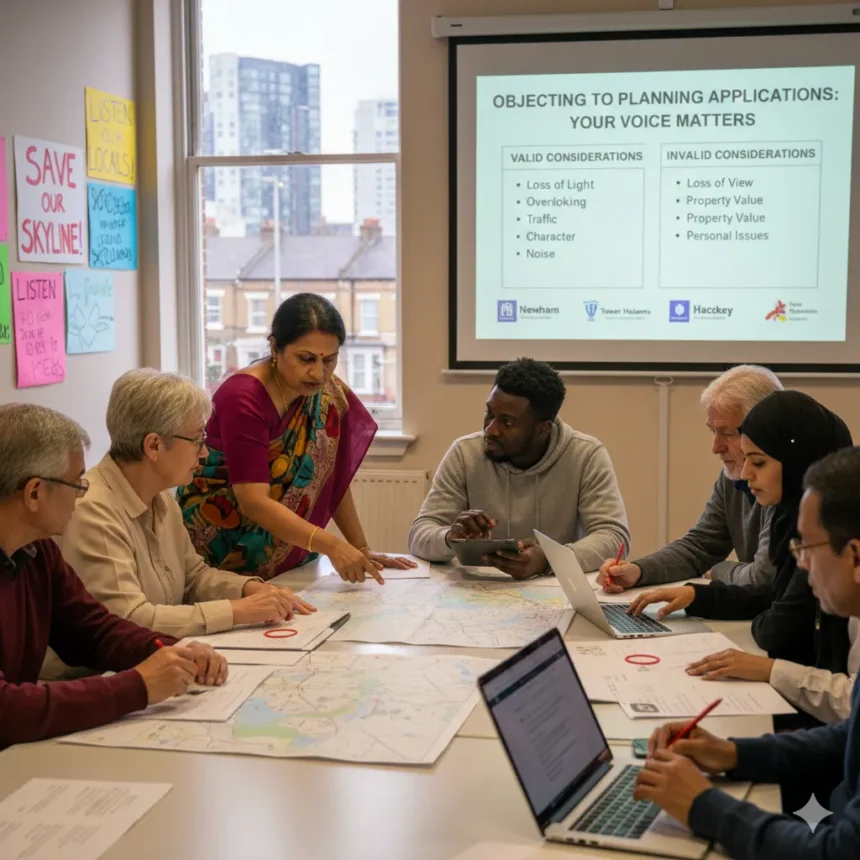
Objecting to a planning application in East London is straightforward: find the application on your local council’s planning portal, submit a clear written objection focusing on material planning considerations within the consultation period, typically 21 days. This process empowers Newham, Tower Hamlets, Hackney, Waltham Forest, Redbridge, and Barking & Dagenham residents to influence developments legally and effectively.
Why This Matters to Local Residents
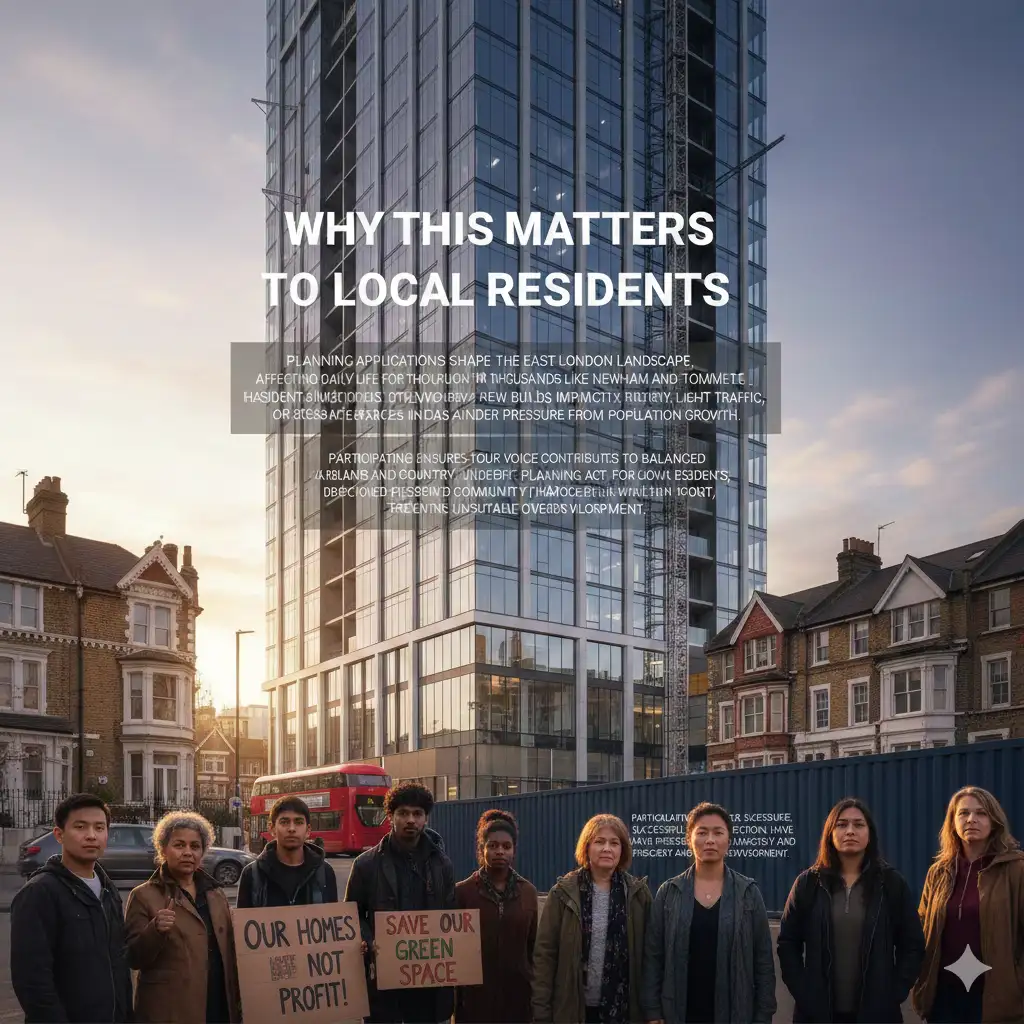
Planning applications shape the East London landscape, affecting daily life for thousands in dense boroughs like Newham and Tower Hamlets. Residents often worry about new builds impacting privacy, light, traffic, or green spaces in areas already under pressure from population growth.
Participating ensures your voice contributes to balanced decisions under the UK’s Town and Country Planning Act. For local residents, successful objections have preserved community character in Hackney and Waltham Forest, preventing unsuitable overdevelopment.
Which Council Service Handles It
Each East London council manages planning applications through its dedicated planning department. Newham council, Tower Hamlets council, Hackney council, Waltham Forest council, Redbridge council, and Barking & Dagenham council all operate public planning portals for viewing and commenting.
Contact the planning team via their website’s planning section—search for “planning applications” on the council homepage. These services process objections impartially, consulting on proposals from small extensions to large housing projects.
Step-by-Step Actions
Follow these steps to object to a planning application efficiently.
- Locate the application: Check your council’s online planning portal using the reference number from neighbour notifications, site notices, or press ads. Portals for Newham council and others display site plans, designs, and supporting documents.
- Review documents: Examine site plans, elevations, design statements, and policy compliance details. Note impacts on amenities, highways, or heritage.
- Identify material considerations: Focus on valid grounds like loss of light, overlooking, traffic safety, or policy breaches—avoid personal views or property values.
- Draft your objection: Write a concise letter or form submission stating facts, referencing policies (e.g., local plans or National Planning Policy Framework), and explaining harms.
- Submit on time: Use the portal’s comment form, email, or post before the deadline, usually 21 days from validation. Include your name, address, and application number.
Councils acknowledge receipt and publish comments online (anonymised if requested).
Information or Documents Needed
No formal documents are required from you, but gather these to strengthen your case.
- Application reference number and address.
- Copies of plans and reports from the portal.
- Relevant local plan policies or National Planning Policy Framework sections.
- Evidence like photos of the site, daylight calculations, or traffic data if applicable.
Reference specific policies from your East London council’s local plan, such as density guidelines in Tower Hamlets or green space protections in Redbridge. Keep evidence factual and relevant.
Expected Response Time
Councils aim to decide minor applications within 8 weeks and major ones within 13 weeks from validation. Your objection forms part of the officer’s report, shared before committee if needed.
Neighbour consultations close after 21 days, but late comments may be accepted pre-decision. Track progress on the portal; decisions appear online shortly after.
In busy boroughs like Hackney, delays occur, but most East London council processes stay within targets.
What to Do If Follow-Up Is Required
If the council approves despite your objection, check the officer’s report for reasoning. Request it if not public.
Speak at committee meetings for significant applications—register 24 hours prior via the council. If refused, developers may appeal to the Planning Inspectorate; you can comment within 6 weeks.
For persistent concerns, join residents’ groups or consult a planning advisor. Escalate via councillor if procedural errors arise, but respect democratic processes.
Rights and Responsibilities Under UK Rules
UK law grants residents the right to comment on nearby applications under the Town and Country Planning (Development Management Procedure) Order. Councils must publicise proposals and consider material objections fairly.
Your responsibility: stick to planning matters—overlooking, noise, design, highways, ecology. Councils ignore non-material issues like private views or covenants.
Objections are public unless anonymity requested; be polite and evidence-based to maintain credibility.
Practical Tips to Avoid the Problem in Future
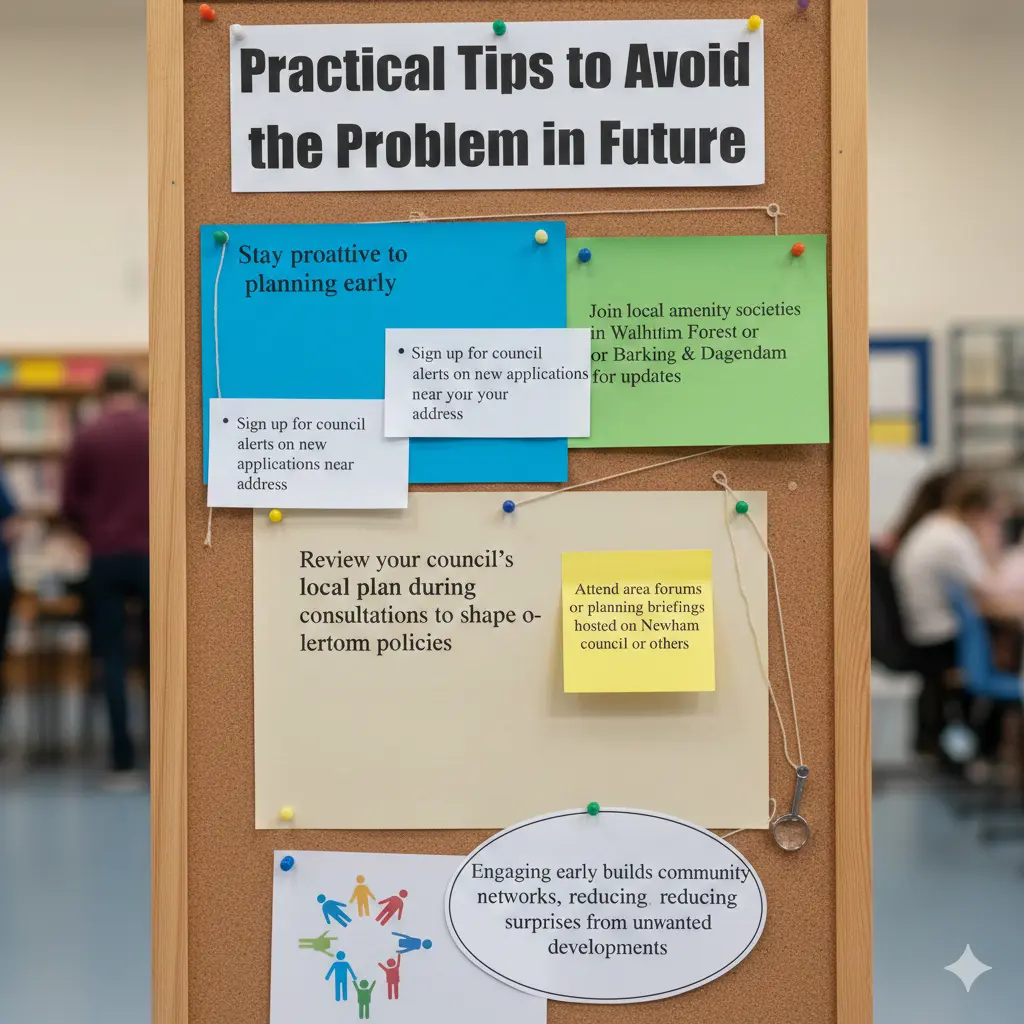
Stay proactive to influence planning early.
- Sign up for council alerts on new applications near your address.
- Join local amenity societies in Waltham Forest or Barking & Dagenham for updates.
- Review your council’s local plan during consultations to shape long-term policies.
- Attend area forums or planning briefings hosted by Newham council or others.
Engaging early builds community networks, reducing surprises from unwanted developments.
Staying Informed Long-Term
Monitor portals regularly and contribute to neighbourhood plans. In East London, resident input has refined policies on high-rises and infrastructure.
By understanding how to object to a planning application in East London, local residents protect their neighbourhoods effectively.