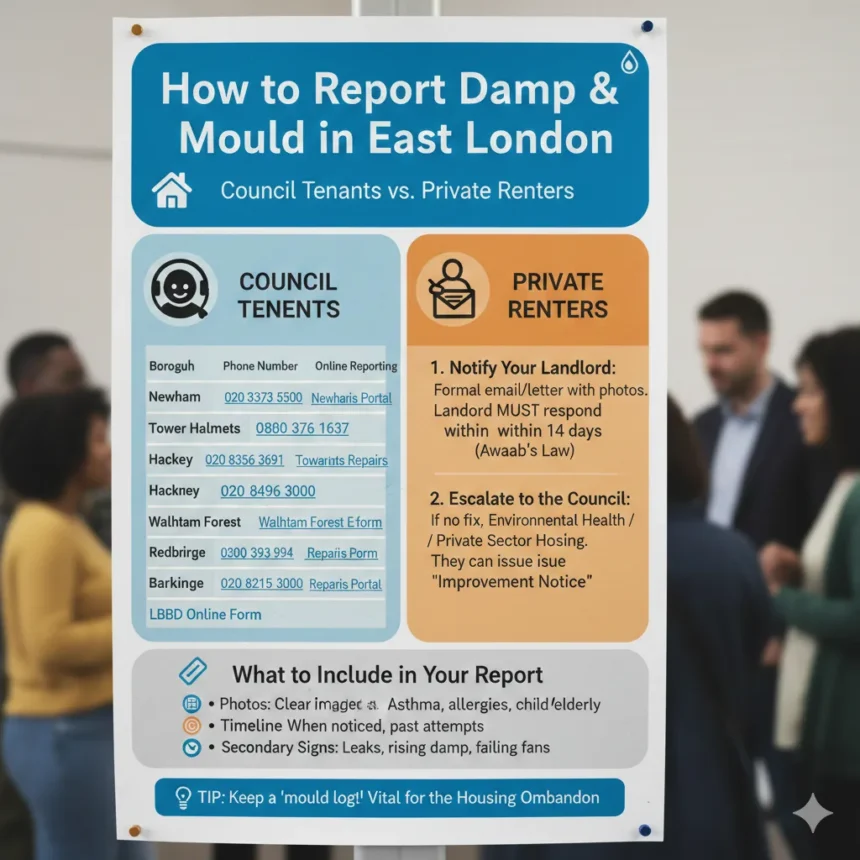
To report damp and mould in East London, contact your local council’s housing or repairs team via their online form, phone line, or email, providing photos and details of the issue. For council tenants in areas like Newham, Tower Hamlets, Hackney, Waltham Forest, Redbridge, or Barking & Dagenham, use dedicated reporting portals; private renters should first notify their landlord before escalating to the council.
Why Damp and Mould Matters in East London
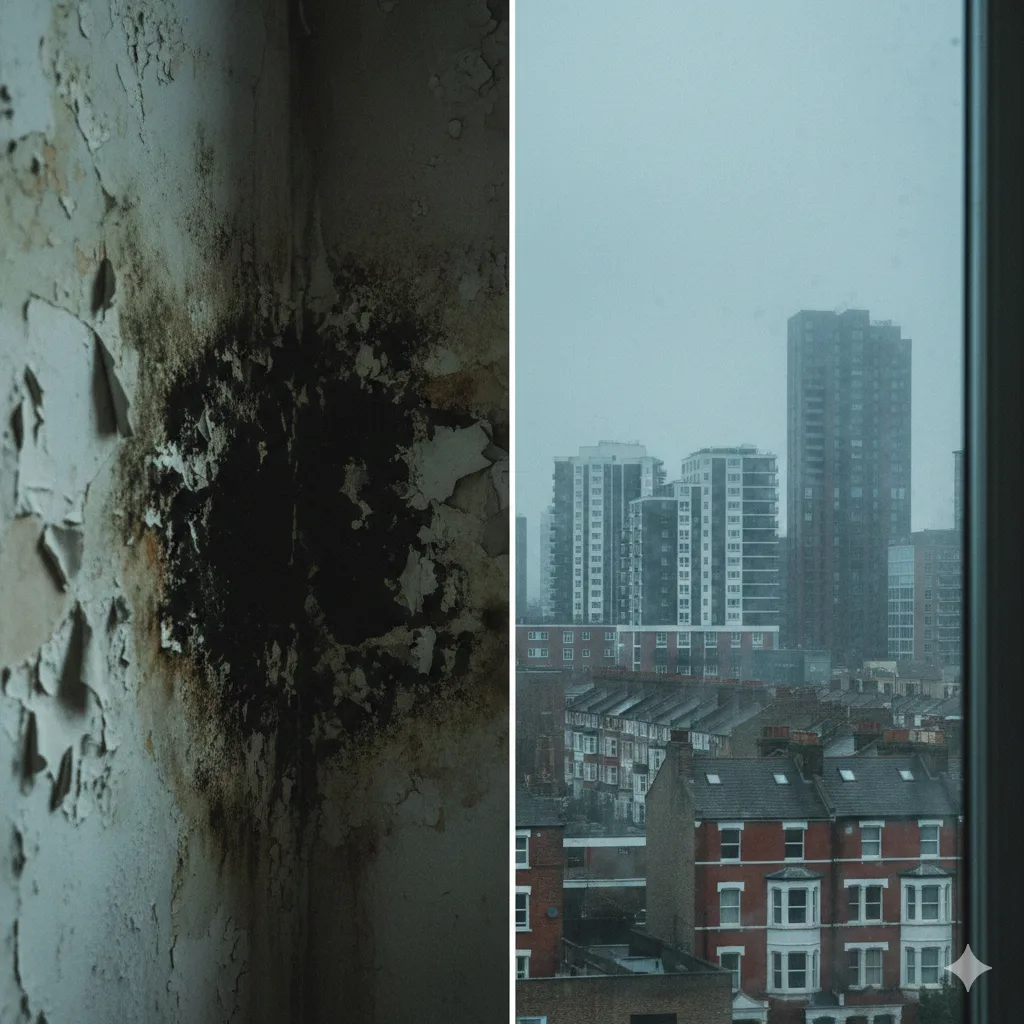
Damp and mould affect thousands of homes across East London boroughs, from Newham’s high-rise flats to Victorian terraces in Tower Hamlets and Hackney. These issues thrive in the area’s older housing stock and humid conditions, leading to black spots on walls, musty smells, and peeling paint.
For local residents, the consequences go beyond aesthetics. Mould spores can trigger respiratory problems, allergies, and asthma, particularly impacting children, the elderly, and those with weakened immune systems. In densely populated areas like Waltham Forest and Barking & Dagenham, poor ventilation in social housing exacerbates the problem, raising health risks and reducing quality of life.
Councils recognise this as a priority under UK housing standards, with East London councils actively investigating reports to prevent long-term damage to properties and resident wellbeing.
Step-by-Step Guide to Reporting
Follow these practical steps to report damp and mould effectively, tailored for East London residents.
- Identify the issue: Note locations (walls, ceilings, windows), size of affected areas, and any recurrence after cleaning. Take clear photos from multiple angles, including close-ups of mould growth.
- Determine your tenancy type: Council tenants report directly to their borough’s housing team; private renters or leaseholders contact landlords first.
- Gather evidence: Document when the problem started, weather patterns, and any DIY efforts like improved ventilation.
- Submit the report: Use online forms for speed—Newham and Tower Hamlets offer dedicated portals—or call council repairs lines during office hours.
- Follow up: Keep a record of your report reference number and chase progress if needed.
This process ensures councils or landlords act swiftly under their legal duties.
Council Services Handling Reports
Each East London borough has specific teams for damp and mould.
Newham Council manages reports through its housing repairs service for council properties, with online forms prioritising detailed submissions.
Tower Hamlets Council directs tenants to housing officers who assess properties on-site, focusing on repairs and ventilation improvements.
Hackney Council uses its repairs portal for social housing, investigating causes like leaks or condensation.
Waltham Forest Council offers e-forms and phone support for leaseholders and tenants, emphasising professional surveys.
Redbridge and Barking & Dagenham councils route reports via general housing teams, often dispatching property services officers for inspections.
Private sector issues fall under environmental health teams across all boroughs, enforcing landlord action if needed.
Information and Documents Needed
Councils require clear details to triage reports efficiently.
Provide your full address, tenancy type (council, housing association, private), and contact details. Describe the problem: exact locations, affected surface area (e.g., “1m² on bedroom wall”), duration, and history (e.g., “mould returned after cleaning twice”).
Photos are essential—upload 5-10 images showing before-and-after if applicable. Include utility bills or heating records if arguing poor insulation.
For private renters, attach your tenancy agreement and prior correspondence with the landlord. No formal ID is usually needed, but keep your council tax reference handy for verification.
Expected Response Times
Councils classify damp and mould by severity under UK repairs priorities.
Category 1 (emergency, e.g., widespread mould risking health) gets a response within 24-48 hours, often with an inspection.
Category 2 (urgent, e.g., visible growth in living areas) targets site visits within 7-10 working days, followed by works scheduling.
Standard reports (Category 3) aim for acknowledgment in 5 days and resolution in 20-30 days, depending on diagnostics like leak tests.
Delays can occur in peak winter months, but East London councils commit to updates every 7-10 days post-report.
Follow-Up if Needed
If no contact after initial acknowledgment, chase your report using the reference number.
Email or call the same housing team, referencing dates and prior details. Escalate to a senior officer if over two weeks pass without inspection.
For unresolved cases, private renters can request environmental health intervention; council tenants may use formal complaints processes under the Housing Ombudsman scheme.
Keep polite records of all communications to build a trail for escalation.
Rights and Responsibilities Under UK Law
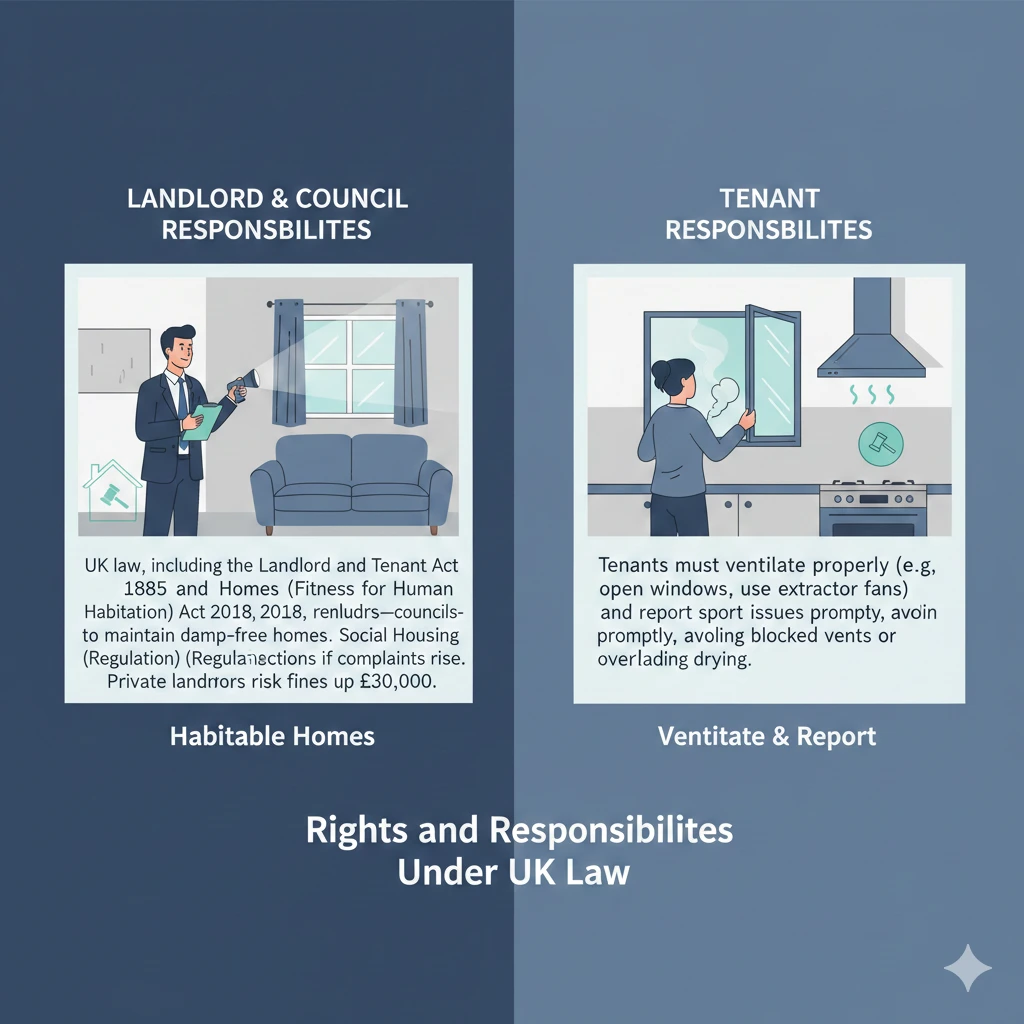
UK law, including the Landlord and Tenant Act 1985 and Homes (Fitness for Human Habitation) Act 2018, requires landlords—including councils—to maintain damp-free homes.
Tenants must ventilate properly (e.g., open windows, use extractor fans) and report issues promptly, avoiding blocked vents or overloading drying.
Councils as landlords have heightened duties under the Social Housing (Regulation) Act, facing inspections if complaints rise. Private landlords risk fines up to £30,000 for non-compliance via council enforcement.
Residents’ rights include habitable homes; remedies range from repairs to rent reductions via tribunals if neglected.
Practical Tips to Prevent Future Issues
Prevention reduces recurrence in East London’s variable climate.
Improve ventilation: Wipe mould with soapy water, then use dehumidifiers or positive input ventilation systems in bedrooms.
Control condensation: Keep internal temperatures above 18°C, avoid drying clothes indoors without extractors, and insulate cold surfaces.
Regular maintenance: Check gutters, seals, and loft insulation annually; councils often advise free upgrades for tenants.
For renters, request landlord surveys; homeowners in Redbridge or Hackney can add PIV units costing £200-£500 for long-term fixes.
Monitor high-risk spots like bathrooms and north-facing walls, acting early to keep homes dry.