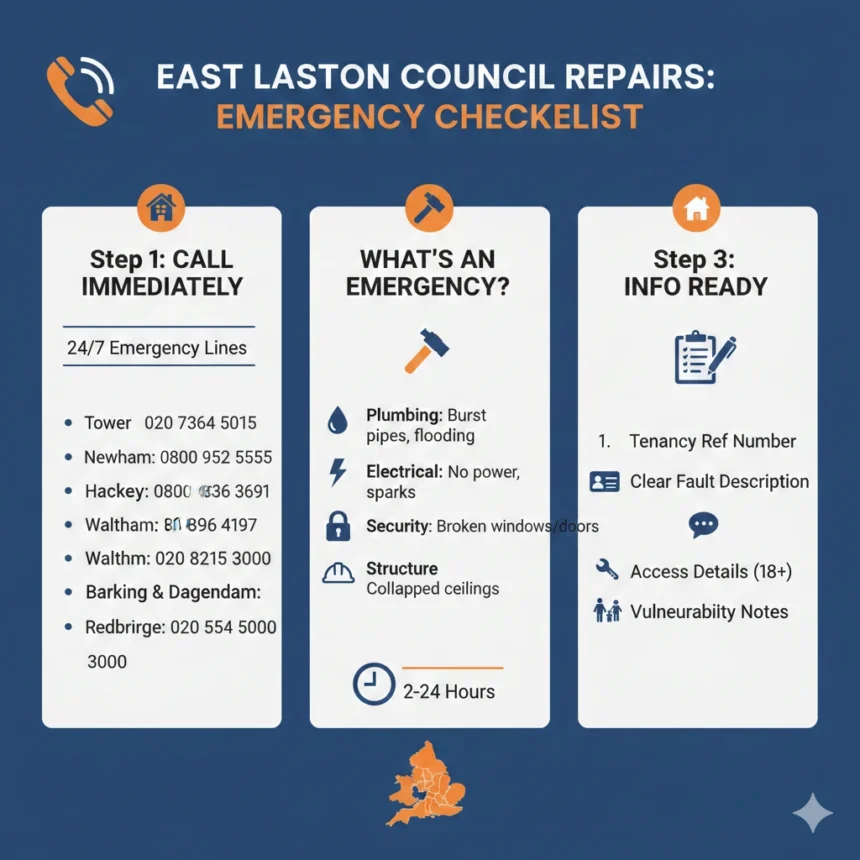
Request emergency council repairs in East London by calling your local council’s out-of-hours housing repairs line immediately if the issue poses a risk to health, safety, or property. Councils in Newham, Tower Hamlets, Hackney, Waltham Forest, Redbridge, and Barking & Dagenham prioritise these reports by phone for rapid response. This ensures local residents get swift action on urgent problems like burst pipes or structural hazards.
Why This Matters to Local Residents
Emergency repairs protect lives and homes in East London boroughs where dense housing is common. Issues like leaking roofs or faulty electrics can worsen quickly, leading to health risks or displacement for families in Newham council or Tower Hamlets council properties. Acting fast preserves community stability and prevents small faults from becoming costly crises for East London council tenants.
Timely fixes maintain safe living conditions amid busy urban life. For residents in Hackney or Waltham Forest, unresolved dangers disrupt daily routines and work. Councils recognise this, operating systems to address genuine emergencies without delay.
Which Council Service Handles It
Each East London borough has a dedicated housing repairs team for council tenants and leaseholders. Newham council manages repairs through its Housing Repairs Service, covering tenant homes and communal areas. Tower Hamlets council uses its Housing Maintenance team for similar urgent issues.
Hackney council directs calls to its responsive repairs squad, while Waltham Forest council’s Housing Repairs section oversees emergencies. Redbridge council and Barking & Dagenham council assign these to their respective Property Maintenance or Repairs and Maintenance teams. Always contact the specific East London council service for your borough to ensure the right team attends.
Step-by-Step Actions to Solve the Problem
Follow these steps to request emergency council repairs effectively.
- Identify if it’s an emergency: Confirm the issue risks health, safety, security, or serious property damage, such as a gas leak, exposed wiring, or collapsing ceiling.
- Gather key details: Note your full address, tenancy type (council tenant or leaseholder), a clear description of the fault, and any immediate risks.
- Call the dedicated line: Use your borough’s emergency repairs phone number during or after hours—avoid online forms for true emergencies.
- Provide information clearly: Stay on the line to describe the problem precisely; operatives may offer initial safety advice.
- Note the reference number: Record the job ID, expected response time, and operative’s name for tracking.
- Prepare access: Clear the area and ensure safe entry for repair teams upon arrival.
These actions help East London council teams respond efficiently.
Information or Documents Needed
Have basic details ready to speed up your report. Your full property address, including postcode, is essential for Newham council or Tower Hamlets council teams to locate you quickly. Provide your tenancy agreement number or rent account reference if known.
Describe the fault specifically—e.g., “water flooding kitchen from burst pipe”—and mention affected rooms or communal areas. Note any vulnerable household members, like children or elderly residents, to prioritise under council policies. No formal documents are required upfront, but photos help if reporting follow-ups later. Keep tenancy papers handy for verification if requested.
Expected Response Time
UK councils aim to attend emergency repairs within hours to safeguard residents. Most East London boroughs target 4 hours for critical risks like gas leaks or structural failures, as per Waltham Forest council standards. Others, including Hackney council, respond within 24 hours for issues like severe leaks.
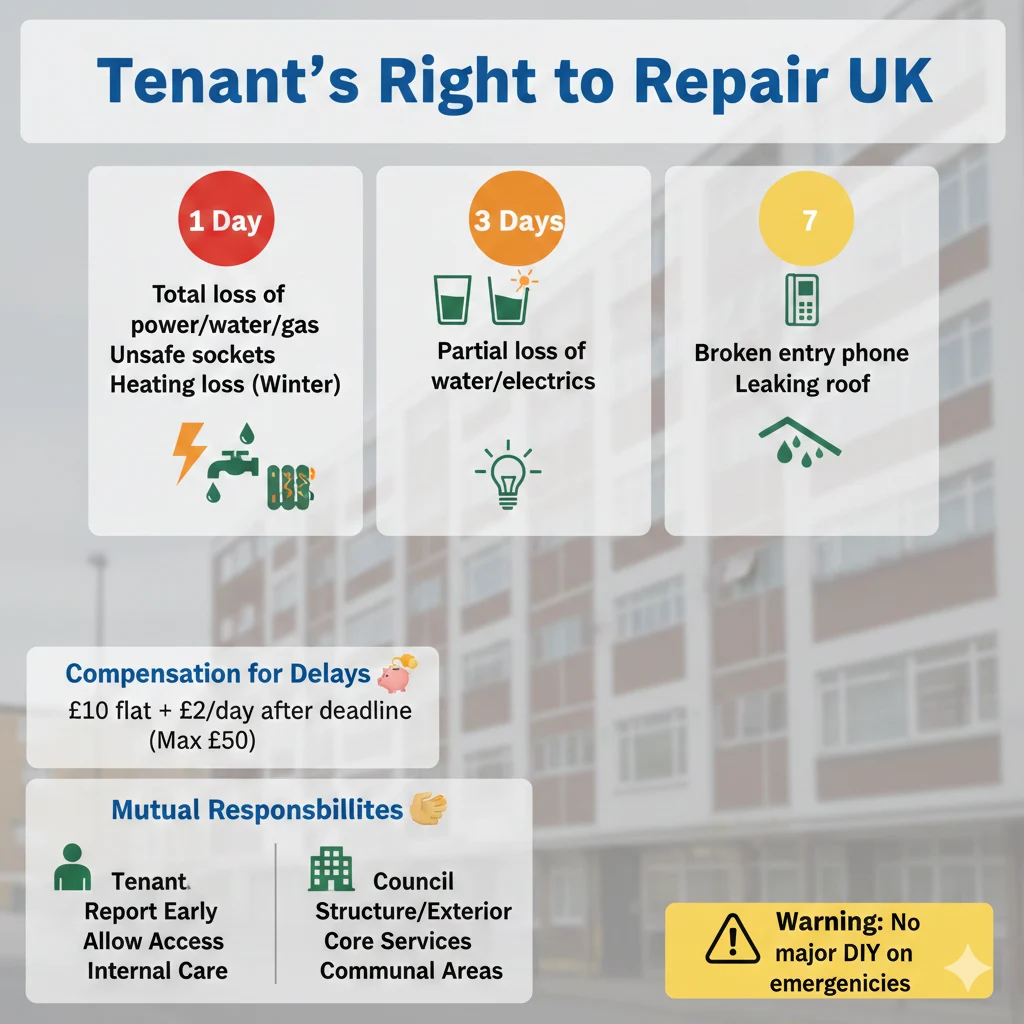
Right to Repair rules mandate fixed timescales for qualifying urgent works. Expect a make-safe visit first, with full repairs scheduled soon after. Delays may occur during peaks, but councils inform you of timelines upon reporting. Local residents should treat these as maximums, with many boroughs like Barking & Dagenham council achieving faster attendance.
What to Do If Follow-Up Is Required
Monitor progress using the reference number provided. Contact your East London council’s repairs team after the expected time if no visit occurs—most offer online portals or call-back lines for updates. For Newham council tenants, log into housing accounts to track jobs.
If the initial fix is temporary, request the full repair schedule during the visit. Escalate politely via the council’s complaints process if timelines slip repeatedly. Keep records of all calls and visits. Tower Hamlets council and others provide dedicated follow-up services to resolve ongoing issues.
Rights and Responsibilities Under UK Rules
Under the Housing Act 1985 and Right to Repair scheme, councils must fix urgent defects affecting health, safety, or security promptly. Qualifying repairs qualify for compensation if delayed beyond legal limits—up to £50 for first failures, rising with repeats. East London council tenants hold these rights across boroughs.
Tenants must report issues without delay and grant access for repairs. Avoid DIY fixes on emergencies to prevent voiding responsibilities. Leaseholders handle internal non-structural faults, while councils cover exteriors and communal areas. Report accurately to uphold mutual duties.
Practical Tips to Avoid the Problem in Future
Maintain your home regularly to minimise emergency council repairs. Check pipes, gutters, and electrics annually, reporting minor faults early to Hackney council or Redbridge council services. Use council-provided DIY guides for safe tenant tasks like unblocking sinks.
Install smoke alarms and secure locks as standard precautions. Keep communal areas clear in blocks to aid Waltham Forest council access. Join tenant forums for borough tips on prevention. Schedule annual property checks with your East London council to catch issues proactively.