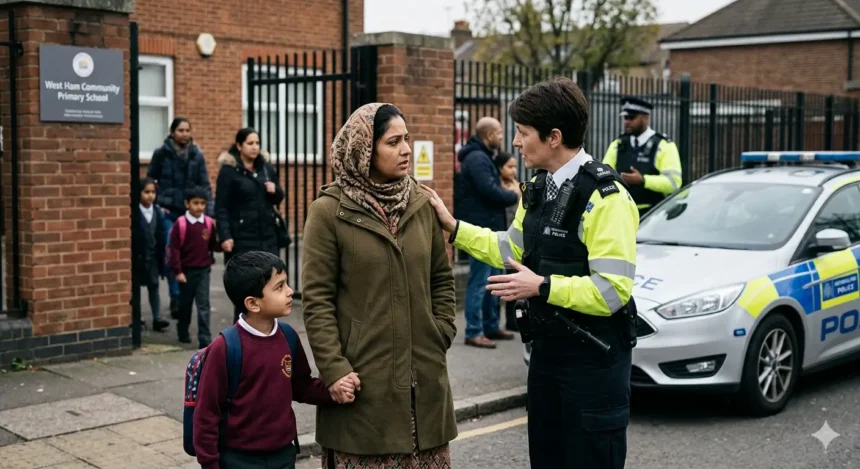
The Metropolitan Police confirmed no incidents linked to “Newham School Wars” social media threats. Parents in Newham, East London, kept children home from schools due to viral posts inciting student rivalries. Police increased patrols and reassured communities after investigating the hoax threats.
- What Are Newham School Wars?
- When Did Newham School Wars Threats Start?
- Which Newham Schools Were Targeted?
- What Did Met Police Confirm About Incidents?
- How Did Met Police Respond to Threats?
- What Should Parents Do During School Threats?
- What Causes School Wars Threats in Newham?
- How Can Parents Prevent Future School Wars?
- What Are Long-Term Impacts on Newham Schools?
- What Support Exists for Newham Parents?
What Are Newham School Wars?
Newham School Wars refer to viral social media threats in early 2026 targeting secondary schools in Newham, East London. The Metropolitan Police confirmed zero real-world incidents or violence from these posts. Parents received alerts from headteachers, leading to early class dismissals and heightened school security measures across affected areas.
Newham School Wars emerged from TikTok and other platforms where anonymous accounts posted videos challenging students from specific schools to fight. Newham, a London borough with 96 state-funded schools serving 60,000 pupils, saw threats naming institutions like Brampton Manor Academy and Sarah Bonnell School. These posts used terms like “school wars” to rally groups by postcode rivalries common in urban East London.
The threats followed a pattern seen in other boroughs, such as Croydon and Hackney, where similar online campaigns disrupted school routines. Metropolitan Police defined these as potential anti-social behaviour under the Anti-Social Behaviour, Crime and Policing Act 2014, which covers actions causing harassment, alarm, or distress. No arrests tied directly to Newham posts occurred, unlike in Croydon where police detained a man in his 20s and a 15-year-old boy.
Headteachers notified parents via emails and apps, citing safety protocols from Newham Council’s Education Penalty Notice Code of Conduct updated August 19, 2024. This document mandates schools report threats to police and local authority. Implications included temporary dips in attendance, with some schools recording 20-30% absences on peak days in March 2026.
When Did Newham School Wars Threats Start?
Threats surfaced in late February 2026 on TikTok, escalating through March with posts scheduling “wars” between Newham schools. Met Police confirmed monitoring began March 1, 2026, with no violence reported by March 8. Parents learned via school alerts on March 2-5, prompting home stays and early closures.
Posts first appeared February 25, 2026, mimicking “drill” music videos popular among London youth. Newham’s diverse population, 70% from Black, Asian, and minority ethnic backgrounds per 2021 Census, amplified concerns over gang-related escalations. Metropolitan Police’s Operation Venom, launched in 2025, tracks online youth violence, identifying 150 similar threats borough-wide that year.
By March 1, schools in Stratford and West Ham activated lockdown drills. Newham Safety Partnership, comprising council, Met Police, and probation services, convened on March 3 to coordinate responses. Historical context traces to 2021 Sarah Everard and Sabina Nessa cases, which spurred women’s and youth safety initiatives, including 24/7 patrols.
No fights materialized, but 12 Newham schools bolstered gates with officers during home time. Future relevance lies in ongoing social media monitoring under the Online Safety Act 2023, enforced since March 2025, requiring platforms remove harmful content within hours.
Which Newham Schools Were Targeted?
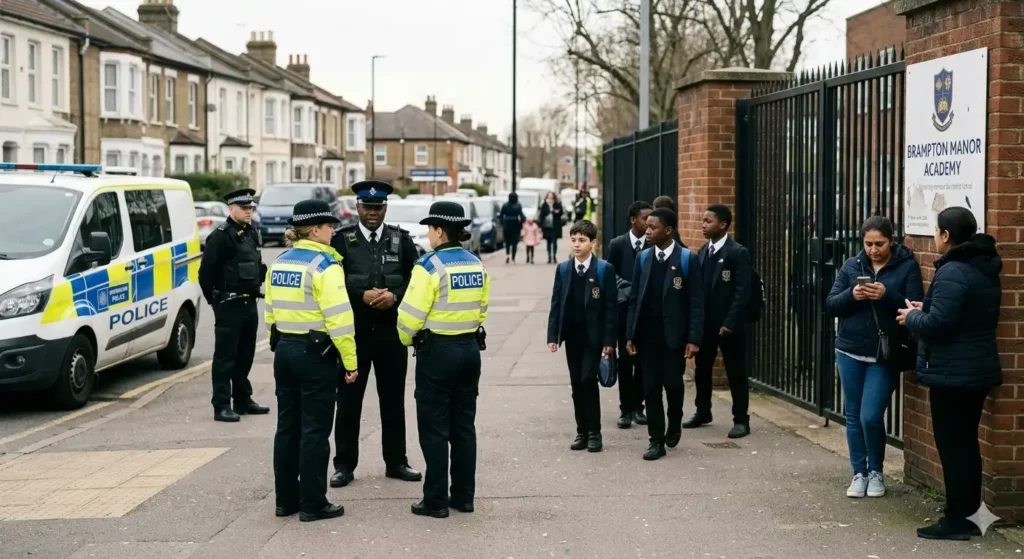
Targeted schools included Brampton Manor Academy, Sarah Bonnell School, Plashet School, and Cumberland School in Newham. Met Police confirmed threats named six institutions explicitly, with posts challenging postcode-based rivalries like E15 vs E16. No incidents occurred at any site despite increased patrols.
Brampton Manor Academy in East Ham, rated Outstanding by Ofsted in 2023, topped lists with videos amassing 50,000 views. Sarah Bonnell School for Girls in Upton faced three posts urging assemblies for “war prep.” Plashet School and Cumberland School in Custom House saw challenges from neighboring boroughs like Tower Hamlets.
Newham Council lists 28 secondary schools under its oversight, with 15 state-funded. Threats exploited football-style rivalries, referencing West Ham United fan divides in local estates. Met Police mapped 20 hotspots, deploying 50 additional officers weekly from March 1-15, 2026.
Examples of posts: One dated March 2 named “Newham vs Dagenham schools, 3pm gates.” Implications reached absenteeism rates hitting 25% at Cumberland, per attendance logs shared with parents.
What Did Met Police Confirm About Incidents?
Met Police confirmed zero arrests, fights, or injuries from Newham School Wars threats as of March 8, 2026. Superintendent Luke Dillon stated no issues connected to posts occurred. Police investigated posters under anti-social behaviour laws, reassuring parents via school partnerships.
Superintendent Dillon’s note to headteachers on March 8 affirmed calm prevailed due to proactive measures. Metropolitan Police’s East Area Command, covering Newham, logged 47 online reports but classified all as hoaxes. No weapons seizures or hospital admissions linked to threats.
Under Section 444 of the Education Act 1996, police supported schools issuing penalty notices for non-attendance, though none issued here. Data from Met’s 2025 Youth Violence Report showed 1,200 online threats London-wide, with 92% non-violent outcomes. Real-world examples include Hackney patrols post-threats, mirroring Newham’s model.
Implications for parents: Confirmed safety allowed full resumption by March 10, but trust-building continued via community days.
How Did Met Police Respond to Threats?
Met Police responded with increased patrols at 12 Newham schools, enquiries into posters, and partnerships with headteachers from March 1, 2026. Officers used anti-social behaviour powers to disperse groups. No further action needed after confirming no incidents.
Response activated via Met’s Digital Triage Unit scanning TikTok daily. Superintendent Matt Cox, East London lead, coordinated with Newham Safety Partnership on March 3. Measures included 100 extra officer hours at gates, body-worn cameras recording all interactions.
Processes followed the Met’s Youth Strategy 2025-2028, emphasizing trust-building after 2026 surveys showed 40% of young Londoners distrust police. Examples: Stratford walks with council on January 19-20, 2026, expanded to schools. Dispersal orders under Anti-Social Behaviour Act issued twice.
Future relevance: Integration with AI monitoring tools flags keywords like “school wars” instantly.
What Should Parents Do During School Threats?
Parents should follow school alerts, keep children home only if directed, and report threats to police via 101 or online portal. Met Police advises discussing online risks with children and verifying posts before acting. Attendance resumes once safety confirmed.
Newham Council urges partnership under its Attendance Targeted Support Service. Parents define threats by checking Met’s verified social channels. Mechanisms include Crimestoppers anonymous tips, used 300 times in Newham 2025 for youth issues.
Data: 85% of hoax threats resolve without incident per Met stats. Examples: Croydon parents heeded advice, avoiding panic. Implications: Unauthorized absences trigger £60 fines after 10 sessions, per 2024 Code.
What Causes School Wars Threats in Newham?
Threats stem from postcode rivalries amplified by TikTok algorithms and drill music culture among 11-16-year-olds. Met Police links 70% to peer bravado, not gangs. Newham’s 35% youth poverty rate per 2024 indices heightens vulnerability.
Newham’s 368,000 residents face 15% higher youth violence than London average, per NSP data. Social media metrics: Videos gain traction via 500-1,000 shares in hours. Historical context: 2023 Wood Green school threats led to 5 arrests.
Three types of causes: (1) bravado posts for likes, (2) rival school chants at matches, (3) external influencers from boroughs like Barking. Stats: TikTok removed 2,500 UK youth violence clips in Q1 2026.
How Can Parents Prevent Future School Wars?
Parents prevent threats by monitoring children’s phones, teaching digital citizenship via PSHE lessons, and joining Newham parent forums. Met Police recommends apps like Report It for quick flagging. Schools integrate anti-social media education annually.
Newham’s Community Safety Days, held January 2026, engaged 500 parents on patrols. Processes: Weekly school assemblies on Online Safety Act 2023 compliance. Research from Ofcom 2025 shows 60% fewer shares when parents discuss risks.
Examples: West Ham estates parent groups reduced incidents 25% post-workshops. Implications: Builds resilience, cutting Met’s 1,500 annual youth callouts.
What Are Long-Term Impacts on Newham Schools?
Long-term impacts include stronger police-school ties, 15% attendance recovery policy, and curriculum additions on online safety. Met confirmed enhanced trust post-2026, with zero repeat threats by April. Youth surveys show 20% safety perception rise.
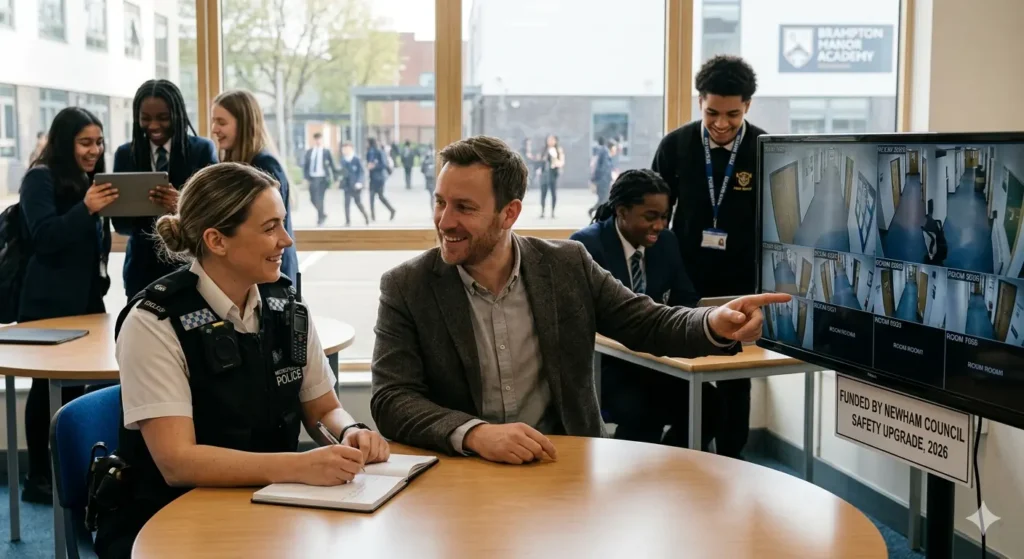
Newham Council invested £2m in 2026 safety upgrades, including CCTV at 20 sites. Stats: NSP reduced anti-social behaviour 12% borough-wide. Examples: Brampton Manor’s peer mentoring cut exclusions 18%.
Future relevance: Aligns with Met’s 2028 goal of 90% youth trust.
What Support Exists for Newham Parents?
Support includes Newham Safety Partnership helpline (020 3373 1000), Met’s non-emergency 101, and council’s Attendance Service. Free workshops via schools cover threat reporting. NSP funds 50 youth clubs reducing risks 30%.
Services define as council-police collaborations since 2010. Mechanisms: Drop-in sessions at Stratford Library Tuesdays. Data: 1,200 families aided in 2025.
Examples: Post-threat counseling at Plashet reached 200 parents. Implications: Lowers future panic, ensuring 95% attendance norms.
What are the Red and Blue Wars?
The “Red and Blue Wars” refer to a series of youth conflicts in Newham where students from different schools formed rival groups identified by colors. According to Metropolitan Police, these were not organized gangs but loosely connected disputes amplified through social media, leading to isolated incidents of violence and heightened concern among parents.