West Ham United fans have long been the heartbeat of the club, their passion fueling triumphs and enduring setbacks alike. In recent years, organized protests have escalated, with supporters voicing deep frustrations toward owners David Sullivan and vice-chair Karren Brady, demanding accountability and real change.
The Roots of Fan Discontent
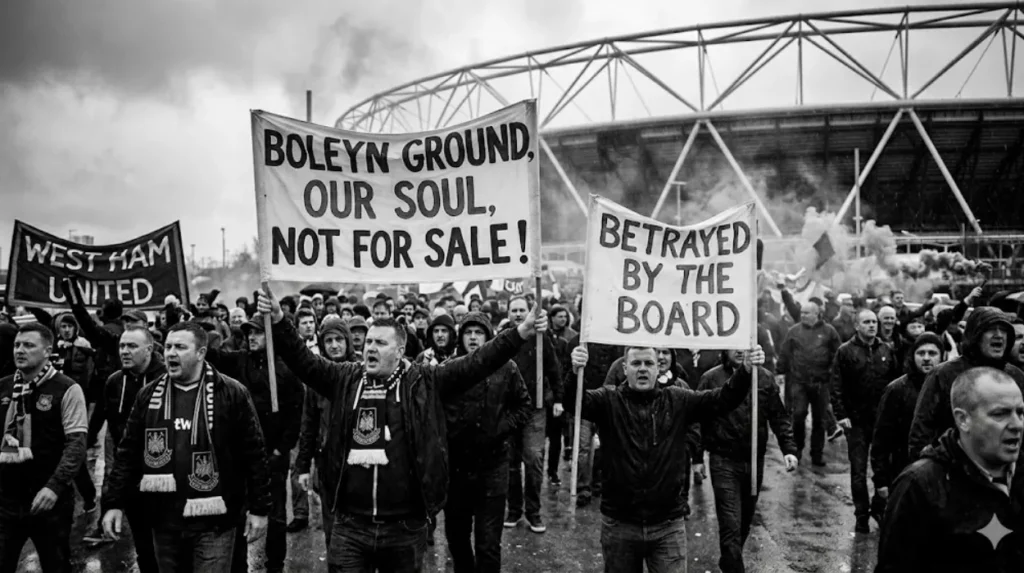
The surge in West Ham fan protests stems from a combination of on-pitch struggles and long-standing grievances over stadium relocation and broken promises. Supporters feel alienated by the move from Upton Park, known as the Boleyn Ground, to the London Stadium in 2016, a shift that many view as trading intimacy for corporate sterility. This relocation, promised as a “world-class” upgrade by Karren Brady in 2013, has instead fostered a sense of disconnection, with fans lamenting the loss of atmosphere and community ties that defined their matchday experience at the historic Upton Park home.
Compounding this are recurring poor performances, including relegation battles and managerial instability, which fans attribute to flawed recruitment and lack of board accountability. Groups like Hammers United have mobilized thousands, turning frustration into action through marches and boycotts. These protests are not isolated outbursts but part of a broader narrative where supporters demand the club reclaim its identity, free from what they see as mismanagement.
Historical Journey of West Ham United
West Ham United’s story is woven into East London’s fabric, beginning in 1900 as Thames Ironworks before becoming the Hammers in 1904. The Boleyn Ground, their home until 2016, hosted legendary moments, from the 1964 FA Cup win to the 1975 European Cup Winners’ Cup triumph, embodying the club’s working-class spirit. Upton Park’s chicken run terrace amplified the roar of fans, creating an electric atmosphere that intimidated opponents and united generations.
The 2010 takeover by David Sullivan and the late David Gold marked a new era, rescuing the club from financial peril post-Icelandic crisis for around £50 million. Sullivan, a self-made entrepreneur, and Gold aimed to stabilize and elevate West Ham, with Karren Brady joining as vice-chair to drive commercial growth. Yet, the Olympic Stadium deal—securing tenancy after legal battles—became a flashpoint, as initial bids collapsed amid rival claims from Tottenham.
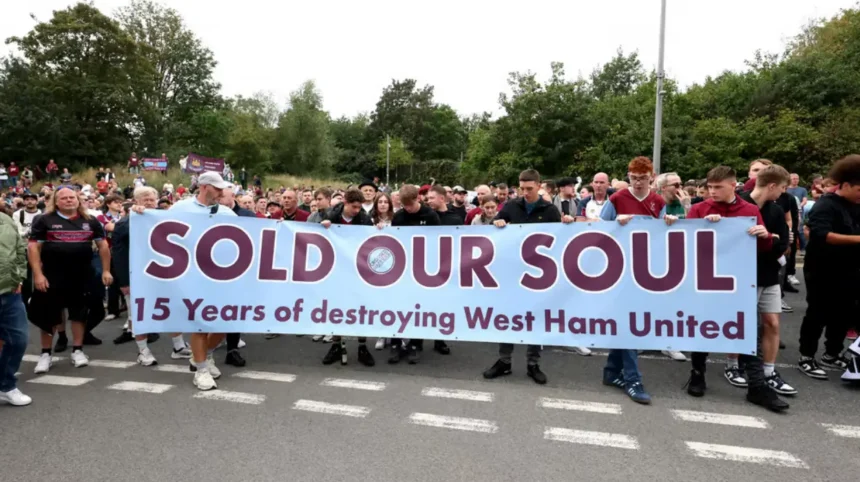
This image captures the intensity of a recent demonstration, where banners echo chants of betrayal felt by many loyal supporters.
The Controversial Stadium Move
The transition from Upton Park to the London Stadium epitomizes fan unrest. Upton Park, with its capacity of 35,000, pulsed with history; the new 62,500-seat venue, built for the 2012 Olympics, prioritizes athletics with running tracks distancing fans from the pitch. Brady’s assurances of transformation rang hollow as issues like poor sightlines, away fans in home blocks, and a “sterile” feel emerged.
Financially, the move burdened taxpayers and the club with subsidies, while revenue gains failed to translate into consistent success. Fans decry the athletics track’s retention, the much-maligned “wall” obstructing views, and athletics priority dates emptying stands. Protests highlight “sold a dream, living a nightmare,” banners symbolizing shattered promises of a football-first fortress.
Hammers United demands stadium adaptations: safe standing, dedicated singing sections, family zones, and ticketing reforms to revive atmosphere. Without these, attendance dips, boycotts loom, and the club’s soul erodes.
Ownership Under Fire: Sullivan and Brady
David Sullivan, majority owner since acquiring control in 2010, built his fortune in publishing before pivoting to football. His tenure saw Europa Conference League glory in 2023 but also criticism for conservative spending and PR missteps. Karren Brady, elevated from Birmingham City CEO, promised stability, vowing West Ham would avoid financial ruin—”hanging in the Tower of London” before letting it falter.
Yet, fans target “BS” banners at Sullivan and Brady, accusing them of unfulfilled pledges. Recruitment flops, like high-profile signings underperforming, fuel claims of poor strategy. Shareholder Daniel Kretinsky’s growing stake adds intrigue, with reports of board clashes over managers. The duo’s defenses—citing investments and Europa success—fall flat amid relegation threats and empty seats.
Anatomy of Recent Protests
Protests ignited in September 2025, with thousands marching to the directors’ entrance before a Crystal Palace loss, flags demanding “just resign” and “no more BS.” Hammers United organized alongside Crossed Hammers, drawing 3,000 despite rain. A coffin procession symbolized the “death” of West Ham’s spirit in November, amid 18th-place peril.
Boycotts followed, notably against Brentford in October, leaving visible empty seats on TV. Petitions hit 16,000 signatures; the Fan Advisory Board issued no-confidence votes. Even in 2026 FA Cup ties, delays from stunts underscored persistence. These actions, peaceful yet fervent, pressure the board without violence, unlike the 2009 Upton Park riot.
Supporters’ unity shines in these gatherings, transforming frustration into a collective call for reform.
Core Demands from Supporters
At the protests’ heart lie clear, actionable demands. Primary: Resignation of Sullivan and Brady, viewed as failing stewards. Stadium overhaul tops the list—remove the running track, install safe standing rails, create Bobby Moore Stands for singing, and family areas to boost atmosphere.
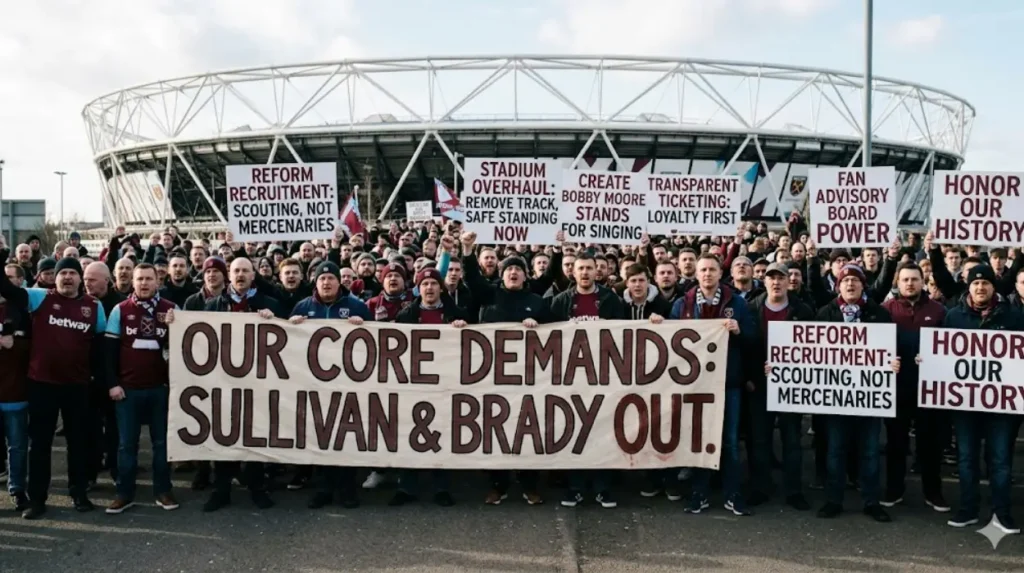
Fans seek transparent ticketing: priority for loyals over “glory hunters,” ending away fan infiltration. Recruitment reform demands data-driven signings fitting West Ham’s ethos, not mercenaries. Broader accountability includes Fan Advisory Board empowerment and PR sensitivity. These echo Hammers United’s manifesto: restore pride, honor history, prioritize fans.
Club’s Response and Stance
West Ham’s replies acknowledge unrest but defend records. Post-September protests, they touted “significant investments” in players and facilities, Europa wins, and matchday enhancements. Dialogues with the Fan Advisory Board continue, promising atmosphere improvements without concessions on leadership.
Club statements reassure on finances—over £500 million spent since 2010—and highlight Kretinsky’s backing. Yet, fans dismiss this as deflection, demanding substantive change over platitudes. Ongoing safe-standing trials signal minor wins, but core issues persist.
Impact on Team and Wider Football
Protests ripple through performance, with boycotts sapping home advantage—West Ham endured five straight home league defeats in 2025, a low since 1931. Managerial churn, from Graham Potter to Nuno Espírito Santo, reflects instability fans blame on owners.
In English football, West Ham’s saga mirrors supporter movements at Manchester United and Tottenham, where ownership critiques spur Fan Advisory Boards. Premier League rules mandate fan engagement, amplifying voices. Success could inspire reforms; failure risks deeper divides.
The Path Forward for West Ham Fans
Supporters’ resolve shows no fade, with Hammers United vowing sustained pressure until demands yield. Potential Kretinsky influence hints at shifts, but Sullivan’s grip holds firm. Reviving Upton Park’s spirit demands compromise: stadium tweaks, bold hires, fan input.
For West Ham, heeding these voices could forge resurgence. Protests underscore a timeless truth—fans are the club’s lifeblood. Ignoring them risks not just seats empty, but loyalty lost forever.