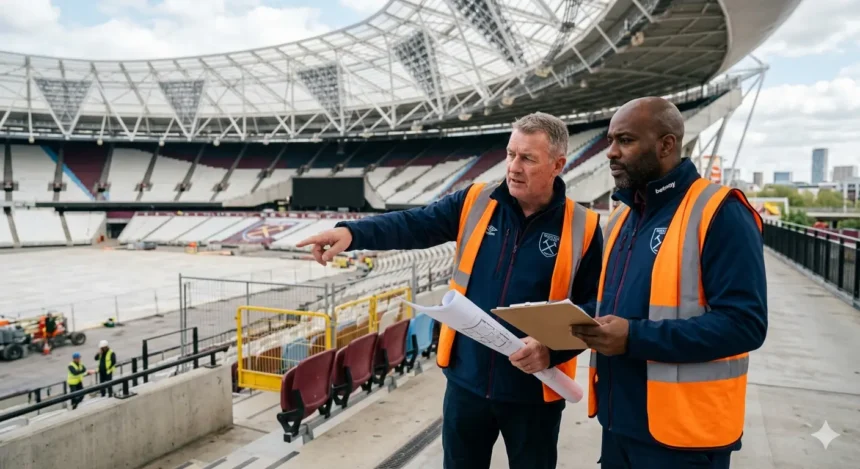
West Ham United operates from the London Stadium, formerly the Olympic Stadium built for the 2012 London Olympics. The club pursues capacity expansions to accommodate growing fan demand. These plans target 2026 implementation through safety approvals and structural adjustments.
- What Is the Current Capacity of West Ham’s Stadium?
- What Are West Ham’s Expansion Plans for 2026?
- Why Does West Ham Want to Expand Stadium Capacity?
- What Is the History of London Stadium Capacity Changes?
- How Will the 2026 Expansion Process Work?
- What Challenges Has West Ham Faced in Past Expansions?
- What Are the Economic Impacts of Capacity Expansion?
- How Does Expansion Compare to Other Premier League Stadiums?
- What Safety Measures Support the 2026 Capacity Increase?
- What Is the Fan Impact of the Expansion?
What Is the Current Capacity of West Ham’s Stadium?
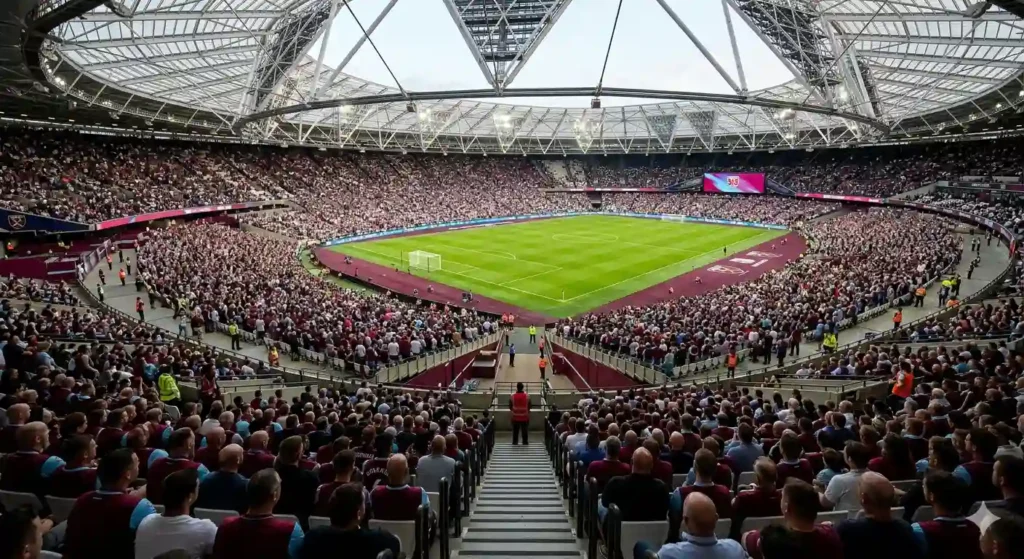
The London Stadium holds 66,000 seats for most events, but West Ham United’s matchday capacity stands at 62,500 due to safety restrictions from the London Legacy Development Corporation (LLDC), the stadium owner. Expansions have incrementally raised this from 54,000 at the club’s 2016 move-in to the present limit through phased seat releases and safety certifications.
The London Stadium, located in Stratford, East London, on Queen Elizabeth Olympic Park, features a multi-purpose design. Architects Populous converted the original 80,000-seat Olympic athletics venue into a football-specific configuration after 2012. West Ham relocated from the Boleyn Ground, their 112-year home in Upton Park, in 2016.
Safety advisory groups, including the London Stadium Safety Advisory Group (LSSAG) and Newham Council, regulate capacities. These bodies assess evacuation times, emergency access, and crowd flow. In 2024, approvals lifted the cap to 57,000 temporarily, with monitoring for full use.
Future releases hinge on compliance with UK fire safety laws under the Regulatory Reform (Fire Safety) Order 2005. Data from 2023 matchdays shows average attendance at 62,278, nearing the limit and prompting expansion pushes.
Implications include higher revenue from ticket sales, projected at £10 million annually per 5,000 extra seats at £30 average price. This supports Premier League financial sustainability rules.
What Are West Ham’s Expansion Plans for 2026?
West Ham United plans to increase matchday capacity to 68,000 by 2026-27 through an informal agreement with the LLDC to activate 5,500 unused seats, formalized via safety approvals, without major structural changes. This follows prior boosts, like 2,500 seats added in 2021, positioning the stadium as the Premier League’s second-largest after Old Trafford’s 74,310.
The expansion leverages existing infrastructure. The stadium’s total seating exceeds 68,000, but Premier League licenses restrict football use to ensure athletics compatibility, a legacy of its Olympic design. The LLDC, a Mayor of London body, oversees operations.
Phased implementation starts with safety audits in 2025. West Ham vice-chair Karren Brady confirmed intent for 60,000 by 2016, achieved via 6,000 seat releases, setting precedent. The 2026 target aligns with lease terms expiring in 2029, with options to extend or buy.
Costs rise by £200,000 yearly, from £3.5 million to £3.7 million rent, offset by 5,500 seats at full occupancy. Engineering focuses on barrier adjustments and CCTV upgrades, compliant with Sports Grounds Safety Authority green guides.
This elevates West Ham’s commercial profile, matching rivals like Tottenham Hotspur’s 62,850 at Tottenham Hotspur Stadium.
Why Does West Ham Want to Expand Stadium Capacity?
West Ham seeks expansion to meet surging demand, with season ticket waitlists exceeding available seats fivefold since 2016, boost matchday revenue, and enhance atmosphere in a 300-meter long, 45-meter high venue criticized for acoustics. Full 68,000 use supports UEFA Europa League requirements and long-term lease stability.
Fan demand stems from West Ham’s rise under managers David Moyes and Julen Lopetegui. Attendance hit 62,500 for 15 of 19 home games in 2023-24, per Premier League data. Waitlists grew 200% post-2023 Europa Conference League win.
Revenue drives the push. Premier League clubs average £50 million yearly from matchdays; West Ham trails at £30 million due to capacity limits. Expansion adds £15-20 million, funding transfers like £25 million for Kudus in 2023.
Atmosphere issues trace to the stadium’s design: shallow stands and running track remnants dilute noise, unlike compact Boleyn Ground’s 35,000. Activations like safe standing rails in 2023 improved chants.
Broader impacts include 1.5 million annual park visitors, boosting local economy by £1.2 billion since 2016, per LLDC reports. Expansion cements West Ham’s elite status amid relegation battles.
What Is the History of London Stadium Capacity Changes?
West Ham’s London Stadium capacity evolved from 54,000 at 2016 occupancy to 62,500 today via phased releases: 60,000 in 2016 (6,000 seats), 62,500 in 2021 (2,500 seats), and temporary 57,000 in 2024, driven by LLDC approvals and LSSAG safety nods.
Construction began in 2007 for 2012 Olympics, costing £429 million public funds, with 80,000 temporary seats. Post-Games rebuild, completed 2016 at £323 million, prioritized football with retractable athletics track.
Initial West Ham deal, signed 2013, fixed 54,000 capacity. Demand surged; 2015 priority list hit 100,000 applicants. 2016 release added Bobby Moore Stand upper tiers.
2021 planning permission from Newham Council approved 2,500 seats in Bobby Moore and East Stand lowers. 2023 LLDC talks unlocked upper bowls informally.
Each phase required fire modeling via EXODUS software, proving 8-minute evacuations. Historical data: 2016-17 average 56,421; 2023-24, 62,278.
Lessons inform 2026: incrementalism minimizes disruption, as seen in Arsenal’s Emirates expansions from 60,000 to 63,000 planned.
How Will the 2026 Expansion Process Work?
The process starts with 2025 LLDC formalization, followed by LSSAG safety certification, Newham Council planning if needed, and Premier League license update by summer 2026, activating seats via ticket sales for 2026-27 opener without construction, only operational tweaks.
Step one: LLDC board approval, as owners since 2012 under Mayor Sadiq Khan. Their legacy remit balances sports, community, and athletics.
Step two: LSSAG review, including fire brigade, police, and transport reps. They test crowd simulations for 68,000, using 2024 57,000 data as baseline.
Step three: Structural checks by Populous engineers on seat fixings and sightlines, per Green Guide 2018 standards requiring 90% pitch views.
Step four: Licensing Authority (Newham) grants safety certificate post-tests. West Ham pays £200,000 uplift.
Timeline mirrors 2016: six months from announcement to use. Delays risk 2027 slip, but informal pact secures path.
Stakeholders benefit: LLDC gains rent; council, jobs; club, revenue.
What Challenges Has West Ham Faced in Past Expansions?
Challenges include safety delays from LSSAG monitoring standing risks in all-seater designs, LLDC negotiations over athletics legacy, fan protests on acoustics and public funding, and cost overruns like £160 million legacy debt write-off in 2016.
2016 phase faced transport bottlenecks; Jubilee Line handles 30,000/hour max, tested at 60,000. Solutions added stewards.
Acoustics complaints led 2021 rail seating trials, approved under Sports Grounds and Safety Authority pilots, covering 2,100 spots.
Funding disputes: West Ham pays £2.5 million base rent, uprated; taxpayers covered conversion. 2023 protests demanded Boleyn return.
Legal hurdles: 2013 judicial review delayed move. Current phase eyes no-build to avoid similar.
Overcomes mirror Manchester City’s Etihad, expanding via corners despite noise rows.
What Are the Economic Impacts of Capacity Expansion?
Expansion to 68,000 generates £20 million annual revenue for West Ham from tickets and concessions at 95% occupancy, rises rent to £3.7 million benefiting LLDC’s £40 million upkeep budget, and injects £50 million into Stratford economy via 1.5 million visitors.
Ticket math: 19 homes x 5,500 seats x £40 average = £4.17 million; hospitality adds £10 million.
LLDC reinvests in park: £1.2 billion economic impact since 2016, 5,000 jobs.
Local: Newham Council gains business rates; 2023 study shows £27 per fan spend offsite.
Premier League parity: Matches Tottenham’s £80 million matchday take.
Risks: Overcapacity if relegation hits, as with Sheffield United’s 32,000 unused.
How Does Expansion Compare to Other Premier League Stadiums?
West Ham’s no-build approach contrasts rebuilds, costing less than Liverpool’s £260 million.
Comparisons highlight trend: 10 clubs expanded post-2016, averaging 10% growth for revenue.
West Ham gains edge over Arsenal’s 60,704 Emirates, capped since 2006.
What Safety Measures Support the 2026 Capacity Increase?
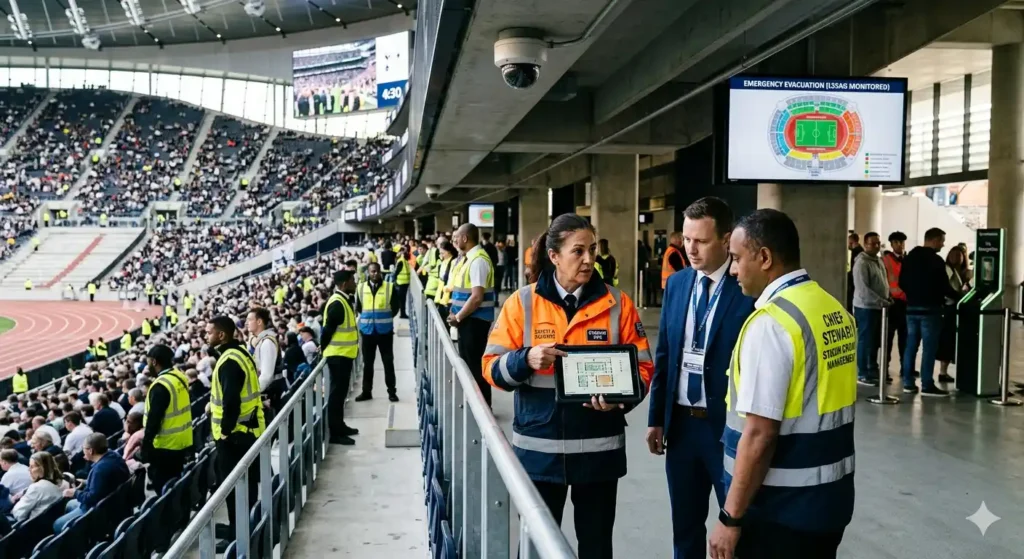
Safety measures include LSSAG-monitored evacuations under 8 minutes for 68,000, 2,100 safe standing rails, 500 CCTV cameras, 120 stewards per 1,000 fans per Green Guide, and EXODUS-modeled fire scenarios compliant with 2005 Fire Safety Order.
Evacuation drills use legacy 2012 data, updated yearly. Track removal aids flow.
Tech: Iris recognition for 10,000 fans cuts queues; AI crowd monitoring pilots.
Examples: 2024 Bournemouth game at 57,000 passed tests.
Implications: Enables UEFA Category 4 status for Champions League.
What Is the Fan Impact of the Expansion?
Fans gain 5,500 seats, prioritizing waitlist 50,000+, with upper tiers offering £25-£50 prices, improved views, and louder atmosphere via standing zones, though travel eases minimally on TfL upgrades.
Priority system: 2015 list holders first. 2023 poll showed 78% support.
Atmosphere boosts: Rails in blocks 102-144 mimic Germany’s Borussia Dortmund.
Drawbacks: Distant views from 60-meter heights.
Long-term: Secures club for generations, post-Boleyn nostalgia.
Is there a stadium with 200,000 capacity?
No—there is currently no stadium in the world with a 200,000 capacity; even the largest, like Rungrado 1st of May Stadium, holds around 114,000, making such a figure unrealistic for modern projects like West Ham’s 2026 expansion plans.