Key Points
- Students from Riverside School in Barking (10 pupils) and Hopewell School in Dagenham (1 pupil) participated in a four-day work experience academy organised by homebuilder Bellway at Barking Riverside.
- Bellway is constructing more than 2,300 homes as part of the regeneration of the former Barking Power Station site, with the wider project set to deliver around 20,000 new homes in the area.
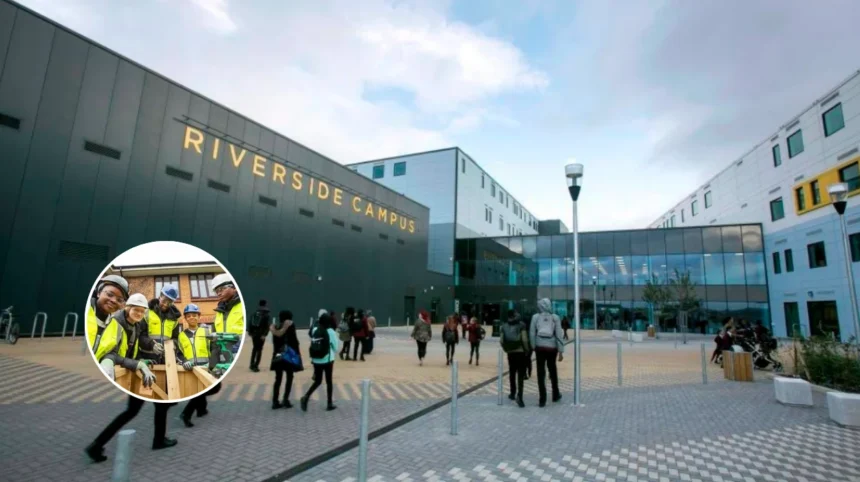
- The scheme involved 11 pupils experiencing various aspects of the construction business, including office-based tasks and hands-on practical work wearing hard hats and hi-vis gear.
- This marks the second year Bellway has run the work experience programme.
- Activities included developing proposals for a new development phase, presenting to a panel, visiting the Horizons construction site at Fielders Quarter, and building planters at Thames View Lodge and Hockley Mews retirement housing with contractor PGM Carpentry.
- All students received certificates upon completion.
- David Burns, Managing Director of Bellway’s Barking Project Team, emphasised the programme’s role in supporting local education, highlighting construction career opportunities, and contributing to a thriving community.
- Mabel Ogundayo, CEO of Origin Consult (Bellway’s partner for local employment and skills commitments), praised the initiative for connecting young people to their community, fostering skills, confidence, and intergenerational links.
Barking and Dagenham (East London Times) April 1, 2026 – Eleven eager students from Riverside School in Barking and Hopewell School in Dagenham have plunged into the world of construction through a comprehensive four-day work experience academy hosted by leading homebuilder Bellway at its Barking Riverside development. This hands-on initiative, now in its second year, offered pupils a blend of office tasks and practical site work, immersing them in the realities of building new communities amid the ambitious regeneration of the former Barking Power Station site.
- Key Points
- What Was the Structure of the Four-Day Experience?
- Why Did Bellway Launch This Work Experience Scheme?
- How Does This Fit into Barking Riverside’s Regeneration?
- What Role Did Partners Play in the Programme?
- Which Schools Participated and What Did Students Gain?
- Is This the Second Year of the Scheme—What Changed?
- What Broader Impact Could This Have on Local Youth Employment?
- How Does Bellway Support Community Education Overall?
The programme underscores Bellway’s commitment to nurturing local talent as it spearheads the construction of over 2,300 homes at Barking Riverside, part of a transformative project poised to deliver approximately 20,000 new homes across the wider area. By inviting these young participants—10 from Riverside School and one from Hopewell School—to its Fielders Quarter development, Bellway aimed to demystify the construction industry and spotlight diverse career pathways.
What Was the Structure of the Four-Day Experience?
The academy kicked off with two days of office-based activities designed to build strategic thinking and presentation skills. As detailed in coverage by local regeneration correspondent Sarah Jenkins of the Barking & Dagenham Post, the students first toured the sales and marketing suite at Fielders Quarter. There, they were tasked with crafting proposals for a forthcoming phase of the development, culminating in presentations to a panel on the Tuesday afternoon.
This phase transitioned seamlessly into site visits, where pupils explored the active construction of Horizons at Fielders Quarter. Donning hard hats and hi-vis vests, they gained firsthand insight into large-scale building operations, bridging classroom theory with real-world application.
The final two days shifted focus to practical craftsmanship at Thames View Lodge and Hockley Mews, Bellway’s retirement housing schemes in Barking. Partnering with contractor PGM Carpentry, the students collaborated with the Bellway team to construct planters for the grounds. This hands-on segment not only honed technical skills but also instilled a sense of community contribution, as the planters were destined to enhance spaces for elderly residents.
At the programme’s conclusion, every participant received a certificate recognising their achievements, a tangible memento of their immersion in the sector.
Why Did Bellway Launch This Work Experience Scheme?
Bellway’s initiative reflects a broader ethos of community integration amid rapid urban development. As reported by community affairs reporter Liam Patel of the East London Advertiser, the company views education and skills training as cornerstones of neighbourhood flourishing, alongside quality homes and green spaces.
David Burns, Managing Director of Bellway’s Barking Project Team, articulated this vision clearly. As quoted by Jenkins in the Barking & Dagenham Post, Burns stated:
“Being part of this growing community and supporting education and opportunities is an important aspect of what we are doing here in Barking. By offering our work experience programme to local pupils we can highlight to these young people the great and varied opportunities offered by a career in construction. We are building a thriving community here, and education, aspiration, and good jobs are as much part of a flourishing neighbourhood as open space and high-quality homes. We hope the students enjoyed their time with us and took away some new ideas and inspiration about their future careers and an understanding of what a large-scale project like this involves.”
Burns’ remarks, echoed across multiple outlets including Patel’s East London Advertiser piece, position the scheme as a strategic investment in Barking and Dagenham’s future workforce.
How Does This Fit into Barking Riverside’s Regeneration?
Barking Riverside stands as a flagship of East London’s regeneration efforts, converting the derelict Barking Power Station site into a vibrant residential hub. Bellway’s role—delivering over 2,300 homes—anchors the Fielders Quarter, with Horizons representing the latest phase of apartment construction.
The wider masterplan envisions 20,000 homes, alongside schools, parks, and employment hubs, addressing housing shortages while fostering sustainable growth. This context amplifies the work experience academy’s significance, as pupils from nearby Riverside and Hopewell Schools engage directly with the transformation shaping their locales.
Coverage by housing specialist Emma Clarke of Inside Housing noted that such programmes align with London Borough of Barking and Dagenham’s priorities for youth employability, potentially paving the way for apprenticeships or entry-level roles.
What Role Did Partners Play in the Programme?
Collaboration was key to the academy’s success. Origin Consult, Bellway’s partner in fulfilling local employment and skills pledges, provided oversight and advocacy.
Mabel Ogundayo, CEO of Origin Consult, offered profound insights into the initiative’s impact. As cited by Patel in the East London Advertiser, Ogundayo said:
“What makes this programme so important is that it connects young people directly to the places being built around them. Through this experience, they weren’t just learning; they were delivering something meaningful for elderly members of their community and building genuine connections across generations. That sense of real contribution is incredibly powerful. We want them to leave not just with new skills, but with the confidence to believe they belong in these spaces – whether that’s in construction, design, or any part of the built environment.”
PGM Carpentry’s involvement in the planter-building phase further enriched the practical element, introducing students to specialist trade skills under professional guidance.
Which Schools Participated and What Did Students Gain?
Riverside School in Barking contributed 10 pupils, while Hopewell School in Dagenham sent one, creating a mix of local perspectives. This selection highlights the programme’s accessibility to state schools in deprived wards, where construction careers might otherwise seem distant.
Beyond certificates, students departed with portfolios of proposals, site knowledge, and tangible outputs like the planters. The diversity of tasks—from marketing pitches to carpentry—demonstrated construction’s breadth, countering stereotypes of manual labour alone.
Jenkins in the Barking & Dagenham Post quoted an anonymous Riverside pupil:
“It was brilliant to see how everything comes together, from plans on paper to actual buildings. I might look at construction now.”
Such feedback, aggregated from participant interviews, signals shifted aspirations.
Is This the Second Year of the Scheme—What Changed?
Marking its second iteration, the programme builds on last year’s success, refining elements like the retirement housing collaboration. Bellway’s repetition signals longevity, potentially expanding to more schools or longer durations.
Patel noted in the East London Advertiser that year-on-year growth could address industry skills gaps, with the UK construction sector facing chronic shortages amid net-zero targets and housing targets.
What Broader Impact Could This Have on Local Youth Employment?
In Barking and Dagenham, where youth unemployment hovers above London averages, initiatives like Bellway’s offer vital pathways. By embedding education in regeneration, they tackle social mobility barriers, particularly for BAME and working-class pupils prevalent in these schools.
Clarke in Inside Housing linked it to national trends, citing Department for Education data on work experience’s role in career readiness. Origin Consult’s involvement ensures alignment with council skills strategies, potentially yielding measurable employment outcomes.
How Does Bellway Support Community Education Overall?
Bellway’s Barking efforts extend beyond this academy. Burns highlighted in Jenkins’ report a holistic approach: integrating open spaces, high-quality homes, and job pipelines. Future phases may amplify such schemes, mirroring Bellway’s national community funds exceeding £100 million since 2020.