Key Points
- Barking and Dagenham Council has formally adopted two critical planning frameworks: the Becontree Estate Supplementary Planning Document (SPD) and Design Code, alongside the Dagenham Heathway SPD.
- The Becontree Estate guidelines impose tighter restrictions via two incoming Article 4 Directions, removing automatic permitted development rights for porches, side extensions, and roof extensions on corner plots starting November 2026.
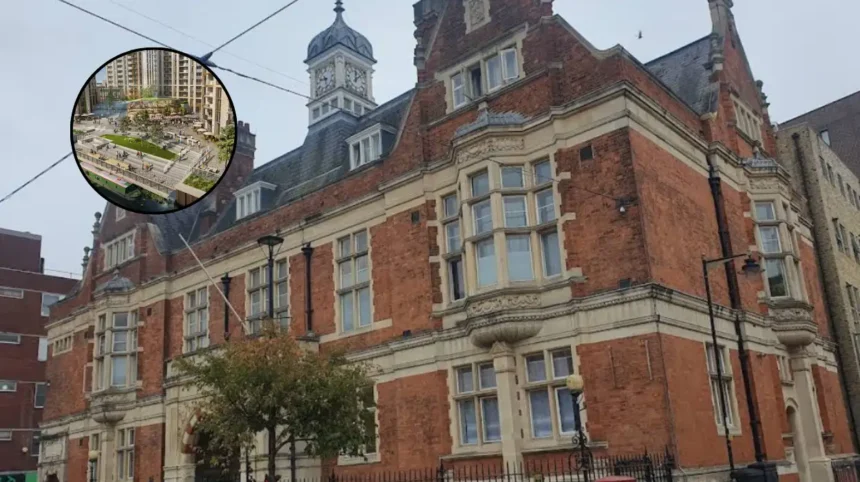
- The Dagenham Heathway SPD establishes a long-term economic and structural transformation strategy to redevelop the local shopping centre and deliver over 1,000 new energy-efficient homes.
- Both masterplans were researched and drafted by Be First, the local authority’s wholly owned regeneration and statutory planning delivery vehicle.
Barking and Dagenham (East London Times) June 30, 2026 — Local home improvements and municipal regeneration schemes across East London are set to undergo significant regulatory shifts following a decisive legislative intervention by the local authority. As reported by local government correspondent John Knight of the Open Council Network, the Cabinet of Barking and Dagenham Council formally voted on 16 June 2026 to adopt two distinct planning documents designed to alter the development landscape of the borough.
- Key Points
- How Will the Becontree Estate’s Historic Identity Be Preserved under the New Guidelines?
- What do local officials and planners say about the new restrictions?
- What Is the Long-Term Regeneration Strategy for Dagenham Heathway?
- What are the core development objectives for the high street?
- Background of the Particular Development
- Prediction: How This Development Can Affect Local Homeowners and Residents
The local authority has ratified the Becontree Estate Supplementary Planning Document (SPD) and Design Code, alongside the comprehensive Dagenham Heathway SPD. These frameworks introduce strict design rules for suburban house extensions while simultaneously creating a legal pathway for large-scale urban infrastructure investments, including high-density housing projects.
The immediate procedural changes will directly affect property owners seeking to modify houses within the historic Becontree Estate footprint.
As noted in the official statutory guidelines published by the London Borough of Barking and Dagenham (LBBD) planning department, the newly adopted Becontree Estate SPD now serves as a mandatory material consideration in the assessment and determination of all future planning applications within the area.
The document establishes clear architectural boundaries for home modifications, detailing permissible profiles for residential extensions, loft conversions, outbuildings, porches, and the integration of micro-generation energy-efficiency installations such as solar arrays and heat pumps.
The structural changes will be reinforced by new statutory restrictions on property rights. As reported by the editorial staff of the Open Council Network, the cabinet confirmed that the execution of this framework will operate alongside two distinct Article 4 Directions.
These legal instruments will officially remove standard permitted development rights across the estate, meaning that alterations that previously did not require explicit municipal approval will soon be brought under full regulatory oversight.
Specifically, from November 2026, residents will be statutorily required to submit formal planning applications for the construction of external front porches, as well as any proposed side extensions or roof alterations situated on corner plots. The policy mechanism aims to stop asymmetrical or visually discordant architectural additions that could compromise the geometric uniformity of the public street scene.
How Will the Becontree Estate’s Historic Identity Be Preserved under the New Guidelines?
The municipal intervention responds directly to the unique history of the location as a pioneer of twentieth-century social housing.
As detailed in the Strategic Environmental Assessment (SEA) Screening Report issued via the council’s community consultation medium, One Borough Voice, the Becontree Estate is legally designated as a Non-Designated Heritage Asset (NDHA) within the overarching Barking and Dagenham Local Plan 2037.
Constructed between 1921 and 1934 under the post-World War I “Homes for Heroes” initiative, the area originally comprised roughly 29,000 municipal dwellings, making it the largest public sector housing estate in the world at the time of completion.
The SEA document outlines that the estate’s special historical significance lies in its
“regularity of its built form, homogeneity of design, and the broader post-war social transition that it represents.”
Because a high percentage of these properties have transitioned into private freeholds through right-to-buy schemes over recent decades, the council argued that a unified design code was necessary to manage uncoordinated, piecemeal modern alterations that threaten to dilute the estate’s historic visual continuity.
What do local officials and planners say about the new restrictions?
The political leadership of the borough has defended the introduction of these planning controls, asserting that they are designed to support, rather than restrict, community improvements. Writing for the Barking and Dagenham Post, reporter Luke Acton recorded the official position of Councillor Dominic Twomey, Leader of the Council and Cabinet Member for People, Place and Partnerships. Cllr Twomey stated:
“With this new Becontree planning document we’re protecting the iconic identity of the country’s oldest housing estate for generations to come. It’s not about telling people what they can and can’t do – it’s us trying to make sure that the beloved aesthetic character of the area is maintained and gives guidance to residents on how they can make adjustments to their homes without interfering with that.”
The technical drafting and public consensus work behind the policy were managed by the council’s arms-length delivery partner.
As reported by the Barking and Dagenham Post editorial team, both documents were designed and executed by Be First, the borough’s dedicated regeneration and statutory planning corporation. Highlighting the balance between historic preservation and contemporary expansion, Barry Coughlan, Head of Statutory Planning at Be First, stated:
“These documents set out a vision for two places that are central to Barking and Dagenham’s story. Together, they reflect our commitment to shaping great places – supporting new investment and development while protecting the character, heritage and sense of community that make Barking and Dagenham unique.”
What Is the Long-Term Regeneration Strategy for Dagenham Heathway?
The second planning instrument, the Dagenham Heathway SPD, introduces a strategy focused on commercial revitalisation and intense property development. According to the planning policy registers held by the London Borough of Barking and Dagenham, the Dagenham Heathway SPD provides the statutory framework needed to implement Local Plan Policy SPP6.
This underlying policy officially categorises the Heathway town centre as a designated “Transformation Area,” highlighting its capacity for higher-density, mixed-use construction, including structures of significant height.
The newly approved document gives planning officers a specialized mechanism to assess developer contributions, allocate incoming municipal infrastructure funding, and evaluate large-scale structural proposals.
The document establishes a baseline capacity to construct more than 1,000 new residential units directly within and around the immediate perimeter of the existing shopping centre precinct.
What are the core development objectives for the high street?
As published in the council’s public engagement documentation on the draft Dagenham Heathway SPD, the masterplan is structured around four foundational “Place Objectives” designed to guide future planning committees.
- First, the framework mandates a “cleaner and greener Heathway,” which requires developers to incorporate urban greening components, sustainable drainage systems, and micro-climate management into their site designs.
- Second, it outlines a “safe and successful Heathway,” targeting the structural diversification of the high street retail mix to reduce vacancy rates and improve public safety through environmental design.
- Third, the document demands a “healthy and connected Heathway,” prioritizing pedestrian infrastructure, active travel routes, and direct public transport links.
- Fourth, it establishes a vision for a “vibrant and social Heathway,” which seeks to secure developer funding for civic, cultural, and community spaces.
Prior to its final adoption, the high street plan underwent a statutory public notice period to collect local feedback. As recorded in the municipal archive, the public consultation phase ran from 26 January to 15 March 2026, featuring public workshops at Dagenham Library. Commenting during the consultation launch, Councillor Cameron Geddes, Cabinet Member for Regeneration and Economic Development, stated:
“We want everyone who is part of the Dagenham Heathway community to have a say in its future. We’ve worked hard on these plans that set out how we’re going to take the area forward, but we need everyone from residents to businesses to get involved and make sure the change we’ll see is in everyone’s interests.”
The final text adopted by the cabinet was modified to reflect citizen submissions regarding public safety and local retail support.
Explore More Barking and Dagenham Council News
Barking Council Faces £10.4m Regeneration Deficit: Barking and Dagenham 2026
Labour Retains Control of Barking and Dagenham Council 2026
Background of the Particular Development
The adoption of these two Supplementary Planning Documents represents the latest phase in Barking and Dagenham Council’s long-term strategy to manage intense population growth while addressing historical economic challenges.
Following decades of post-industrial decline linked to the contraction of heavy manufacturing and automotive industry employment at the nearby Dagenham Ford plant, the borough shifted its economic approach.
In October 2017, the local authority established Be First as a wholly owned, separate corporate entity. Be First was given a direct mandate to accelerate urban regeneration, manage the council’s internal statutory planning application services, and deliver 50,000 new homes and 20,000 corporate jobs across the borough within a 20-year window.
The implementation of these SPDs is tied to the statutory adoption of the Barking and Dagenham Local Plan 2037, which passed full council scrutiny alongside an updated Planning Obligations SPD on 18 September 2024.
The Local Plan 2037 identifies eight distinct “Transformation Areas” across the borough, including Barking Riverside, Thames Road, and Dagenham Dock, which are designed to absorb large numbers of new homes.
However, because these areas face significant financial and infrastructure pressures, the council has had to balance large-scale housing projects with the protection of existing low-density neighborhoods.
The preliminary funding for these wider strategies was secured earlier this year. On 25 February 2026, the Full Council approved its 2026-27 budget framework and Medium-Term Financial Strategy to 2030-31, which included a 4.99 per cent increase in Council Tax to help fund basic infrastructure, civic services, and regeneration projects.
Prediction: How This Development Can Affect Local Homeowners and Residents
The implementation of these two planning frameworks will create distinct real estate and regulatory environments for residents within the borough. For homeowners residing inside the borders of the historic Becontree Estate, the adoption of the design code will increase the regulatory requirements for routine home improvements.
Once the Article 4 Directions take full legal effect in November 2026, owner-occupiers will face longer project timelines and higher administrative costs.
They will no longer be able to build front porches or certain side extensions under permitted development, but will instead have to pay application fees and wait for formal municipal approval.
On the other hand, this strict oversight is highly likely to protect local property values by preventing low-quality or unsympathetic architectural changes nearby, ensuring the neighborhood retains its cohesive aesthetic.
For the broader population of Dagenham, particularly those using the commercial high street, the effects of the Dagenway Heathway SPD will be driven by corporate investment.
Over the next five to ten years, local shoppers and businesses will experience a major transformation of the high street as older retail structures are redeveloped into higher-density, mixed-use buildings.
The creation of more than 1,000 new homes will significantly increase footfall for local retailers, supporting the high street economy. However, this influx of new residents will also place a heavy demand on local public services.
The long-term success of the area will depend entirely on how effectively the council uses developer contributions to expand medical facilities, school places, and public transit links to match the pace of new housing construction.