Key Points
- Voters in Eastbrook & Rush Green ward, Barking & Dagenham, face a fragmented right-wing contest with three distinct options ahead of local elections.
- Reform UK targets the ward, bordering Havering, as a key seat to challenge Labour’s dominance.
- Lewis Holmes, former Reform UK local figure and Thames View by-election candidate, has defected to run as an Independent with running mate Ashlea Wane.
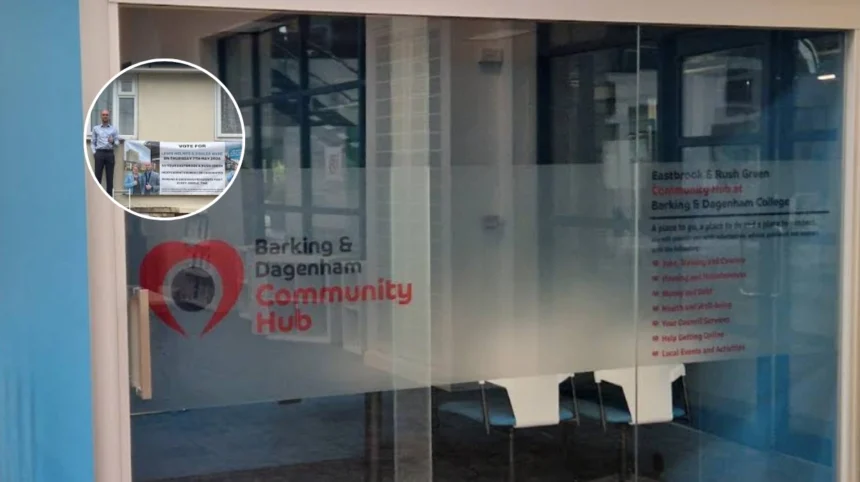
- Holmes pledged on Instagram banner to put “Barking & Dagenham Residents First”.
- HOPE Not Hate exposed Holmes sharing posts by Tommy Robinson (Stephen Yaxley-Lennon) and far-right nationalists before the Thames View by-election.
- In June 2025, Holmes replied “Amen” to ex-Reform MP Rupert Lowe’s criticism of Reform UK as “utter shambles”; Lowe later founded Restore Britain, further right than Reform.
- Despite exposures, Reform London Assembly member Alex Wilson praised Holmes’s Thames View candidacy on X (post ID: 1950288980899192904).
- Reform Party UK Exposed highlighted Holmes’s tweet calling Barking “a nasty, disgusting place surrounded by Pakistani rape gangs” (X post ID: 1947670504179220836).
- In the Thames View by-election last summer, Labour held the seat, Greens came second, Holmes (Reform) third beating Conservative Andrew Boff, per OnLondon analysis by Lewis Baston.
- Holmes was active on X/Twitter and Instagram accusing Barking & Dagenham Council of various misdeeds.
Barking & Dagenham (East London Times) April 3, 2026 – Voters in the Eastbrook & Rush Green ward of this east London borough are poised for a highly fragmented right-wing political contest in the upcoming local elections, with Reform UK facing competition from a defecting former ally now running independently and potential overlaps from even more extreme groups. The ward, which shares a border with Havering, has emerged as a flashpoint for Nigel Farage’s Reform UK party, though Labour’s stronghold remains formidable. Tensions have escalated following the dramatic exit of local activist Lewis Holmes from Reform UK, who has announced his independent candidacy alongside running mate Ashlea Wane, pledging to prioritise local residents.
- Key Points
- Who is Lewis Holmes and why did he leave Reform UK?
- What makes Eastbrook & Rush Green a key battleground?
- How has the far-right exposure affected Reform UK’s strategy?
- What do recent by-elections reveal about voter shifts?
- Who are the other players in this right-wing race?
- What are the implications for Barking & Dagenham’s politics?
Who is Lewis Holmes and why did he leave Reform UK?
Lewis Holmes had positioned himself as Reform UK’s key figure in Barking & Dagenham until recently.
As detailed in coverage by OnLondon, he stood as the Reform candidate in the Thames View ward by-election last summer, finishing a notable third behind Labour—who comfortably held the seat—and the surging Greens. Remarkably, Holmes outperformed the established Conservative candidate Andrew Boff, a London Assembly member known for his local prominence.
Holmes was vocal on social media, using X/Twitter and Instagram to lambast Barking & Dagenham Council over alleged failings.
However, his departure from Reform UK appears rooted in a series of controversies. According to reporting from HOPE Not Hate, an anti-extremism group, Holmes had shared posts by Stephen Yaxley-Lennon—better known as Tommy Robinson—and other far-right nationalists shortly before the Thames View by-election. This exposure highlighted his associations with figures well beyond mainstream conservatism.
Further straining ties, in June 2025, Holmes publicly responded “Amen” to a post by former Reform MP Rupert Lowe, who described Reform UK as “the utter shambles” in need of a “credible alternative”.
Lowe has since launched Restore Britain, a party positioned even further to the right of Reform UK. These incidents, as flagged by the X/Twitter account Reform Party UK Exposed (post ID: 1947670504179220836), included Holmes’s own inflammatory tweet labelling Barking as “a nasty, disgusting place surrounded by Pakistani rape gangs”.
Despite these red flags, Reform London Assembly member Alex Wilson endorsed Holmes’s Thames View bid just days after some exposures, posting praise on X (post ID: 1950288980899192904). Holmes has now pivoted, unveiling an Instagram banner (post by @lewisrholmes, ID: DWmbZPDAggi) declaring his independent run in Eastbrook & Rush Green with the slogan “Barking & Dagenham Residents First”.
What makes Eastbrook & Rush Green a key battleground?
Eastbrook & Rush Green ward lies in the east of Barking & Dagenham, adjacent to Havering, making it strategically vital for right-wing parties eyeing gains against Labour. As noted in Wikipedia’s ward profile and local election previews, it is one of Reform UK’s top targets for the 7 May elections.
The borough has not featured heavily in media since Reform UK flagged it as a priority, but this multi-candidate right-wing split could dilute anti-Labour votes.
The ward elects two councillors, amplifying the stakes for Holmes and Wane’s independent ticket. Reform UK hopes to dent Labour’s “big red wall” here, though analysts like Lewis Baston of OnLondon (in his Thames View by-election piece:
“Barking & Dagenham: Labour holds, Greens thrive and Tories slide”)
suggest the right’s fragmentation may hand advantages to incumbents or rivals like the Greens.
How has the far-right exposure affected Reform UK’s strategy?
The saga underscores deepening rifts on the right. HOPE Not Hate’s digs into Holmes’s online activity—sharing Tommy Robinson content and nationalist posts—came amid Reform’s efforts to broaden appeal.
Yet Wilson’s endorsement indicates internal tolerance for such views at times. Reform Party UK Exposed’s highlighting of Holmes’s Barking slur tweet adds to the bad blood, portraying him as too extreme even for some critics of Reform.
Holmes’s “Amen” to Rupert Lowe’s June 2025 barb at Reform as a “shambles” (leading to Lowe’s Restore Britain venture) signals his drift towards purer far-right politics. Restore Britain, while not yet fielding candidates here, represents a potential third strand in this “great fragmenting Right show”, as the story frames it—Reform UK, Holmes’s independent populism, and ultra-right alternatives.
What do recent by-elections reveal about voter shifts?
The Thames View by-election provides crucial context. Per Lewis Baston’s OnLondon analysis (article: “lewis-baston-barking-dagenham-labour-holds-greens-thrive-and-tories-slide/amp/”), Labour retained control, but the Greens’ strong second place signalled progressive inroads. Holmes’s third for Reform edged out Andrew Boff’s Conservatives, a blow to traditional Tories and hinting at Reform’s pull among disillusioned voters.
This dynamic now replays in Eastbrook & Rush Green, where Holmes’s independent bid—branded with his residents-first banner—could siphon Reform votes. No statements from Labour or Greens on this specific race were immediately available, but the by-election pattern suggests a crowded field benefits the left.
Who are the other players in this right-wing race?
Reform UK remains committed, viewing the ward as prime territory despite the Holmes defection. Nigel Farage’s party has not named its new candidate, but its targeting strategy persists.
Andrew Boff’s prior loss raises questions over Conservative involvement; Boff, as a London Assembly heavyweight, might sit this out or back allies.
Ashlea Wane, Holmes’s running mate, brings a fresh face to the independent slate, though details on her background are sparse beyond the joint pledge. Rupert Lowe’s Restore Britain looms as a wildcard—further right, potentially appealing to Holmes sympathisers if it contests.
HOPE Not Hate continues monitoring, with its exposures likely to feature in campaigns.
Tommy Robinson’s shadow lingers via Holmes’s shares, while Reform Exposed’s critiques expose internal purges. Alex Wilson’s praise for Holmes post-exposure (X post: 1950288980899192904) suggests Reform’s pragmatic side, even as it navigates far-right fringes.
What are the implications for Barking & Dagenham’s politics?
This fragmentation risks right-wing implosion, bolstering Labour’s grip. Eastbrook & Rush Green’s two seats could see split votes, echoing Thames View where Greens thrived amid Tory-Reform rivalry. Holmes’s social media barrage against the council—accusations of “wickedness”—will likely intensify, but his baggage may alienate moderates.
As elections near, all eyes on whether Reform rebounds, independents surge, or extremes dominate. Voters face stark choices: Reform’s national push, Holmes-Wane localism tainted by controversy, or purer far-right echoes. Neutral observers await turnout data, but history—from Baston’s by-election dissection to HOPE Not Hate alerts—warns of volatility.
Barking & Dagenham, long a bellwether for working-class shifts, exemplifies Britain’s splintering right. With no missed details from exposures, tweets, or pledges, this ward’s race captures national tensions ahead of 7 May.