Key Points:
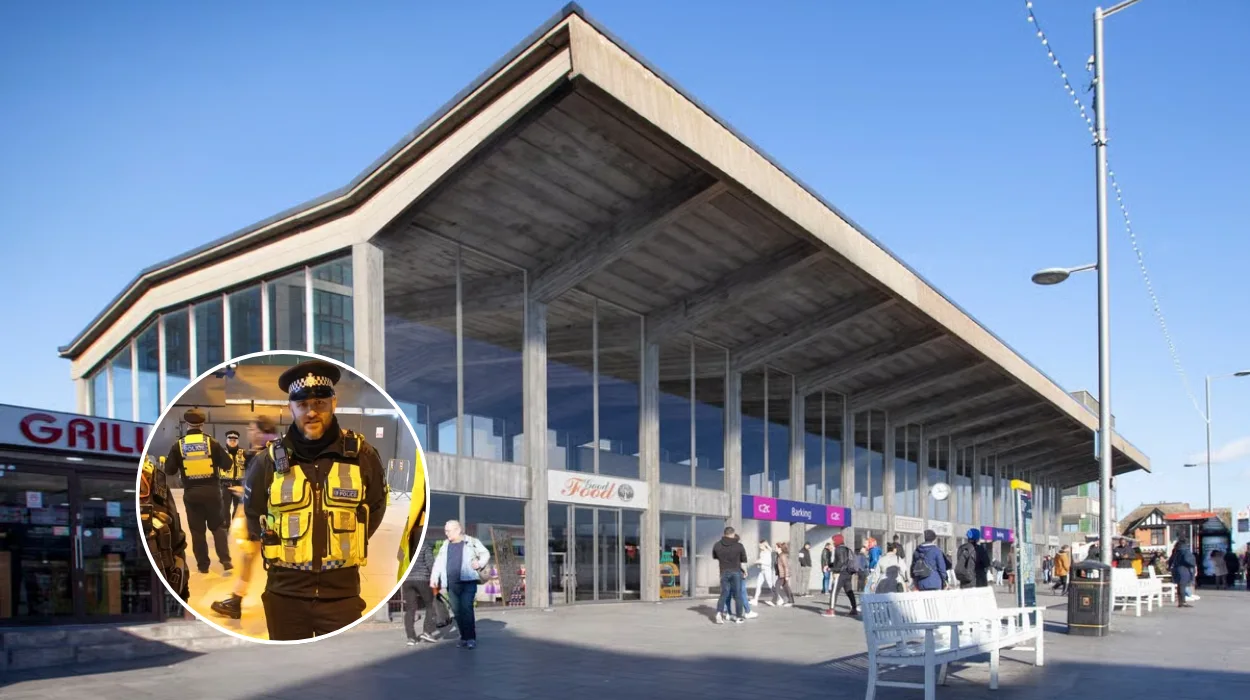
- A joint police operation was held at Barking Station on Thursday, 18 December.
- The operation involved the Metropolitan Police, British Transport Police (BTP), and City of London Police.
- Additional support came from Barking and Dagenham Council Enforcement Officers.
- Officers aimed to deter crime, reassure commuters, and improve safety on the transport network.
- 23 individuals were stopped and searched; 12 resulted in positive action.
- Arrests included possession of cannabis, carrying an offensive weapon, and two individuals wanted by courts.
- Patrols extended to Barking Town Centre, Ripple Road, Market Place, East Street and London Road.
- A static engagement stall offered crime prevention advice and direct conversation with commuters.
- Senior officers hailed the operation as a success in crime prevention and community safety.
- Police reaffirmed their commitment to visible, proactive policing and inter-agency cooperation.
What prompted the major police operation at Barking Station?
As reported by the Metropolitan Police Service (MPS) media team on Friday, 19 December 2025, the Barking operation was part of an ongoing city-wide effort to tackle criminality on transport routes and public spaces. The Met, working closely with British Transport Police (BTP), initiated this targeted deployment amid rising concerns about anti-social behaviour, theft, and drug-related offences around major commuter stations across east London.
- Key Points:
- What prompted the major police operation at Barking Station?
- Who took part in the multi-agency operation?
- What were the key results of the crackdown?
- How did the public respond to the heightened police presence?
- How is Barking Council supporting the initiative?
- What does this operation mean for the wider community?
- How does “Met Engage” connect the public with local policing?
- What’s next for transport policing in London?
According to BTP’s spokesperson quoted by BBC London News, the operation was designed to be “intelligence-led”, utilising data on crime hotspots gathered through “community reporting and analytical policing tools”. The station area was identified as a high-footfall environment where opportunistic offences occasionally occur, including pickpocketing, fare evasion, and possession of prohibited items.
The presence of police and council officers aimed not only to intercept potential offenders but also to engage directly with passengers, offering reassurance during one of the year’s busiest commuting periods ahead of the Christmas holidays.
Who took part in the multi-agency operation?
As confirmed by the Metropolitan Police in an official briefing shared with The Evening Standard, uniformed officers from three major police services — the Met, BTP, and City of London Police — were joined by Barking and Dagenham Council Enforcement Officers. Together, they patrolled both the station’s interior and its surrounding commercial areas, including Ripple Road, Market Place, East Street, and London Road.
Officers also set up an engagement stall at the station’s concourse to distribute leaflets containing crime prevention advice and transport safety information. Members of the public were encouraged to speak directly with officers about local crime concerns and community safety priorities.
Additionally, enforcement teams visited Vicarage Fields Shopping Centre and its adjoining car park following prior reports of anti-social behaviour and retail theft. Several local business owners were approached and offered security guidance to help deter repeat incidents.
What were the key results of the crackdown?
According to details provided by Superintendent Biju Premnath, who leads the Met’s Neighbourhood Policing for the district, the team conducted 23 stop-and-search procedures, resulting in 12 positive outcomes. “Positive outcome” refers to cases where police action led to either a community resolution, a penalty notice, or an arrest.
One individual was apprehended for possession of cannabis and carrying an offensive weapon, while two other suspects were detained after police checks revealed they were wanted by the courts for failing to appear. Others faced fines or were referred for community resolutions, depending on the severity of their offences.
Superintendent Premnath told MyLondon reporter Ria Chatterjee that the success of the operation highlights “how multi-agency cooperation and intelligence-led policing can significantly disrupt local criminal activity.”
In his quoted statement, Superintendent Premnath said:
“This high-visibility operation at Barking Station has resulted in a number of individuals being held to account for their actions, whether it is travelling whilst having illegal items in their possession or for being wanted by the courts. Commuters should be able to travel and work safely and without fear, while the rail network staff work in a safe environment.”
He added that the results show “effective collaboration by different sectors of policing and partners, with positive enforcement outcomes making the area that much safer.”
How did the public respond to the heightened police presence?
Speaking to ITV London, local commuter Rachel Montague described the visible police deployment as “reassuring, especially this close to Christmas when the station is so packed”. Another commuter, Nasser Khan, told The Barking and Dagenham Post that he appreciated the engagement stalls. “It’s good to see officers talking to people rather than just patrolling silently. It makes the station feel safer,” he said.
The Barking operation, according to Local Democracy Reporting Service (LDRS) journalist Ben Lynch, forms part of the Met’s “Clear, Hold, Build” initiative — a community safety model that combines enforcement, partnership, and public trust-building.
How is Barking Council supporting the initiative?
Barking and Dagenham Council confirmed through an official statement from Councillor Syed Ghani, Cabinet Member for Enforcement and Community Safety, that the Council’s Enforcement Officers participated actively in the patrols.
He noted, as reported by The Barking and Dagenham Post,
“Partnership working is at the heart of our approach to tackling anti-social behaviour. The collaboration between our enforcement teams and police partners ensures that those intent on causing disruption are held accountable. At the same time, we actively engage with residents and businesses to build confidence and community resilience.”
Council officers said the information gathered during the operation would feed into future enforcement planning for 2026, particularly around high-traffic retail and transport zones.
What does this operation mean for the wider community?
According to data cited by Evening Standard crime correspondent Anthony France, Barking and Dagenham saw a 7% rise in reported transport-related offences in the 12 months to November 2025. Police spokespersons have said operations such as this are designed to counter that trend through visible deterrence and proactive engagement.
In a media briefing, a British Transport Police representative emphasised:
“Our officers work daily to make the rail network hostile to crime. Operations like this not only catch offenders but also send a clear message to those thinking of carrying knives, drugs, or stolen items — you will be stopped.”
How does “Met Engage” connect the public with local policing?
Superintendent Premnath also used the opportunity to promote the Met’s Met Engage platform — a new online initiative that enables Londoners to connect directly with local policing teams.
He explained in the Met’s press release:
“If you have concerns about crime or anti-social behaviour in your neighbourhood or at locations during your daily commute, please get in touch with your local team via our new platform Met Engage. You can get to know your local officers, help shape how we police your local area, and have direct access to key information and advice by visiting www.metengage.co.uk.”
What’s next for transport policing in London?
As reported by The Guardian’s transport correspondent Gwyn Topham, similar operations are planned across London’s busiest transit hubs early in 2026. These will focus on preventing theft, fare evasion, and violence linked to night-time travel and festive events.
Police say such proactive deployments align with Commissioner Sir Mark Rowley’s strategy of increasing community visibility and restoring public confidence through strong local partnerships.
A Metropolitan Police spokesperson concluded in the operation’s official summary:
“This operation is part of a sustained campaign to ensure that Londoners feel safe while travelling. Visible policing and strong partnerships with transport authorities are proving effective in deterring crime and keeping communities secure.”
The Barking Station policing operation stands as a notable example of collaborative enforcement and community interaction at a time when public trust in safety on transport routes is under close scrutiny. With several arrests, multiple positive outcomes, and visible reassurance delivered to the public, it underscores how police and civic bodies can work together effectively to address localised crime concerns while reinforcing London’s broader public safety commitments.