Key Points
- Conviction Details: Marian Coseru, a company director residing in Hornchurch, and his firm Miorita Ltd have been convicted at Barkingside Magistrates’ Court for the supply of illicit tobacco.
- Charges Faced: Both parties pleaded guilty to two distinct counts of possessing tobacco products for the purpose of supply.
- Law Enforcement Enforcement: The prosecution arose following two targeted investigations by Barking and Dagenham Council’s Trading Standards team utilizing specialist tobacco detection dogs.
- Seized Contraband: Hundreds of illegal cigarettes from premium brands including Kent, Dunhill, Marlboro, and Sobranie were seized across inspections in March and September 2025.
- Regulatory Infractions: The tobacco lacked mandatory UK health warnings and had not received authorization or approval for commercial sale within the UK market.
- Preceding Conviction: The defendants are repeat offenders, having previously been convicted of similar illicit tobacco offences on 18 April 2023.
- Financial Penalties: The court ordered a cumulative financial penalty of £4,366 across fines, victim surcharges, and local authority prosecution costs.
Barking (East London Times) July 3, 2026 – A local company director from Hornchurch and his retail business operating in Barking have been formally convicted and ordered to pay £4,366 in financial penalties after pleading guilty to charges relating to the supply of illegal tobacco. Marian Coseru, of Harrier Close, Hornchurch, entered guilty pleas on behalf of himself and his company, Miorita Ltd, which operates a commercial premises on Ripple Road in Barking. The prosecution, heard at Barkingside Magistrates’ Court, follows an extensive enforcement operation conducted by Barking and Dagenham Council’s Trading Standards team. Officers exposed a persistent pattern of illegal stock possession during surprise inspections carried out in the spring and autumn of the previous year.
- Key Points
- What Did Barking and Dagenham Trading Standards Discover During Their Investigations?
- How Did the Local Authority React to the Repeat Tobacco Offence?
- What Penalties and Costs Were Imposed by Barkingside Magistrates’ Court?
- Background of the Counterfeit and Illicit Tobacco Trade in East London
- Prediction: How This Development Will Affect Local Business Owners and Consumers
What Did Barking and Dagenham Trading Standards Discover During Their Investigations?
As reported by community reporter Robyn Bennett of the Barking and Dagenham Post, the operational activities that initiated the legal action occurred over two highly coordinated search dates.
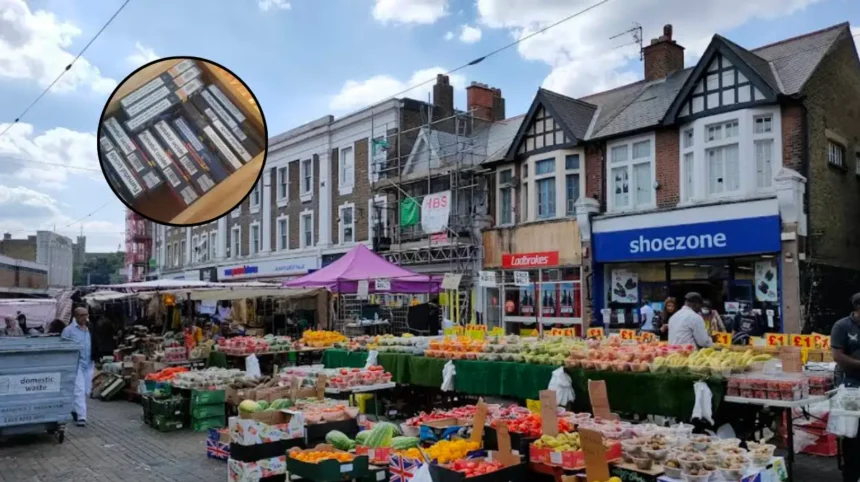
The first major phase of the enforcement occurred on 26 March 2025, when local authority trading standards officers, accompanied by specialist tobacco detection dogs, executed a thorough inspection of the Ripple Road retail space.
The detection dogs flagged hidden stashes, allowing officers to uncover and seize an extensive volume of non-compliant cigarettes. The initial raid resulted in the seizure of 700 Kent cigarettes, 840 Dunhill cigarettes, 40 Marlboro cigarettes, and 40 Sobranie cigarettes.
Despite the initial seizure and clear warnings from law enforcement, the company continued its unauthorized operations.
A second unannounced inspection was executed on 25 September 2025. During this subsequent search, Trading Standards officers discovered a second wave of illicit tobacco hidden from plain view beneath the main shop counter and tucked away inside storage drawers.
This second collection of contraband included an additional 180 Kent cigarettes, 80 Dunhill cigarettes, and 160 Sobranie cigarettes.
According to official updates from the London Borough of Barking and Dagenham Council, none of the seized tobacco products displayed the legally mandated graphic health warnings required under British law, nor were they authorized or approved for standard commercial distribution within the UK domestic market. Furthermore, before any direct enforcement action or seizures took place, local authority investigators had successfully validated intelligence reports by deploying an undercover test purchaser to buy a packet of 20 Kent cigarettes from the Ripple Road shop, establishing direct proof of active distribution.
How Did the Local Authority React to the Repeat Tobacco Offence?
Local authority executives have maintained a firm stance against the sale of unapproved, non-duty-paid tobacco within east London.
Commenting on the successful court outcome, Cllr Syed Ghani, the Cabinet Member for Enforcement and Community Safety, expressed the local administration’s refusal to tolerate such operations:
“This prosecution sends a clear message that selling illegal tobacco in Barking and Dagenham will not be tolerated. These products undermine legitimate businesses, fund criminal activity and pose serious risks to public health. Our Trading Standards team will continue to take robust action against those who break the law.”
The council’s enforcement team emphasized that retail locations distributing counterfeit or non-duty-paid goods directly disadvantage law-abiding business operators who pay appropriate duties and sell verified stock.
What Penalties and Costs Were Imposed by Barkingside Magistrates’ Court?
The judicial findings at Barkingside Magistrates’ Court reflected the recurrent nature of the infractions committed by both the director and his corporate entity. On 23 June 2026, the court finalized the financial terms and penal components of the sentence.
Miorita Ltd was handed a direct criminal fine of £2,000. Additionally, the corporate body was ordered to pay a statutory victim surcharge of £800 alongside the council’s full prosecution costs, which totaled £1,412.
While Marian Coseru did not receive an independent personal fine in this particular instance, he was explicitly ordered to pay a victim surcharge of £154. Collectively, the total financial obligation levied against the defendants amounts to £4,366.
Legal records indicate that this is the second time the defendants have faced substantial penalties for this exact category of offense.
On 18 April 2023, both Marian Coseru and Miorita Ltd were convicted at the same court for identical tobacco supply offences.
During that 2023 proceeding, Coseru received a two-month custodial sentence, which was suspended for 12 months, while the company faced separate financial penalties. The latest 2025 offences occurred after the expiration of that initial 12-month suspension window.
Background of the Counterfeit and Illicit Tobacco Trade in East London
The conviction of Marian Coseru and Miorita Ltd is part of an ongoing, multi-agency effort across the outer boroughs of East London to curb the infiltration of illicit tobacco, counterfeit vapes, and non-conforming consumer items.
Local councils, including Barking and Dagenham and neighboring Havering, have expanded their use of specialized K9 detection teams—specifically trained to identify the distinct scents of tobacco packaging materials hidden behind false walls, magnetic panels, and underground floor cavities.
In broader regional operations documented by local enforcement boards, Trading Standards teams recently executed a series of sweeps across six retail premises in the Barking area, resulting in the seizure of over £15,000 worth of illicit cigarettes, unregistered disposable vapes, and unauthorized medicines.
Data compiled by HM Revenue and Customs (HMRC) and the UK Trading Standards Institute highlights that the distribution networks supplying local shops with non-duty-paid products often bypass standard public health regulations. This includes statutory limitations on heavy metal components, charcoal filtration standards, and standard age-verification frameworks designed to protect consumers.
Prediction: How This Development Will Affect Local Business Owners and Consumers
This prosecution is expected to trigger a significant shift in operational risks for independent convenience store owners and commercial tenants across East London.
As the London Borough of Barking and Dagenham secures consecutive financial convictions and maintains a strict precedent of publicly identifying non-compliant directors, local retailers will likely implement more rigorous supply chain verifications to avoid severe financial liabilities, potential closure orders, or personal criminal records.
For the general public and consumers in Barking and Dagenham, this enforcement trend will likely result in a reduced availability of under-the-counter, non-duty-paid tobacco products within local shopping districts.
As local councils increase their utilization of tactical K9 detection dogs and undercover test purchases, consumers will find fewer avenues to purchase discounted, non-compliant goods. Consequently, buyers will be increasingly directed toward fully regulated, duty-paid alternatives that display mandatory UK health warnings and comply with established public safety standards.