Key Points
- Massive Residential Influx: Early proposals submitted to the local authority outline the construction of approximately 2,100 new homes to replace the ageing shopping venue.
- Diverse Housing Typologies: The planned units will span across multiple residential formats, explicitly targeting co-living spaces, student accommodation, and traditional residential flats.
- Car-Free Blueprint: Operating on a strict environmental directive, the master plan adopts a car-free model, providing transit access only for servicing, deliveries, and blue badge holders.
- Strategic Land Transfer: The project advances following a critical vote by local cabinet members to sell the site’s freehold to the developer to secure institutional funding.
- Overcoming Historical Inertia: This new intervention emerges four years after a previous multi-million-pound redevelopment iteration collapsed due to shifting economic landscapes.
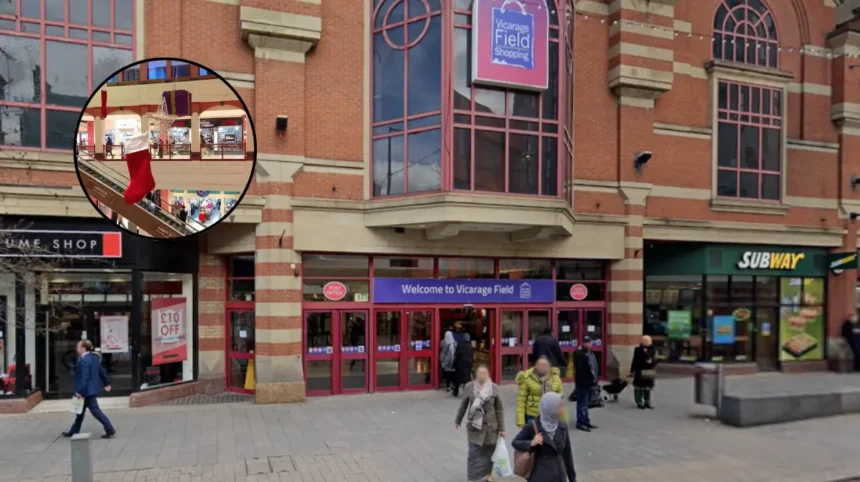
Barking (East London Times) June 6, 2026 — Plans have officially emerged detailing a sweeping urban regeneration project that could see the historic Vicarage Field Shopping Centre dismantled and replaced by an expansive residential complex consisting of more than 2,100 new homes. Property development firm Lagmar, which maintains an established footprint through its ongoing management of the 5.2-acre central site, is spearheaded as the leading driver behind the ambitious town centre restructuring. Initial planning documents formally filed with the London Borough of Barking and Dagenham Council reveal that the high-density project will introduce an array of modern housing sub-types, specifically mixing co-living units, standard residential homes, and dedicated student accommodation blocks into the heart of the East London municipal territory.
- Key Points
- What Does the Proposed Master Plan Entail for the Barking Retail Site?
- How Will the Environmental and Transport Infrastructure Handle the Housing Influx?
- Background of the Vicarage Field Redevelopment Sector
- Future Prediction and Impact Assessment
- The Student Population
- Existing Barking Residents and Businesses
What Does the Proposed Master Plan Entail for the Barking Retail Site?
According to detailed planning documentation compiled by Nick Clark of the Evening Standard, the early description of Lagmar’s architectural intervention proposes the complete removal of the existing covered retail mall to make way for eight freshly constructed buildings.
Positioned as the focal architectural anchor of the development will be a central “market building”, which is intended to draw footfall and retain commercial vitality within the urban interior.
As reported by Nick Clark of the Evening Standard, planning documents specify that
“the ground floor and mezzanine levels will be non-residential, and that there will also be ‘an open public realm that adds greening and function to the town centre’.”
The upper levels of the eight planned structures will host the primary bulk of the residential space. Within these higher elevations, the developer intends to distribute a distinct blend of student flats, conventional residential homes, and co-living units. Co-living configurations, which are structurally designed to mirror contemporary higher-education halls but are curated specifically for working professionals, will form a substantial portion of the high-density layout.
The architectural layout will follow a strict spatial distribution, with planning records identifying that the tallest structural masses will be deliberately concentrated towards the northern boundary of the plot. This configuration aims to manage sightlines and optimize sunlight penetration across the rest of the communal spaces.
How Will the Environmental and Transport Infrastructure Handle the Housing Influx?
A primary pillar of the new municipal submission revolves around a complete transformation of the local transport footprint.
The development site sits diagonally opposite Barking railway station, which boasts the highest possible Public Transport Accessibility Level (PTAL) score of 6B, offering direct connections to central London via Underground, Overground, and national rail networks.
Capitalising on this exceptional connectivity, the developers are steering away from traditional automotive infrastructure.
As reported by Nick Clark of the Evening Standard, official municipal documents confirm that the project
“will be adopting a ‘car-free’ approach, meaning it will only provide delivery and servicing access and some limited parking for blue badge holders.”
By choosing to eliminate private vehicle parking allocations, the design explicitly relies on alternative transit frameworks.
To mitigate the lack of vehicle infrastructure, the planning text states that the design will explicitly focus on active transit methods, incorporating comprehensive cycle storage facilities and pedestrianized networks engineered to “encourage the use of public transport/reduce the reliance on private vehicles.”
To formalise these structural intentions, the current submission submitted by Lagmar has been entered as a request for a “scoping opinion” from Barking and Dagenham Council’s planning department.
This mechanism serves as a formal inquiry asking local planners to explicitly detail the parameters and data points required for a comprehensive environmental impact assessment, which must accompany any future formal planning application. Planning officers have noted that an outline planning application detailing exact heights, massing, and unit distributions will follow once the scoping parameters are settled.
Explore More Barking News
Gary MacDonald £5.2m Lottery Winner Returns to Workplace; Barking, 2026
Barking 9 Arrests: Immigration Raids & Waste Enforcement 2026
Background of the Vicarage Field Redevelopment Sector
The push to reconstruct the Vicarage Field Shopping Centre represents a multi-decade effort by the London Borough of Barking and Dagenham to modernise its urban core. Originally constructed in the early 1990s following a compulsory purchase order in the late 1980s, the existing 160,000-square-foot indoor mall has long been classified by planning inspectors as architecturally outdated, inwardly facing, and isolated from the broader streetscape.
The site has a complex planning history:
- 2015: Real estate investment managers PineBridge Benson Elliot acquired the long leasehold interest of the shopping centre.
- 2017: Outline planning permission was successfully secured for a large-scale, mixed-use retail and residential master plan.
- 2019: The council approved the first reserved matters application, which cleared the path for physical work.
- 2021: To consolidate ownership of the remaining independent retail plots along Station Parade and Ripple Road, the council enacted the London Borough of Barking and Dagenham (Vicarage Field and surrounding land) Compulsory Purchase Order 2021.
- 2022: Following an extensive public inquiry into 67 third-party property objections, the previous commercial blueprint collapsed due to macroeconomic instability, rising construction costs, and a sharp decline in traditional retail demand.
To salvage the strategic development priority, cabinet councillors voted in September of last year to sell the absolute freehold ownership of the land to Lagmar.
This shift from a public-private leasehold split to full freehold ownership was specifically engineered to allow Lagmar to bypass municipal bureaucratic delays and directly attract major institutional investment funds to bankroll this new 2,100-home phase.
Future Prediction and Impact Assessment
The transition of the Vicarage Field site from a low-density shopping mall to a 2,100-unit residential hub will alter the socioeconomic landscape for several key groups across East London.
The high concentration of co-living and residential apartments will significantly expand housing stock in a critical transit zone. For young professional renters priced out of Zone 1 and 2, Barking will become a highly competitive alternative.
The co-living units will introduce a more flexible, community-oriented rental model, though the high density may spark local debate regarding the proportion of genuinely affordable housing units versus market-rate builds.
The Student Population
The introduction of dedicated student accommodation will position Barking as an emerging residential node for London’s higher education sector.
With direct rail links to central London universities, the borough will likely see an influx of domestic and international students, shifting local demographics and creating a seasonal student economy that supports local transport and hospitality sectors.
Existing Barking Residents and Businesses
For current residents, the immediate impact will be felt in the changing face of the high street. The demolition of the old shopping centre means a temporary loss of retail options, followed by a transition to the new ground-floor market building. Independent business owners on Ripple Road and Station Parade will navigate a transformed footfall pattern.
While 2,100 new households introduce a massive injection of local spending power, the strict car-free mandate will place the entirety of this population’s transport needs onto the existing Barking station infrastructure, testing the capacity of local public services.